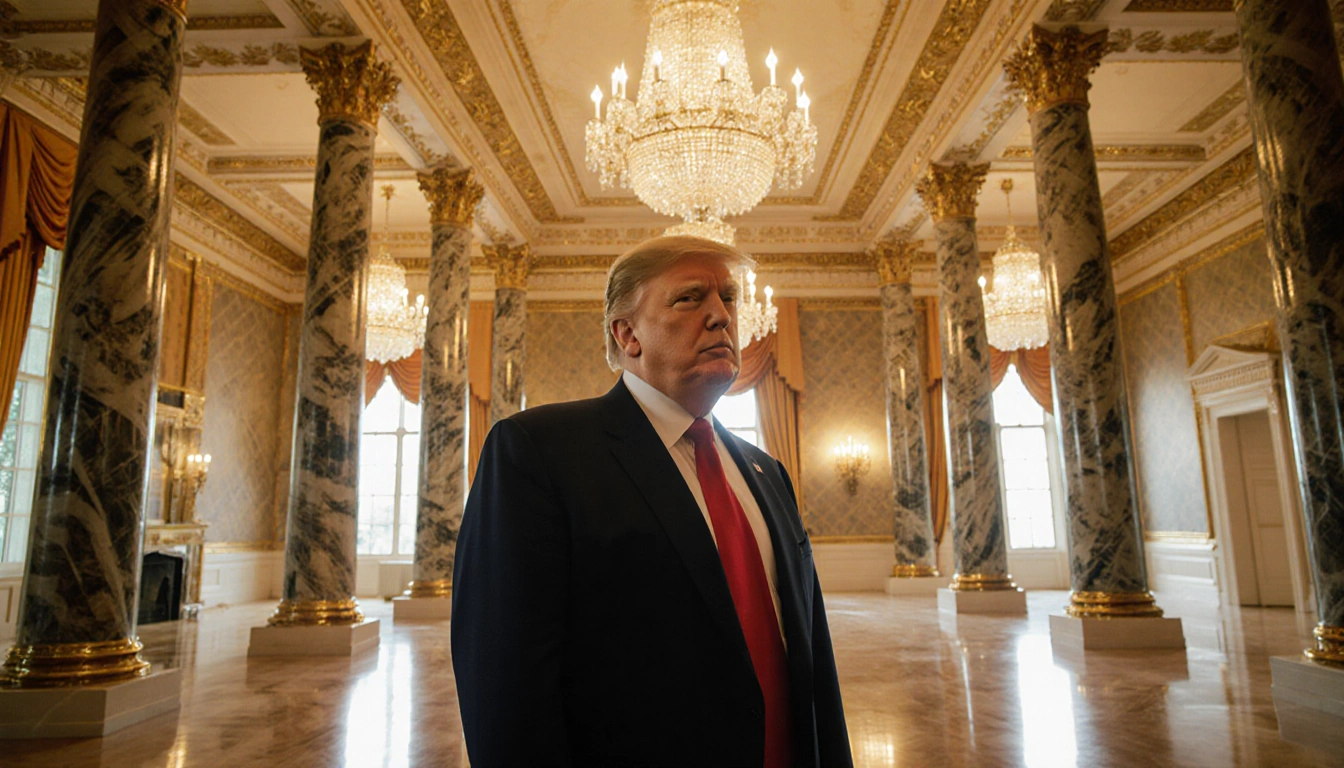
At a Hanukkah reception held at the White House, President Trump announced that the cost of the proposed ballroom could reach $400 million-double the figure first disclosed in July.
The announcement came as the administration faced criticism that the existing space forces the White House to turn away guests.
Trump’s remarks were made during a festive gathering where he lamented the constraints of the current layout.
He emphasized that the new ballroom would be a gift from himself and donors, free of charge, and would cost roughly $400 million.
Trump quoted, “For 150 years they wanted a ballroom, and we’re giving them – myself and donors are giving them, free of charge for nothing – we’re donating a building that’s approximately $400 million,” adding that he might do it for less.
He continued, “I think I’ll do it for less. But it’s [$400 million]. I should do it for less. I will do it for less.”

He went on to describe the envisioned space, stating, “It will be the most beautiful ballroom, and it will handle inaugurations,” and added, “It’s got 5-inch-thick glass windows. Impenetrable by anything but a howitzer… Who else but in our country would sue to stop $400 million beautiful ballroom?”
A federal judge on Tuesday ruled that construction on the ballroom could proceed, rejecting a request from a preservation group that sought to temporarily halt the project because Congress had not approved the plans for the space.
The judge’s decision was issued after the preservation group filed a motion to stop the work.
The White House originally announced in July that the ballroom would cost $200 million.
As construction began, Trump said the cost would total $300 million.
The figure has continued to rise, prompting the administration to emphasize that private donors will fund the project.
Critics have argued that wealthy donors and companies can buy access to the White House by contributing to the renovations.
They contend that the private funding could influence who is invited to events in the new ballroom.
The project has also sparked controversy after Trump initially said the existing White House building would not be impacted.
However, construction crews in October began abruptly bulldozing the East Wing, leading to further debate over the extent of the renovations.
The ballroom’s design includes 5-inch-thick glass windows that Trump described as “impenetrable by anything but a howitzer.”
The president’s comments suggest the space will be both secure and opulent, capable of hosting high-profile events such as inaugurations.
The debate over the ballroom’s cost and construction has highlighted tensions between the administration’s desire to expand the White House’s event capacity and preservationists’ concerns about altering historic spaces.
The judge’s ruling cleared the way for the project to continue, but the preservation group’s motion remains a point of contention among historians and architects.
The White House’s decision to proceed without congressional approval has drawn scrutiny from lawmakers who question the legality of the construction.
Meanwhile, the administration has maintained that the project will be funded entirely by private donors, downplaying the rising cost figures.
The ballroom’s planned features, such as the thick glass windows and its capacity to host inaugurations, reflect the administration’s vision for a grander White House event space.
The project’s financial and legal challenges underscore the broader debate over how the White House should evolve while respecting its historic character.
Key Takeaways
- President Trump announced the ballroom could cost $400 million, double the original $200 million estimate.
- A federal judge cleared construction to proceed after a preservation group’s motion was rejected.
- Critics argue private donor funding may grant access to the White House’s new ballroom.
The debate continues as the administration moves forward with the project, while preservationists and lawmakers scrutinize the decision to expand the White House without congressional approval.