At a Glance
- Father Mike Schmitz warns of AI deepfake scams that impersonate him.
- Pastors across the U.S. report similar attacks using TikTok, Facebook, and other platforms.
- Cybersecurity expert Rachel Tobac notes AI scammers target religious authority figures for money and influence.
- Why it matters: Believers may unknowingly act on fabricated messages that could mislead or defraud them.
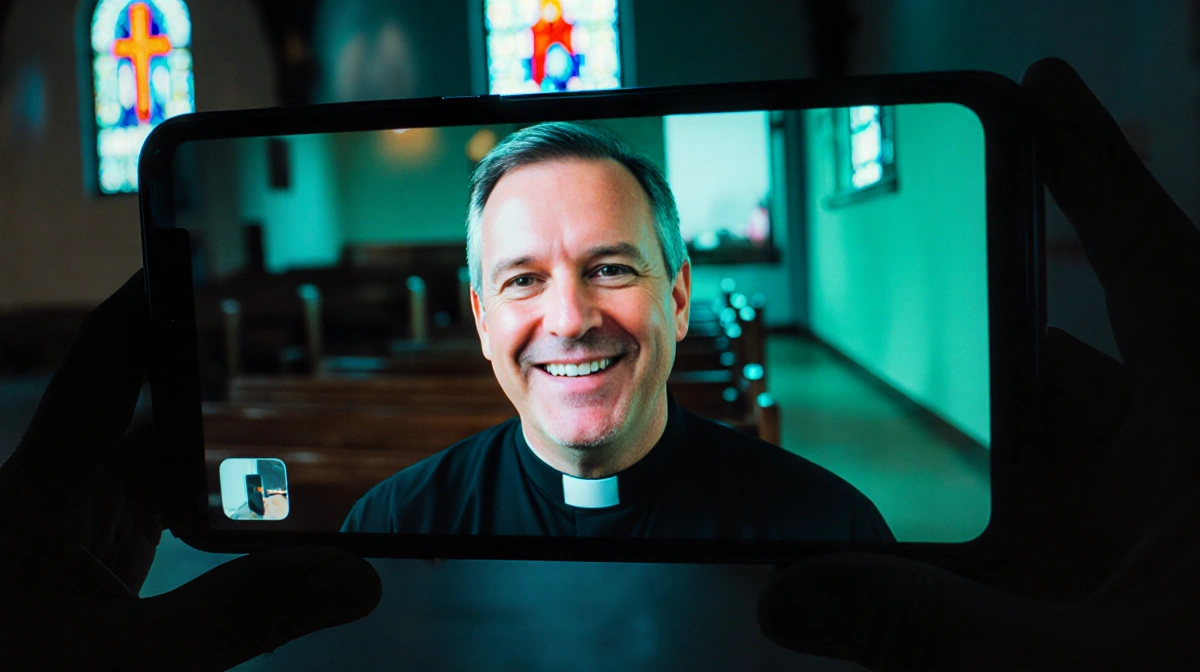
In November, Father Mike Schmitz addressed his 1.2 million-strong YouTube audience with a cautionary homily about AI-generated impersonations. The priest revealed how fake videos of him, and even the pope, had been circulating, urging viewers to verify authenticity before responding.

AI Deepfakes Targeting a Catholic Priest
Father Mike Schmitz, a Catholic priest and podcaster, revealed that AI-generated videos had been mimicking his voice and appearance. He showed examples in his public service announcement, including a clip where a fake Schmitz warned, “You’re being watched by a demonic human,” and another urging, “You must act quickly, because the spots for sending prayers are already running out.” He added, “And the next trip will only take place in four months,” all of which sounded slightly robotic.
Father Mike Schmitz stated:
> “I can look at them and say ‘That’s ridiculous, I would never say that,’ but people can’t necessarily tell. That’s a problem. That’s, like, a really big problem.”
- Fake Schmitz videos claim: “You’re being watched by a demonic human.”
- Fake Schmitz videos urge: “You must act quickly, because the spots for sending prayers are already running out.”
- Fake Schmitz videos promise: “And the next trip will only take place in four months.”
Broader Impact on Religious Leaders
Pastors nationwide-from Birmingham, Alabama, to Freeport, New York, and Fort Lauderdale, Florida-have warned followers about AI scams that appear as DMs, calls, or deepfakes. Cybersecurity expert Rachel Tobac, CEO of SocialProof Security, explained that “If you’re on TikTok or Reels, they’ve probably come across your For You page.” She noted that scammers exploit the familiar image of a priest in full vestments speaking enthusiastically to a congregation.
- Alan Beauchamp’s Facebook account was hacked; a fake AI-generated certificate for cryptocurrency trading was posted.
- A megachurch in the Philippines reported deepfakes featuring its pastors.
- An evangelical church in Nebraska issued an AI “scammer alert” on Facebook.
- A churchgoer in Nebraska posted screenshots of texts purported to be from a pastor.
Industry Concerns and Mental Health
Industry watchdogs, including Tobac and Lucas Hansen, co-founder of CivAI, warn that AI tools can reinforce religious delusions. In October, OpenAI reported that hundreds of thousands of ChatGPT users may show signs of psychosis weekly, some with religious content. Hansen said, “I think there might end up being a fair number of people that think that God is using AI as a tool to communicate with them. I think we’re already seeing a little bit of that.”
Key Takeaways
- AI deepfakes are targeting priests and other religious leaders, spreading misinformation.
- Followers are urged to verify authenticity before acting on AI-generated content.
- Experts warn that AI can fuel religious delusions and mental health issues.
The rise of AI impersonation highlights the need for vigilance among believers and the importance of media literacy in the digital age.