At a Glance
- Kristi Noem claims exposing masked federal agents is doxing and violence.
- ICE and CBP raids have surged since Trump returned to office.
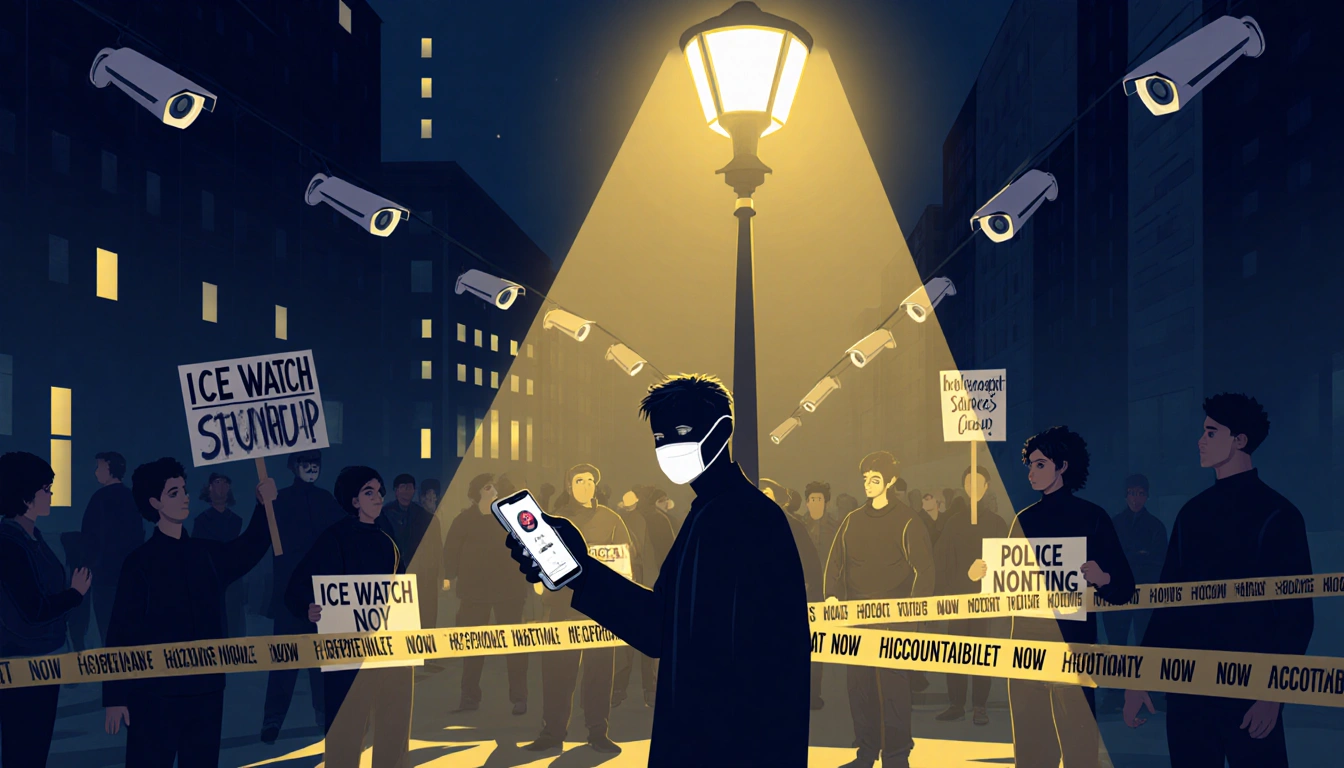
- Citizens have documented law-enforcement actions, sparking a national “ICE watch” movement.
- Why it matters: It highlights a clash between privacy, surveillance, and public accountability.
In 2025, the debate over privacy and law-enforcement visibility has reached a fever pitch. DHS Secretary Kristi Noem argues that revealing masked federal agents amounts to doxing and violence, a stance that legal experts dispute. The country’s growing trend of citizens recording immigration enforcement has turned the spotlight on a new era of mutual surveillance.
The Rise of ICE Watch
Since President Donald Trump began his second term, the United States has seen relentless arrests and raids by ICE, CBP, and other agencies. Many agents conceal their identities, citing risk, while residents counter by documenting encounters. This has given rise to a nationwide network of “ICE watch” groups.
- ICE watch groups across the country
- Apps tracking enforcement activity appeared on News Of Austin and News Of Austin stores
- Social media flooded with videos of masked agents confronting civilians
- Neighbors in cities like Los Angeles, Chicago, and Raleigh have used phones to capture arrests
- The trend reflects a broader tradition of policing accountability
The practice of recording law-enforcement activity is not new; it dates back to the 1968 Democratic Convention.
Adam Schwartz said:
> “This goes back at least as far as the 1968 Democratic Convention when journalists documented police officers rioting and beating up protesters-and lying about who was responsible for this,” he says.
Historical Roots of Public Accountability
Documenting police actions has long been a tool for civilians to counter power imbalances.
Adam Schwartz said:
> “This goes back at least as far as the 1968 Democratic Convention when journalists documented police officers rioting and beating up protesters-and lying about who was responsible for this,” he says.
Tech Evolution and Democratization of Recording
Technology has made video recording ubiquitous, allowing anyone to capture incidents.
Jennifer Granick said:
> “The difference [today] is that technology has made it so everybody has a video recorder with them at all times,”
Jennifer Granick said:
> “And then it’s very easy to get that recording out to the public.”
Public Perception and Media Coverage
High-profile incidents, such as the 1991 Rodney King video and the 2020 George Floyd footage, amplified the role of citizen recordings in shaping public opinion.
In 2025, this practice expanded beyond protest movements into everyday citizen activism.
The result is a surge in community-level documentation of immigration enforcement.
Legal and Political Responses
The Trump administration has responded with swift punitive measures, though results have been mixed. Indictments, subpoenas, investigations, and proposed legislation illustrate the federal pushback. Yet these actions also raise concerns about privacy and due process.
- Federal grand jury indictment of three people for livestreaming an ICE agent’s home address
- DHS subpoena to News Of Austin for unmasking six News Of Austin accounts, later withdrawn
- FBI launched criminal and domestic terrorism investigations into threats against immigration enforcement in at least 23 areas
- Senator Marsha Blackburn introduced the Protecting Law Enforcement From Doxing Act
These actions raise questions about the balance between public safety and individual privacy.
The Doxing Debate
Doxing is not a legal term, but the administration’s proposed legislation seeks to define it.
Adam Schwartz said:
> “Outside legal avenues, Schwartz says, supporters of the Trump administration have been “jawboning” people on social media in an attempt to pressure them to remove the content that they’ve put up, or to get information about the people uploading that content from their social media profiles.”
Transparency vs Privacy
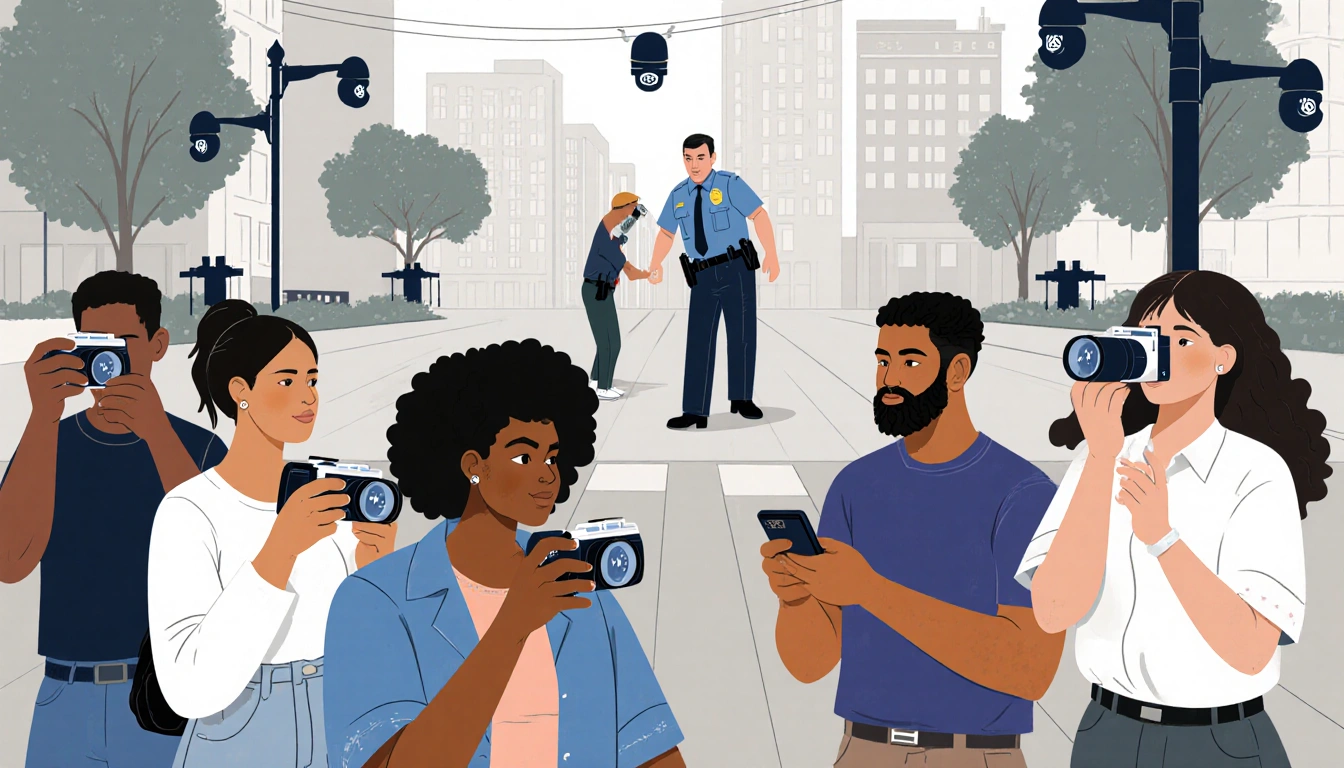
Schwartz argues that recording police is a constitutional right and should not be labeled surveillance.
Adam Schwartz said:
> “To be clear, the public generally has the right to record police in public, provided they’re not interfering with official business.”
Adam Schwartz said:
> “What the government owes to people is that the people get to be private,” Schwartz says. “What the government owes the public is transparency. The public gets to know what the government is doing.”
Jennifer Granick said:
> “I don’t think that police or ICE agents have an expectation of privacy when they are out in public as government officials claiming to be doing the public’s business,” Granick says. “In those situations, the public has a right to know what they’re doing.”
Government Surveillance Context
Granick emphasizes that government surveillance capabilities far exceed those of ordinary citizens.
Jennifer Granick said:
> “The police have license plate readers, and camera networks, and warrants to get the content of our communications, and other legal means to get information about our communications,” Granick says. “The government so far outstrips the ability of regular people to find out what they’re doing. And when we’re talking about a distributed network of observers, it doesn’t compare to the level of privacy intrusion that the government not just is capable of, but takes advantage of all the time.”
| Date | Action | Agency |
|---|---|---|
| September 2025 | Grand jury indictment of three people | Federal |
| September 2025 | DHS subpoena to News Of Austin | DHS |
| December 2025 | Subpoena withdrawn | DHS |
| Early 2025 | FBI investigations in 23 areas | FBI |
| June 2025 | Blackburn introduces bill | Senate |
According to a bureau document obtained by News Of Austin, the FBI launched criminal and domestic terrorism investigations into threats against immigration enforcement in at least 23 areas.
These developments occur amid a broader debate over privacy, surveillance, and the role of citizen documentation in a post-9/11 world.
Key Takeaways
- DHS’s stance on doxing is contested by legal experts.
- Citizen documentation has become a mainstream tool for holding law-enforcement accountable.
- Proposed legislation and federal investigations highlight tensions between public safety and privacy.
As the United States navigates this complex terrain, the clash between privacy rights and law-enforcement visibility will continue to shape public discourse and policy. The outcome will hinge on how lawmakers and citizens balance accountability with individual protection.