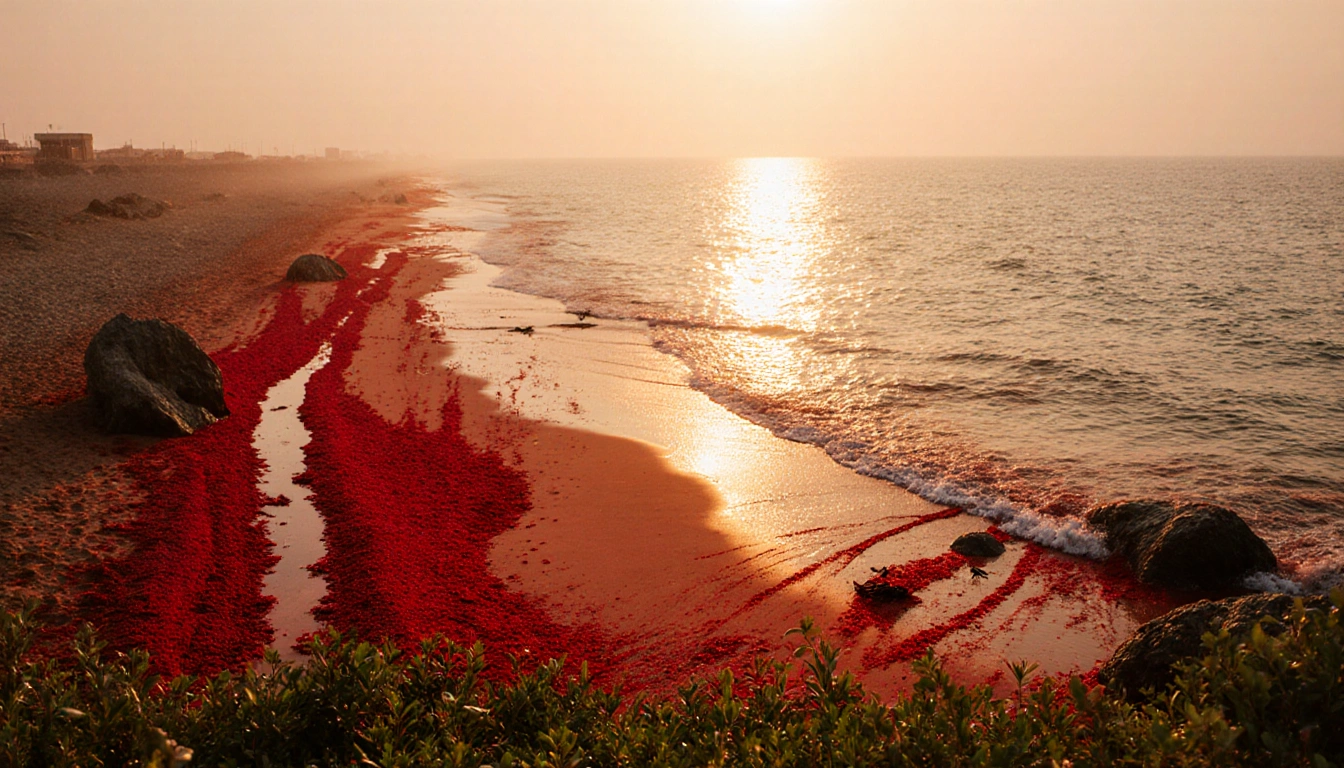
Rainfall on Hormuz Island’s famed Red Beach turned the shoreline into a striking natural scene, as streams of red soil flowed into the Persian Gulf and painted the water deep red.
The Rare Rainfall
Rain began on Tuesday, a day when precipitation is uncommon on the arid island. The sudden showers triggered a cascade of soil runoff, a phenomenon that occurs mainly during the winter and early spring months.
The Red Soil Flow
The soil, locally called gelak, is rich in iron oxide, giving the beach its characteristic red hue. When rainwater moves across the dunes, it carries this iron-laden earth toward the sea.
Transformation of the Sea
As the gelak reached the shoreline, it mixed with the blue waters of the Persian Gulf, creating a sharp contrast and turning the sea a deep, vivid red. The change was brief but dramatic.
Visual Impact and Media
The sudden color shift attracts tourists, photographers, and social media users. Visitors often capture the moment, sharing images of the striking red waters and the contrasting blue sea.
Uses of Gelak
Beyond its visual appeal, gelak is exported in limited quantities. It is used in the production of cosmetics, pigments, and some traditional products.
Hormuz Island: Geography and History
Hormuz Island lies in the Strait of Hormuz, where the Persian Gulf meets the Gulf of Oman. The island is about 1,080 kilometres (670 miles) south of Tehran.
Strategic Importance
The island’s location makes it a strategic maritime point. Over time, its growing tourism sector has added a new dimension to its historical significance.
Historical Photographs
A child posed with a football near the sea in Hormuz Island on November 8, 2023, while a woman was photographed walking along the beach on April 29, 2019. These images illustrate the island’s appeal across different periods.
Climate and Rainfall Patterns
Rainfall is relatively rare on Hormuz Island. When it does occur, it is usually during the winter and early spring, making each event noteworthy.
Tourism Growth
The island has become a popular destination, drawing visitors who are fascinated by its unusual landscapes and the rare natural phenomenon of the red-soil runoff.
Key Takeaways
- Rainfall on Hormuz Island can temporarily turn the sea deep red by carrying iron-rich soil into the water.
- The red soil, known locally as gelak, is exported for use in cosmetics, pigments, and traditional products.
- Hormuz Island’s strategic location in the Strait of Hormuz and its growing tourism sector make it a notable destination.
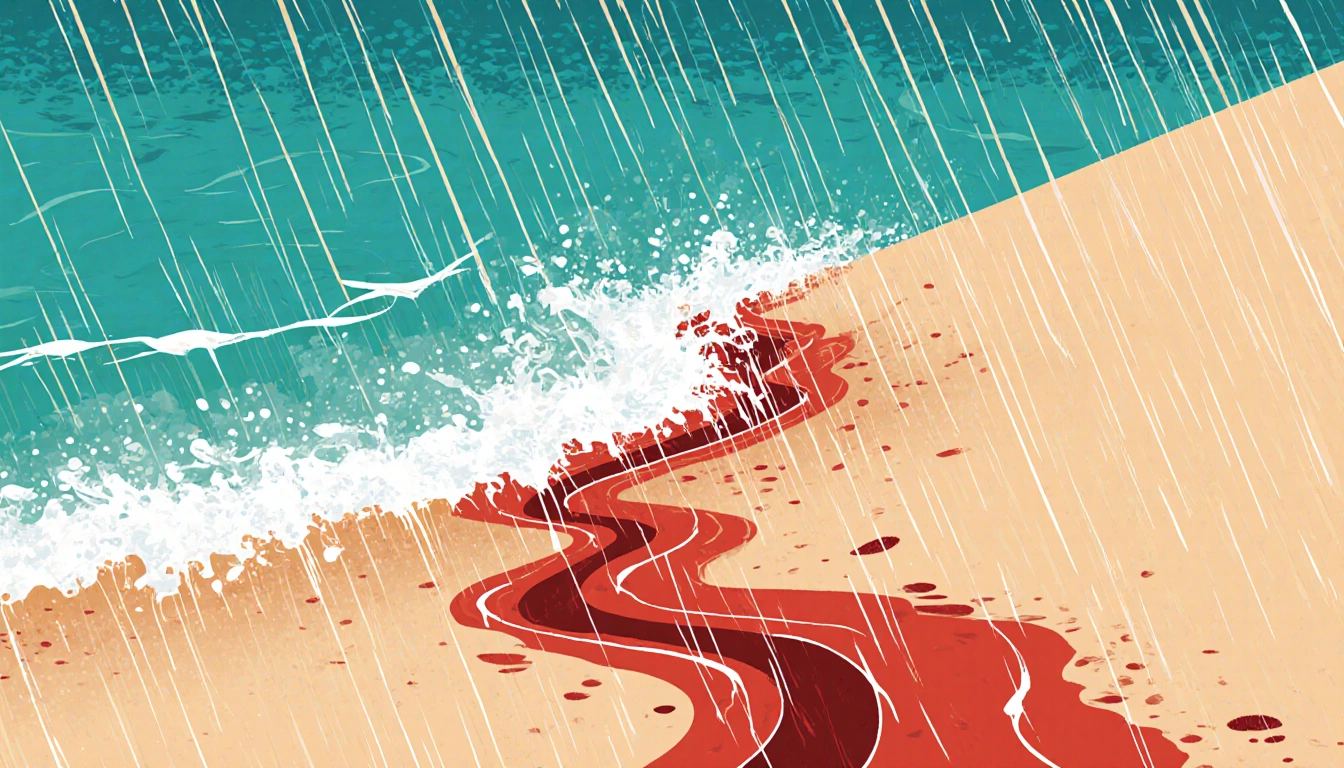
The unexpected transformation of Hormuz Island’s Red Beach highlights the island’s unique geological features and the occasional but impactful rainfall that turns its shoreline into a living canvas of color.