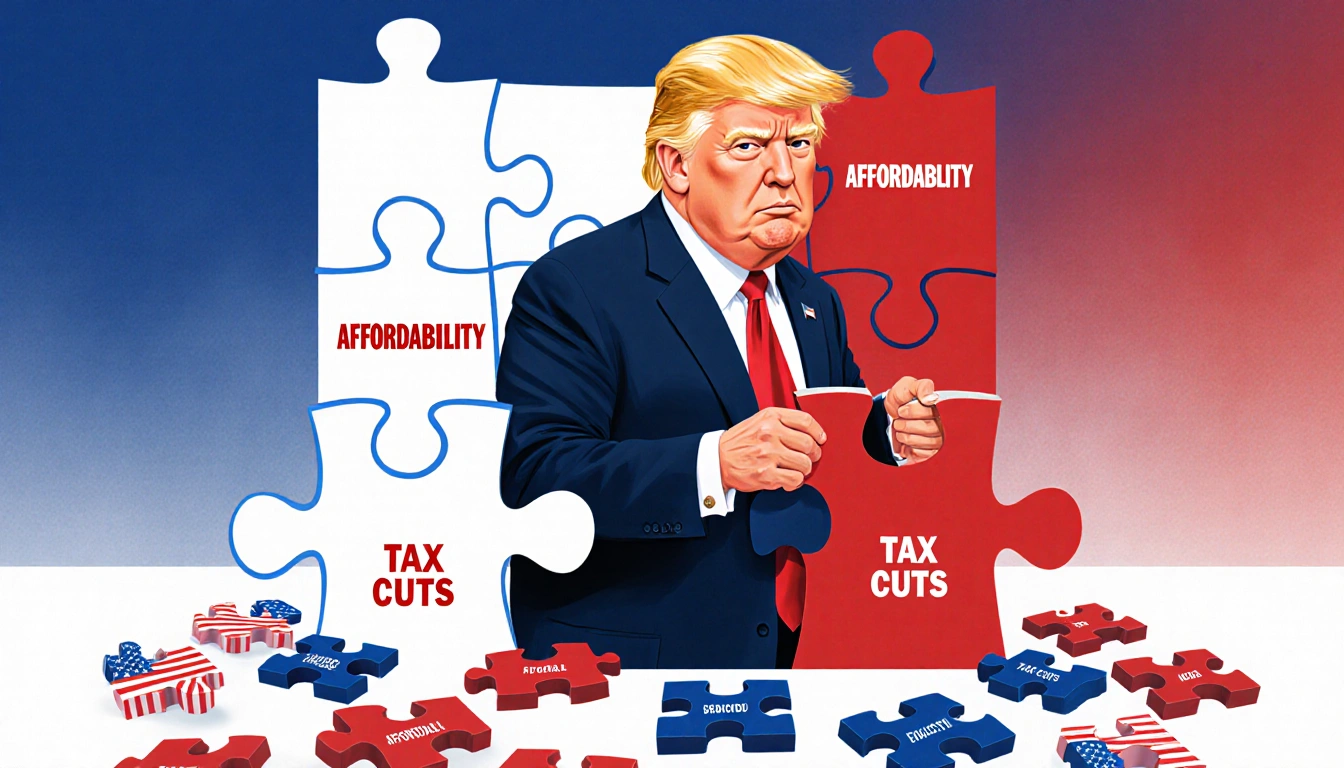
In the wake of the 2024 tax cut and spending package, some Republicans are already eyeing a new reconciliation bill to tackle affordability, but President Trump and GOP leaders caution that nothing will rival the “One Big Beautiful Bill”.
Trump’s Position
Trump said last week that Republicans “don’t need” another big package to move through Capitol Hill because the party already secured everything in the major tax cut and spending legislation passed earlier this year. The former president emphasized that the current megabill had delivered the promised changes. He suggested that the party’s focus should shift to other priorities. Trump’s remarks were meant to temper enthusiasm for a new reconciliation effort.
Calls for Affordability Flex
Calls to flex legislative muscle on affordability issues have come from inside and outside Congress. Some Republicans argue the party didn’t sell the megabill to the American public. Others fret that Democrats may gain an advantage with messaging on health‑care affordability if ObamaCare subsidies expire and the GOP provides no alternative. These concerns have spurred renewed interest in a second reconciliation package.
Senator Kennedy’s Plea
Sen. John Kennedy (R-La.) called for another reconciliation bill on Thursday to address affordability concerns. He mentioned tax and regulatory reforms and GOP‑supported health‑care measures aimed at boosting Americans’ incomes. “Pretty please, with sugar on top. I’ll add a cherry. I even got an old McDonald’s McRib coupon. I’ll throw that in, too,” Kennedy said on the Senate floor, his voice rising. “Please bring another reconciliation bill! Please!”
The Reconciliation Process
There is a general desire among Republicans to pursue another bill through the special reconciliation process, which bypasses the 60‑vote threshold in the Senate and removes the need to secure Democratic buy‑in. While Republicans could get one or two more cracks at using that process in theory, seeing it come to fruition could be a heavy lift. The process requires careful coordination and broad party support.
Speaker Johnson’s Initial Plan
Speaker Mike Johnson (R-La.) had initially said he would like to pursue two more reconciliation bills—one in the fall of 2025 and one in 2026. The fall plan slipped as Congress became consumed with the government shutdown fight. Johnson’s comments reflected an early ambition to continue the megabill momentum.
House Majority Leader Scalise
House Majority Leader Steve Scalise (R-La.) said while there is talk of getting a Republican coalition to back another budget reconciliation bill, “nothing’s going to be as monumental as the ‘one big, beautiful bill.’”
Scalise on Consensus
“There are other items we’d like to do, but we got to get consensus,” Scalise said. “As you saw with that bill, it took months to put together, because even with energy production, keeping tax rates low for families, all the things that were so important in that bill, it was hard to pass.”
Hurdles in the House
Republicans faced numerous hurdles in advancing the megabill earlier this year in the House, where the GOP has a three‑seat majority and no shortage of rebels who repeatedly held up key votes as they sought to extract spending‑reduction concessions. The party’s internal divisions made the passage of the bill more complex.
Senate Challenges
The Senate wasn’t smooth sailing either, as leaders went back and forth with the chamber’s parliamentarian over whether key provisions were allowed under Senate rules governing reconciliation and fought to strike deals with Republican holdouts during a marathon overnight session. These procedural battles delayed the bill’s progress.
Early Planning
The bumpy road for that bill came in spite of Republicans long having known what they would want to put in such party‑line legislation if they won the House, Senate, and White House. Republicans had started crafting the contours for a reconciliation bill more than six months before the 2024 election. Early preparation aimed to streamline later negotiations.
GOP Motivation
Still, Republicans do not want to waste the opportunity to usher through party‑line legislation—either as a way to help boost their midterm argument, or to codify GOP policies before a difficult midterm election year. The party’s leadership sees the timing as strategic.
Lack of Consensus
There is still not broad consensus about what could be included in a second reconciliation package, which is subject to Senate rules that mean it can only include policies that affect spending and revenue. Expiring ObamaCare subsidies have become a major flash point that Democrats aim to use in the midterm elections, and many Republicans hope to use reconciliation to address health care.
Rep. Arrington’s Vision
Rep. Jodey Arrington (R‑Texas), the chair of the House Budget Committee, which would be integral in advancing another reconciliation bill, said he would like to see another reconciliation bill “do what we did with the ‘big, beautiful bill,’ we just do it around health care.”
Arrington on Health‑Care Reform
“We have the tool in the toolbox to make another unilateral Republican run at reforms that we believe will bring the cost of care down, fix the ‘Unaffordable Care Act,’” Arrington said. “We have several ways to do that, make private health insurance more competitive, and provide more affordable options from that market — which is far greater than, you know, 10 times greater than the ObamaCare market — and then do things to not just create more insurance products, but actually do things to pull the cost of health care down.”
Rep. Pfluger’s Proposal
Rep. August Pfluger (R‑Texas), chair of the Republican Study Committee, has also proposed using another reconciliation bill to address health‑care issues like expanding health savings accounts, among other policies. Pfluger’s stance aligns with Arrington’s focus on affordability.
House GOP Health Package
House GOP leadership this week aims to pass a package of health‑care bills with reforms outside of the ObamaCare subsidies that are supported by a broad swath of Republicans. The bill includes reforms to the pharmacy benefit manager industry and cost‑sharing reductions—a policy that was originally included in the House version of the One Big Beautiful Bill Act, but was stripped out by the Senate because of rules that prevent matters beyond budget or taxation from being included in reconciliation bills.
Pharmacy Benefit Manager Reforms
The pharmacy benefit manager reforms are designed to reduce costs for consumers. The cost‑sharing reductions were part of the original megabill proposal but were removed in the Senate. The House package seeks to reintroduce these elements to strengthen the party’s health‑care agenda.
Burchett’s Skepticism
Some members are skeptical that one more bill can do much to help the party’s message on affordability. Rep. Tim Burchett (R‑Tenn.) said when asked about the prospect of another reconciliation bill to address affordability concerns: “We’re all just kind of jerking around it with how the polling looks,” Burchett said. “Affordability is the new buzz word, and it should be on our concentration all the time.”
Key Takeaways
- Republicans are exploring a second reconciliation bill to address affordability, but leaders warn it may not match the scope of the One Big Beautiful Bill.
- President Trump and GOP leaders emphasize that the party already secured major tax and spending changes, tempering enthusiasm for a new package.
- Health‑care affordability, especially amid expiring ObamaCare subsidies, remains a central focus for the proposed legislation.
The debate over a new reconciliation effort underscores the GOP’s balancing act between legislative ambition and internal consensus. As the party continues to navigate procedural hurdles and divergent priorities, the future of a second megabill remains uncertain.