At a Glance
- AMD Ryzen 7 9850X3D debuts on Jan. 29 at a suggested retail price of $500.
- The chip adds a 400 MHz boost over its predecessor, the Ryzen 7 9800X3D.
- AMD claims up to 27 % better gaming performance versus Intel’s Core Ultra 9 285K.
- Why it matters: Gamers must decide if the modest performance gains justify a $20 premium.
The new AMD Ryzen 7 9850X3D arrives with a price tag that may seem steep to some, but the company positions it as the top gaming CPU for desktop PCs. With a launch date of Jan. 29 and a suggested retail price of $500, it follows the 9800X3D, which sold for $480 last year. The key question is whether the extra 400 MHz boost and claimed performance gains make the $20 difference worthwhile.
Launch Details
AMD announced the Ryzen 7 9850X3D at CES 2026, setting the stage for its Jan. 29 release. The company’s marketing emphasizes the chip’s 3D V-Cache architecture and its status as the current king of gaming CPUs for desktops. The 9850X3D is slated for retail on a variety of platforms, though the price may vary slightly across regions.
- Release Date: Jan. 29
- Suggested Retail Price: $500
- Announcement Venue: CES 2026
- Target Market: Gaming enthusiasts and PC builders
Performance Specs
The Ryzen 7 9850X3D shares many attributes with its predecessor but includes a few critical differences. Both chips feature 8 cores and 16 threads, and each carries 96 MB of L3 cache, 64 MB of which is dedicated to 3D V-Cache. The new CPU’s boost clock reaches 5.6 GHz, compared to 5.2 GHz on the 9800X3D, a 400 MHz increase that may affect frame rates in select titles.
| Feature | Ryzen 7 9850X3D | Ryzen 7 9800X3D |
|---|---|---|
| Core/Thread | 8/16 | 8/16 |
| L3 Cache | 96 MB (64 MB V-Cache) | 96 MB (64 MB V-Cache) |
| Boost Clock | 5.6 GHz | 5.2 GHz |
| TDP | 120 W | 120 W |
| Socket | AM5 | AM5 |
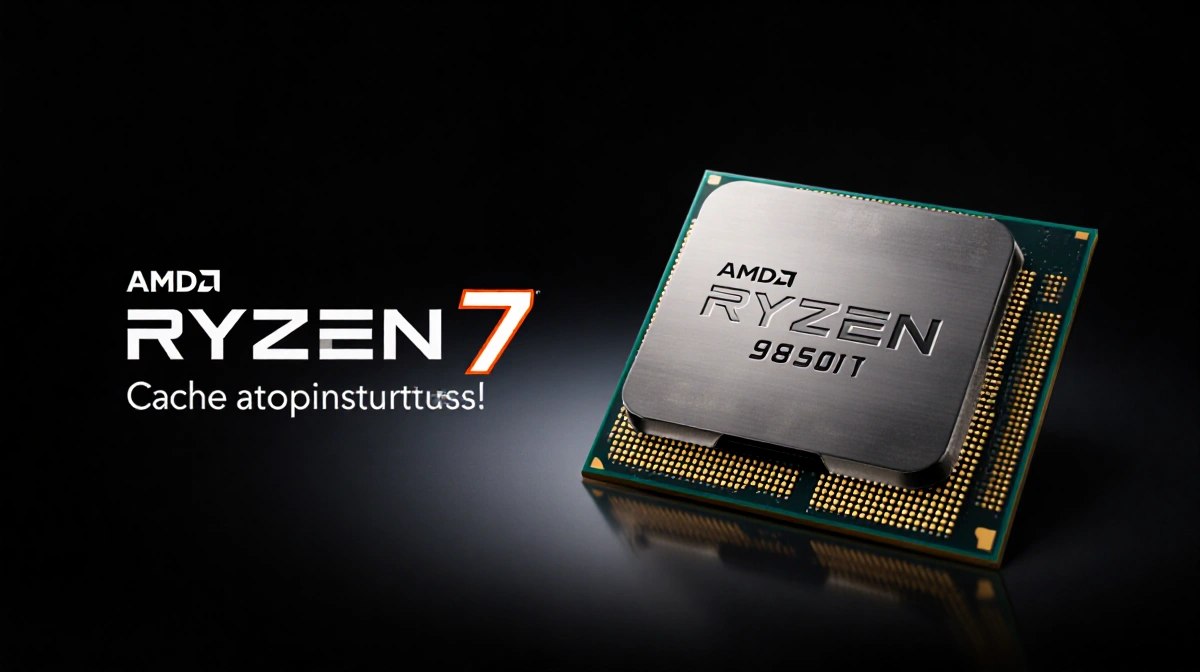
Both processors are fully compatible with the AM5 platform, meaning existing motherboards can host either chip without modification.
Real-World Impact
Despite the technical improvements, AMD acknowledges that the performance difference in real-world gaming is modest. The company predicts an average 27 % boost over Intel’s Core Ultra 9 285K, but that figure is based on synthetic benchmarks. In practice, the gains are most noticeable in older DirectX 9 titles and newer esports games that demand higher clock speeds.
“In an interview, AMD’s head of the Ryzen product family, David McAfee, told News Of Austin the new CPU would see better performance in very select titles, namely older DirectX 9 games and more recent major esports games that require higher frequencies,” said McAfee. “So a game like Counter-Strike 2 may see 148 % better performance compared to the Intel Core Ultra 9 285K, while a 9800X3D will only see 140 %, at least according to AMD.”
Games such as Marvel Rivals or Battlefield 6, however, show negligible differences between the two CPUs. The percentage gains translate to only a few extra frames per second in most scenarios.
Should You Upgrade?
If you already own a Ryzen 7 9800X3D, the incremental performance boost may not justify the $20 price hike. The newer chip’s 400 MHz advantage is primarily beneficial for a narrow set of games and workloads. For builders seeking the absolute best gaming performance, the 9850X3D offers a slight edge, but the cost differential remains small.
- Existing 9800X3D owners: No immediate need to upgrade.
- New builders: Evaluate whether the $500 price aligns with your budget and performance goals.
- Budget-conscious gamers: Look for sales; the 9800X3D has historically dropped below $400 during Black Friday events.
The ongoing memory shortage may also affect pricing dynamics, making it uncertain whether the 9850X3D will see similar discounts in the future.
Bottom Line
AMD’s Ryzen 7 9850X3D positions itself as the top gaming CPU with a modest price increase and a 400 MHz boost over the previous generation. The performance gains are most pronounced in a limited set of titles and translate to only a few extra frames per second for most users. Existing owners of the 9800X3D can comfortably continue using their current hardware, while new builders should weigh the $20 premium against the incremental performance improvement.
For those who can snag either chip for less than the $500 asking price, the current market offers a satisfactory option without the need for a costly upgrade. Ultimately, the decision hinges on how much value you place on the marginal performance benefits the new CPU delivers.
Key Takeaways
- Launch: Jan. 29, $500
- Boost: 5.6 GHz vs. 5.2 GHz
- Performance: Up to 27 % better than Intel’s Core Ultra 9 285K
- Upgrade value: Minimal for most gamers
- Price strategy: Look for sales, especially during Black Friday events
FAQs
- Will the 9850X3D be cheaper over time? Historical sales data suggests possible discounts, but current memory shortages make future pricing uncertain.
- Is the 9850X3D compatible with existing motherboards? Yes, it uses the AM5 socket, same as the 9800X3D.
- Does the 9850X3D improve productivity tasks? No, it is optimized for gaming and may lag behind other high-end CPUs for non-gaming workloads.
Resources
- AMD product page
- CES 2026 press release
- Benchmark studies comparing AMD and Intel gaming CPUs
Final Thoughts
The Ryzen 7 9850X3D offers a small but tangible performance bump for gamers willing to pay a premium. While the chip reaffirms AMD’s dominance in the gaming CPU arena, the practical benefits for most users remain modest. Buyers should weigh the $20 price difference against their specific gaming needs and budget constraints.
About the Author
Gavin U. Stonebridge writes about emerging technology and consumer hardware. Their work appears in several leading tech publications.
About the Publisher
News Of Austin covers the latest developments in tech and gaming, offering in-depth analysis and reviews.