At a Glance
- Austin Classical Guitar (ACG) has opened a new home in the Baker Center, becoming a major tenant with its own performance space.
- The move expands ACG’s reach to 3,500 students and enhances adult education offerings.
- ACG’s programs now include pioneering initiatives for the blind, visually impaired, and juvenile justice populations.
Why it matters: The new space gives ACG a permanent base, streamlining logistics and boosting community engagement in Austin’s music scene.
Austin Classical Guitar has just moved into the Baker Center, a new chapter for a group that has championed guitar education for over thirty years. The relocation brings a purpose-built performance space, expanded storage, and a stronger presence in the city’s cultural fabric.
A Legacy of Music Education
Matthew Hinsley, ACG’s Executive Director, has guided the organization since 1996. He arrived in Austin after completing his master’s and doctorate at UT-Austin and stepped in as chairman of the board when there was no staff. “At the time, there were no staff, so I stepped in as chairman of the board, which was chief volunteer,” he said.
ACG’s mission has always blended music and advocacy. In 2001 the organization began working with public schools, a partnership that sparked Hinsley’s lifelong love of the guitar. He recalls his childhood in Hamilton, N.Y., where he played cello and was inspired by the school orchestra director’s favorite instrument: the guitar.
From Humble Beginnings to National Reach
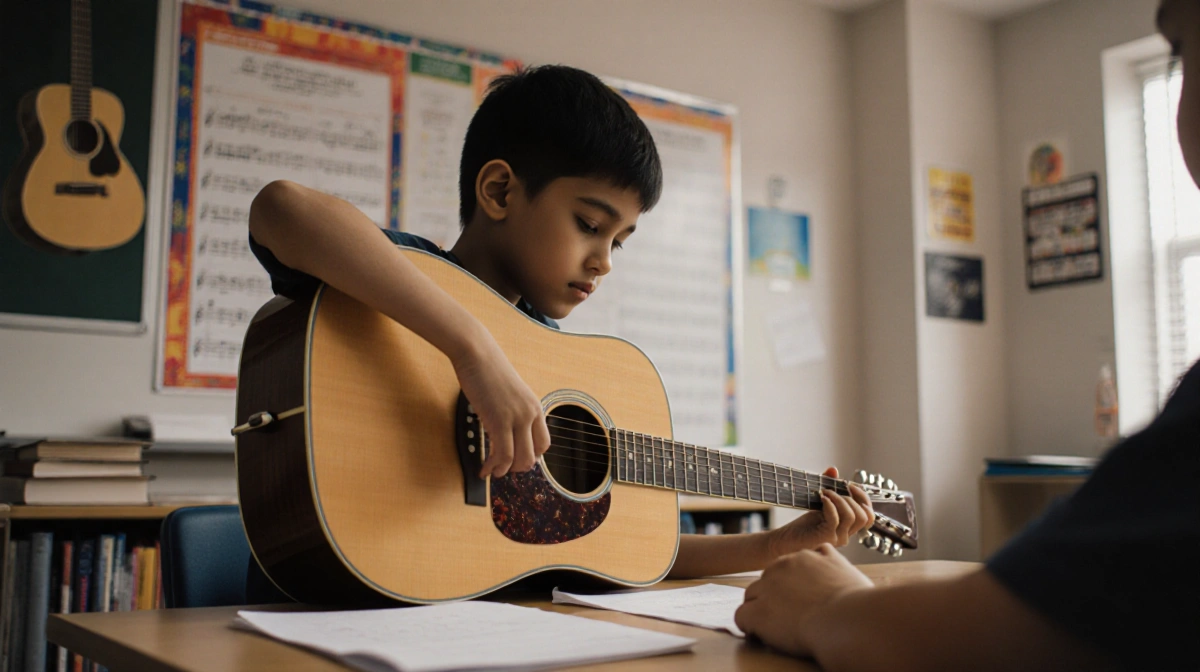
The first classroom program started in a single Austin ISD school. Hinsley observed that while many children wanted to learn guitar, the U.S. lacked a structured curriculum for it. “Music education was built around choir, band, and orchestra, but none of that development had been applied to teaching guitar as a classroom-based endeavor,” he explained.
In 2008 ACG launched a guitar music curriculum that has since been adopted by schools across the nation. The organization now serves 3,500 students and has supplied tens of thousands of instruments.
Innovative Programs for All
ACG’s reach extends beyond traditional grade schools. It established a first-of-its-kind program at the Texas School for the Blind and Visually Impaired and created a life-changing initiative for the state’s juvenile justice system, including the Gardner Betts Juvenile Justice Center in eastern Travis County.
Hinsley described the impact: “They can sit down with other kids in that facility, that is so stark and so cold and so judgment-and measurement-oriented, and every aspect of their lives is based on the worst decision they’ve probably made, and make beauty.”
The Baker Center Transformation
Moving into the Baker Center has allowed ACG to flourish in ways Hinsley never expected. The new space simplifies logistical challenges like storing and shipping dozens of guitars. It also lets the organization increase its adult education provision.
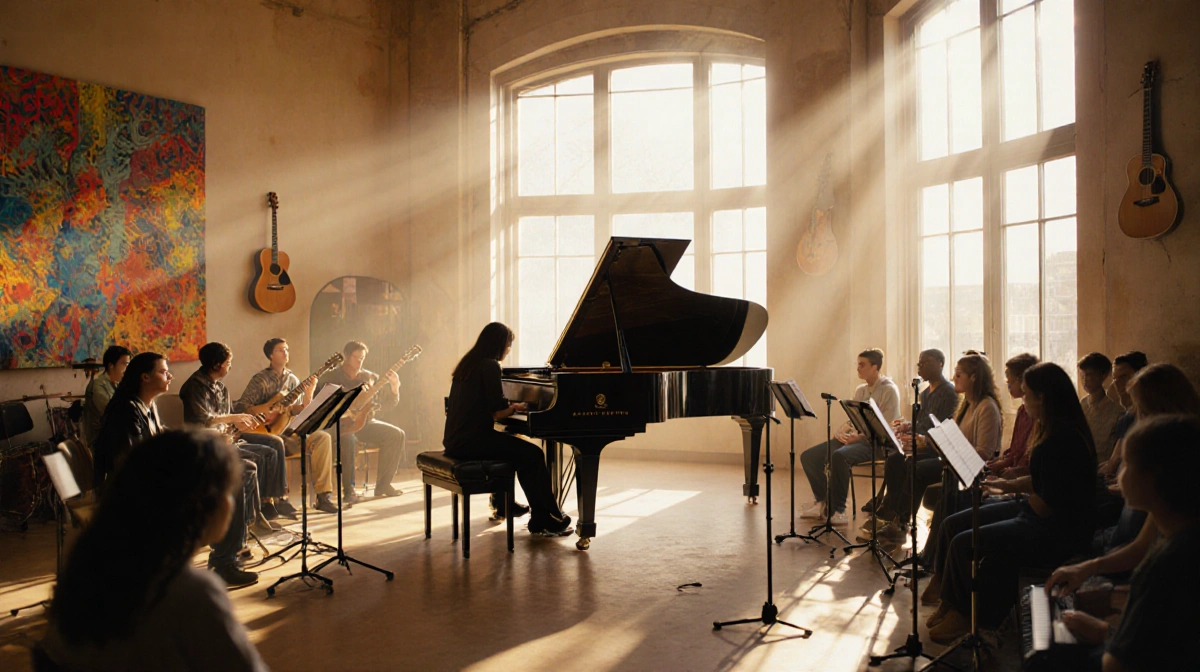
“The biggest boon of their new home is the Rosette performance space, which was converted from the former studios of AISD-TV,” Hinsley said. The space was originally eyed as a production area for the Drafthouse, but after conversations with ACG it became a stage available to arts groups and musicians.
ACG is now one of the few Austin arts institutions with offices and a purpose-built performance space in the same building. Hinsley added, “People walk into this space and they go, ‘Wow.’ Either out loud, or in their eyes, or in their smiles. And in that feeling, there is a sense of possibility.”
Performance Space and Community Impact
The Rosette stage has already hosted local ensembles, community workshops, and ACG’s own performances. Its existence has attracted other arts groups to the Baker Center, creating a vibrant cultural hub.
The new location also aligns with ACG’s goal of making guitar accessible. With a dedicated space, the organization can host more workshops, masterclasses, and community concerts, reaching a broader audience.
Looking Ahead
Hinsley sees the Baker Center as a springboard for future growth. He plans to expand the number of students served, deepen partnerships with schools, and continue outreach to underserved populations.
The organization’s success demonstrates how a focused curriculum and dedicated space can transform music education in a city. As ACG moves forward, it remains committed to turning the guitar into a tool for learning, expression, and community building.
This article appears in January 23, 2026.
A note to readers: Bold and uncensored, News Of Austin has been Austin’s independent news source for over 40 years, expressing the community’s political and environmental concerns and supporting its active cultural scene. Now more than ever, we need your support to continue supplying Austin with independent, free press. If real news is important to you, please consider making a donation of $5, $10 or whatever you can afford, to help keep our journalism on stands.
The News Of Austin‘s first Culture Desk editor, Morgan J. Carter, has reported on Austin’s growing film production and appreciation scene for over a decade. A graduate of the universities of York, Stirling, and UT-Austin, a Rotten Tomatoes certified critic, and eight-time Best of Austin winner, he’s currently at work on two books and a play.