At a Glance
- The Austin Native American Cultural Center is fighting for a permanent home after a planned sale of its current site.
- Workshops have grown since moving into Brooke Elementary, drawing community members to sew regalia for the 33rd Austin Powwow.
- The center also supports Indigenous students after Senate Bill 17 shut down campus diversity spaces.
Why it matters: Indigenous cultural preservation and community empowerment hinge on securing a dedicated space in a city that claims progressiveness.
The Austin Native American Cultural Center has become a lifeline for Indigenous residents in a city that prides itself on inclusion. The center’s community-run sewing workshops, powwow preparations, and student support programs all rely on a stable physical location. Yet a recent announcement from the school district threatens to displace the organization.
From Powwows to Sew Workshops
Growing up in Fort Worth, Lindy Vasquez-Gordineer’s family rarely spoke of their Indigenous heritage. “We were supposed to be hidden about it. It was easier to claim Mexican … because people made fun in school,” she remembered.
Once a year, her father took her to the local powwow in Grand Prairie, where she watched dances that felt “almost magical.” She has attended many powwows but never entered the circle. “I wanted to be in the circle. I wanted to dance,” she said.
Today, Vasquez-Gordineer performs with the Austin Native American Cultural Center’s group at the November Powwow. She recalls her father’s first night watching her as a jingle dancer: “It was very emotional,” she said. “My dad’s a quiet person. Doesn’t talk to anyone. And he actually came out on the dance floor and danced with me.” She added, “I almost cried. It was a really, really proud moment.”
On Jan. 14, during the center’s first weekly Sew Indigenous workshop of the year, she wrapped white yarn around cardboard to create grass dance regalia for her son. “I know what the stories are, what the colors mean now … I’m trying to learn everything, so my future generations don’t lose their culture again,” she emphasized.
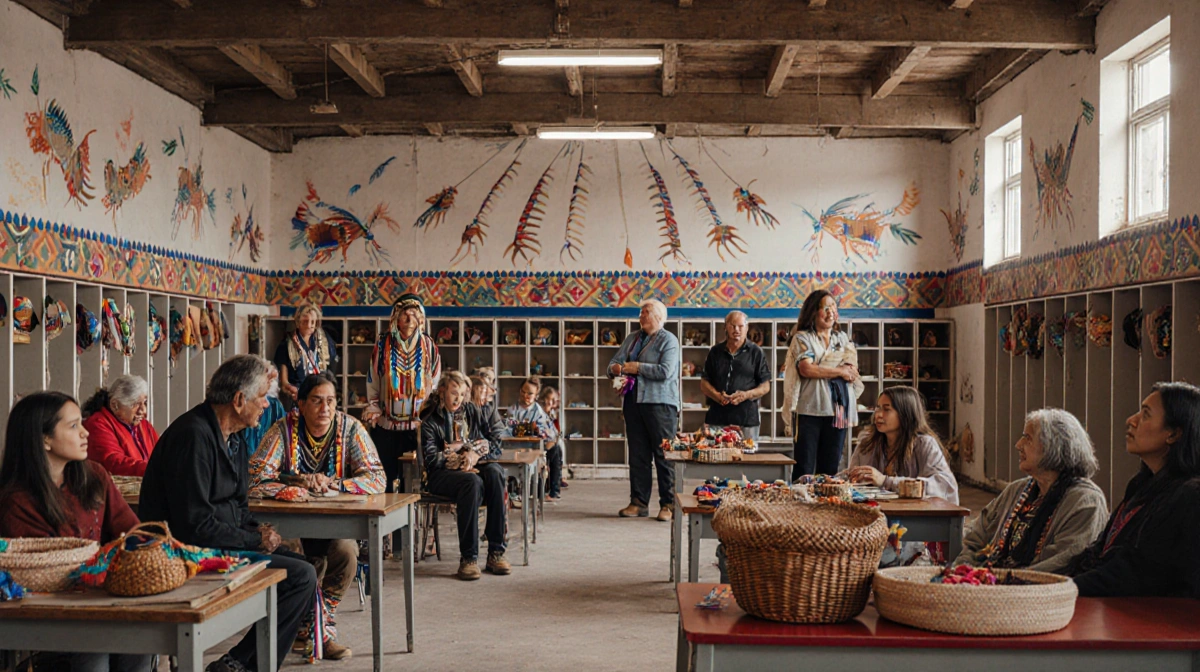
The workshops, held every Wednesday, began almost a year ago. They have expanded from a small, windowless office north of the University of Texas campus to two large classrooms at the former Brooke Elementary school, which the district closed in 2020.
A New Home and a New Threat
In April, the newly dubbed “Native American Cultural Center” moved into the empty Brooke Elementary building. The two large classrooms now feature papered walls and cubbies for belongings. Community members from elders to toddlers fill the space.
The weekly Sew Indigenous workshops swelled after the move, Skye Howell, the organization’s executive director, said. “It was like a dam being removed from a river – it really opened it up for us to be able to grow as a community. We never know how many people are going to show up.”
But the center faces another move. In early December, the district announced its plan to sell the Brooke property and close the deal by August 2026, citing a nearly $20 million budget deficit at a Dec. 10 community meeting. “We thought we’d be here longer,” Howell reflected. “It’s bittersweet. But we grow where we’re planted, right?”
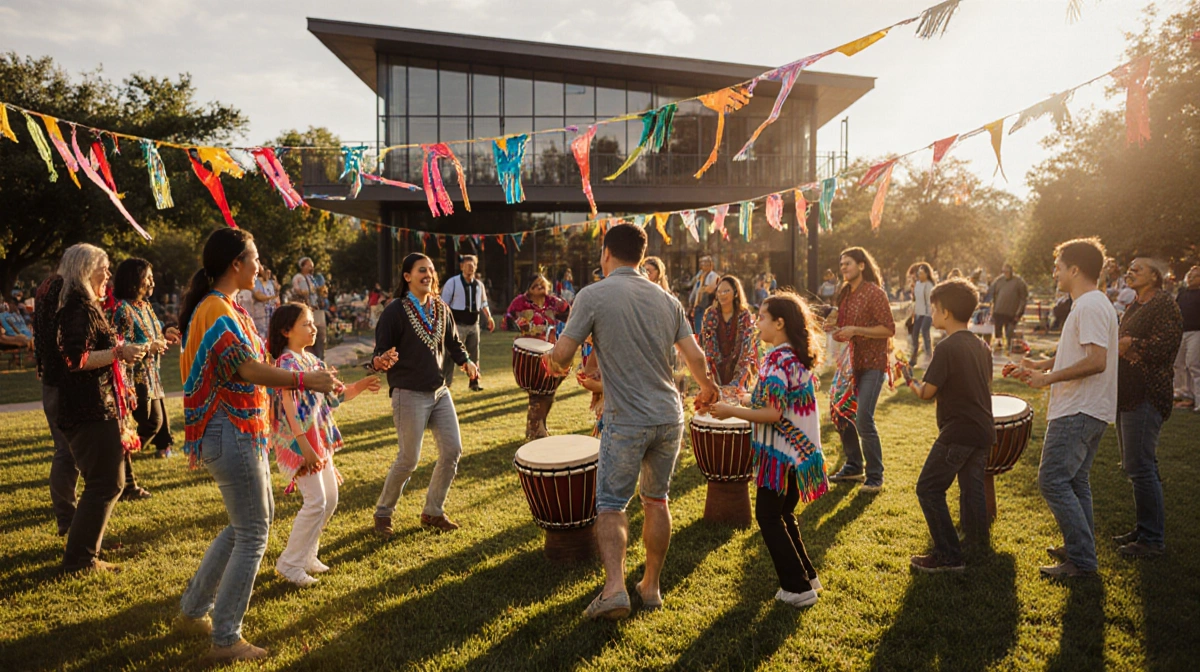
The center also plans to host the 33rd Austin Powwow, which attracts about 15,000 people and generates $300,000 in tourism and hospitality for the city, Howell said.
Despite the growth, Austin’s Indigenous community still lacks a permanent cultural center. “We are the only group that does not have a cultural center designated,” Howell told News Of Austin. “Why do we not? … If you look across Austin planning, we’re invisibilized.”
Community Resilience Amid Policy Changes
The center’s work extends beyond the powwow. Nan Blassingame, a Native fashion designer and creative director, has long imagined weekly gatherings where community members can sew and bead together. “I dreamt of this. I wanted this for our community, a workshop where we could teach sewing and beading,” she said.
Blassingame grew up in Hammon, Oklahoma, within the Cheyenne and Arapaho tribal nations. She started sewing classes at age nine and found the craft therapeutic: “This is really therapeutic to me. I just love to sew and bead … and sometimes I feel it helps with anxiety and depression.”
In January 2024, Senate Bill 17 prohibited all “diversity, inclusion, and equity activities” at the University of Texas. The Native American Indigenous Collective, an Indigenous student-run organization, was told to pack up its office. “It felt like being abandoned,” Raven Price-Smith recalled.
Price-Smith kept the group’s art, unable to pay for a storage unit. She took a semester off for mental health, yet the group continued to hold its first on-campus student powwow that year. “We weren’t gonna cancel anything. We just kept going,” she said.
The Native American Cultural Center has since supported every student powwow, giving the community a reliable space. Price-Smith is now a student intern for the center. She remembers learning to sew a skirt and a jingle dress from Blassingame, which rekindled her dancing after a decade.
Looking Ahead: A Future Cultural Center
The center’s executive director, Skye Howell, is working with City Council and Travis County to secure a fully resourced cultural center. “For us to be the first people of this land and region, and that not to be a priority in a place as progressive as Austin … We want to be recognized,” Howell said.
Options include moving to an active school campus or another affordable, accessible location on a bus line. Howell added, “In Austin, it’s a challenge to find a space that’s affordable, that’s accessible, that’s on the bus line, and again, truly a space where you feel like you belong. Especially for BIPOC organizations, and especially in the current political climate.”
The organization also aims to launch college and career readiness programs for Native AISD students and host art markets to help participants create livelihoods.
Timeline of Key Events
| Date | Event |
|---|---|
| Jan. 14, 2024 | First Sew Indigenous workshop held at the center |
| April 2024 | Center moves into Brooke Elementary |
| Dec. 10, 2024 | School district announces sale of Brooke property |
| Aug. 2026 | Planned closure of Brooke campus |
| Jan. 1, 2024 | Senate Bill 17 takes effect |
Key Takeaways
- The Austin Native American Cultural Center is at risk of losing its home amid a school district sale.
- Community workshops and the 33rd Austin Powwow rely on a stable location.
- Indigenous students have found refuge and support in the center after policy changes shut down campus diversity spaces.
- The center is actively pursuing a new permanent space with city and county partners.
- Securing a dedicated cultural center is essential for preserving Indigenous heritage in Austin.