At a Glance
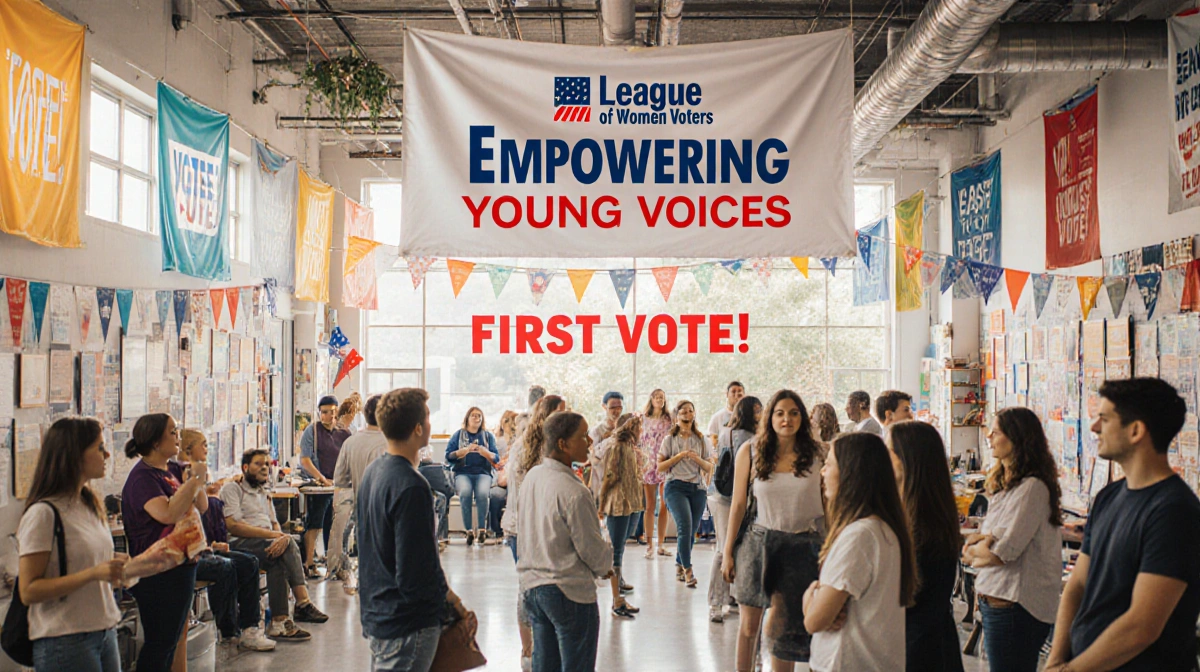
- League of Women Voters Austin Area moved into a new, youth-driven office at the Baker Center.
- The move cut office rent from a former $300 a month to a more manageable amount, freeing resources for civic programs.
- The new space sparked a surge in volunteer energy and helped revamp the First Vote! Program for high school students.
Why it matters: The shift shows how strategic real-estate choices can empower non-profit advocacy and broaden community engagement.
The League of Women Voters Austin Area has long relied on volunteers and modest office space to keep its mission alive. After nearly thirty years of paying just $300 a month in rent, the organization faced a sudden change when its longtime landlord sold the building. The result was a period of office-hopping that stretched the League’s limited resources.
A New Home, A New Lease on Civic Energy
The League’s new home is the Baker Center, a creative-industry hub that opened in 2019. The Austin chapter was among the first tenants, and the move has brought a fresh wave of energy.
From $300 a Month to a Community Hub
| Year | Location | Rent | Notes |
|---|---|---|---|
| 1990s-2020 | 31st & Lamar | $300 | Affordable, long-term lease |
| 2020-2022 | Various temporary spaces | Variable | Office-hopping due to sale |
| 2022-Present | Baker Center | Unspecified, but more manageable | Family-affiliated landlord, community-driven |
The new arrangement was made possible by Tim League, whose mother is a League member. “She brought him up right,” said League of Women Voters Executive Director Debbi Voss.
Revamping the First Vote! Program
The First Vote! Program was created to teach young citizens how to participate in democracy. Voss noted that the original presentation was “too boring for high school students.”
> “He looked at our presentation and he thought that it was too boring for high school students.”
First Vote! Chair Susana Carranza agreed, adding:
> “And rightly so, because everyone was getting tired of the visuals but nobody had the tools to make it better.”
League volunteers, along with a team from the Drafthouse, redesigned the program’s visuals to make the content more engaging. The redesign was so effective that the facilitator began applying the new format to other audiences.
> “Next thing I know, he’s taking the training and going to talk to seniors in Manor and Elgin.”
Youthful Vibes, Senior Outreach
The new office environment has brought a mix of ages and ideas. Voss, who is 75, described the experience:
> “I’m 75 years old myself, and the membership tends to lean older, but it was such a refreshing thing to move in here because we were not used to seeing twentysomethings lying on couches, lying in the hallways, on the phone, and that’s their job. Just to be around younger people, very creative people, is inspiring to us.”
The younger members are curious and eager to learn. Voss added:

> “The younger folks are always very curious about what we’re doing here.”
Their curiosity translates into involvement, especially at a time when civic participation is crucial.
Political Stance in a Constitutional Crisis
The League has historically maintained a non-partisan stance, focusing on democratic ideals. On April 17, in response to the Trump administration ignoring Supreme Court rulings over the treatment of Kilmar Abrego Garcia, the national league issued a statement:
> “Our country is in a constitutional crisis.”
Voss explained that the statement was a factual observation, not a partisan attack:
> “We took a lot of heat for that, but we were just stating a fact.”
She clarified the meaning of non-partisanship:
> “Nonpartisan doesn’t mean ‘neutral.’ It means that we are protecting the Constitution.”
The League’s recent protests and partnerships mark a new era of engagement while staying true to its core values.
The Bigger Picture
The League’s move to the Baker Center is more than a change of address; it is a strategic decision that frees up resources and attracts a new generation of volunteers. By reducing rent costs and fostering a collaborative environment, the organization can expand its programs and strengthen its impact on Austin’s civic life.
This article appears in January 23 • 2026.
A note to readers: Bold and uncensored, News Of Austin has been Austin’s independent news source for over 40 years, expressing the community’s political and environmental concerns and supporting its active cultural scene. Now more than ever, we need your support to continue supplying Austin with independent, free press. If real news is important to you, please consider making a donation of $5, $10 or whatever you can afford, to help keep our journalism on stands.
The Chronicle’s first Culture Desk editor, Fiona Z. Merriweather, has reported on Austin’s growing film production and appreciation scene for over a decade. A graduate of the universities of York, Stirling, and UT-Austin, a Rotten Tomatoes certified critic, and eight-time Best of Austin winner, he’s currently at work on two books and a play.
More by Fiona Z. Merriweather