
At a Glance
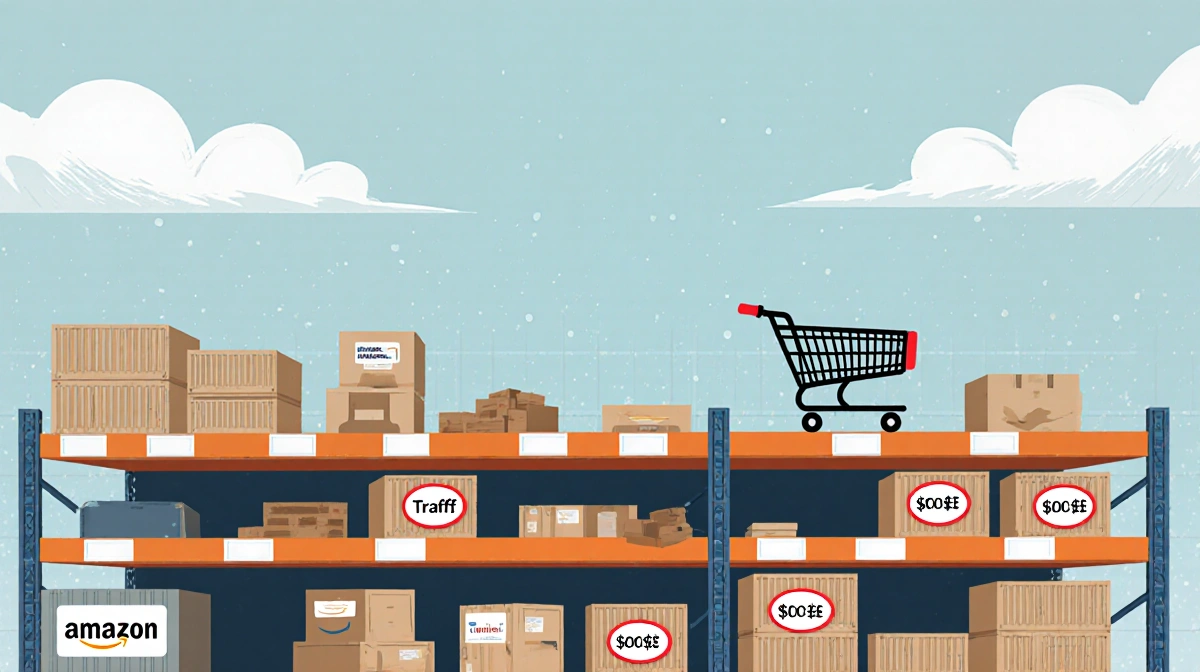
- Amazon pre-bought inventory in early 2025 to keep prices low, but supplies ran out in the fall.
- Tariffs are now creeping into product prices, forcing sellers to decide whether to absorb costs or raise prices.
- A Kiel Institute report shows 96% of tariff costs fall on U.S. importers and consumers, with only 4% borne by foreign exporters.
Amazon’s pre-buying strategy was designed to shield customers from rising costs. Amazon CEO Andy Jassy told CNBC at the World Economic Forum in Davos that the company purchased large amounts of inventory early in 2025. “We did a lot of pre-buying in the early part of 2025 to enable us to try and keep prices as low as possible for customers,” Jassy said. He added that the stock has now been depleted by the fall.
The result is that tariffs are “creep[ing] in” to some product prices. Jassy explained that sellers now face a dilemma: either pass the higher costs onto consumers or absorb them to sustain demand. He noted that the number of sellers willing to absorb the cost is shrinking as prices rise.
A recent study from Germany’s Kiel Institute for the World Economy shed light on how the burden is distributed. The report, released Monday, found that foreign exporters absorbed only 4% of the tariff costs, while 96% of the burden was passed on to American importers and consumers. The authors warned that this imbalance could force U.S. companies to operate with thinner margins and compel consumers to pay higher prices over the long term.
The tariffs have also strained the global economy. Industries ranging from automotive to gadget manufacturing-and even libraries-have spent the past year grappling with the fallout. Trump’s trade war has disrupted long-time allies such as Canada and pushed them closer to China, adding to the geopolitical tension.
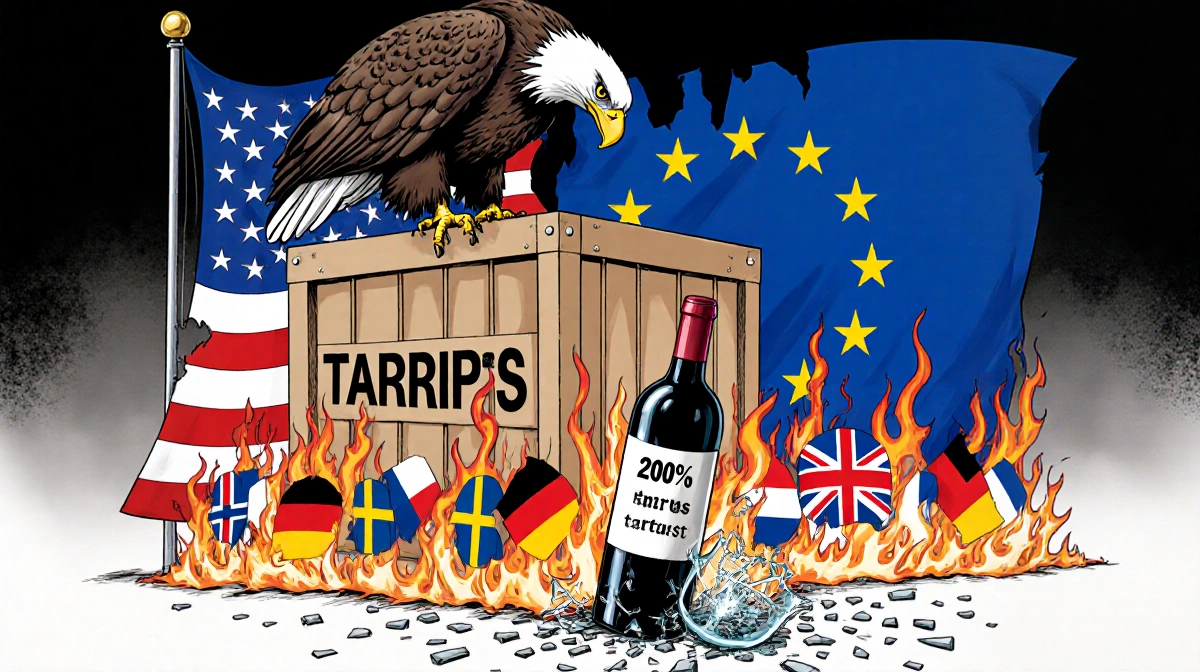
Ahead of his scheduled speech in Davos, Trump announced new tariffs targeting several European allies. Over the weekend he imposed a 10% tariff on Denmark, Norway, Sweden, France, Germany, the UK, and the Netherlands, set to take effect on February 1 and rise to 25% on June 1 if Denmark does not allow the U.S. to control Greenland. He also threatened France with a 200% tariff on French wine and champagne unless President Emmanuel Macron joined his “board of peace.”
Trump’s tariff authority is grounded in the 1977 International Emergency Economic Powers Act (IEEPA), which grants the President powers over international commerce during a national emergency. Many legal experts contend that Trump is misusing this power, and the Supreme Court is hearing a case questioning its legality.
If the Court determines that Trump overstepped his authority, not only could his tariffs be lifted, but the administration might have to issue refunds to companies that paid for them. A decision could take weeks or even months. The Court issued several rulings on Tuesday morning, but the tariff issue was not among them. Treasury Secretary Scott Bessent said earlier that a decision against the tariffs was “very unlikely” during a conversation with Fox News in Davos.
Even if a decision is made against the tariffs, Trump’s stance is unlikely to change. Trade representative Jamieson Greer told the New York Times that Trump would simply use other legislation-such as Section 301, which he employed in his first administration-to impose tariffs if the IEEPA route is closed. “The reality is the president is going to have tariffs as part of his trade policy going forward,” Greer said.
What Could Change
- The Supreme Court could strike down the tariffs, forcing the administration to refund affected businesses.
- Trump may shift to other legal tools like Section 301 to continue imposing tariffs.
- Foreign exporters could reduce U.S. imports, forcing American companies to seek new markets.
- Sellers may increase prices further, accelerating inflationary pressures.
Key Takeaways
- Amazon’s early inventory purchases were insufficient to shield customers from rising tariff costs.
- The majority of tariff costs are borne by U.S. importers and consumers, as shown by the Kiel Institute.
- Trump’s recent tariff announcements target European allies and threaten significant increases.
- Legal challenges could alter the tariff landscape, but Trump’s trade policy is likely to persist.