
At a Glance
- Trump’s first year of executive orders reversed key climate policies, revived coal, and pulled the U.S. from the Paris Agreement.
- The administration rolled back tax credits for wind, solar, and electric vehicles, and lifted bans on offshore drilling.
- These moves threaten to undo decades of progress and could be undone by a future administration.
Why it matters: The reversal of environmental safeguards shows how fragile U.S. climate policy can be when tied to a single administration.
—
The first year of President Donald Trump’s administration was marked by a series of executive orders that reversed many of the environmental protections enacted under the previous administration. These actions signaled a new focus on fossil fuels and a retreat from international climate commitments.
Executive Orders and Immediate Actions
Trump’s first executive order declared a national energy emergency, fulfilling a campaign promise to “drill, baby, drill.” Subsequent orders:
- Revitalized America’s coal industry with a $625 million Interior Department investment.
- Eliminated subsidies for electric vehicles approved by Congress.
- Loosened regulations for domestic fossil-fuel producers.
- Withdrew the U.S. from the Paris Agreement and the United Nations framework for climate cooperation.
- Reopened U.S. coastlines to drilling and killed a climate-jobs training program.
- Closed off millions of acres of federal water earmarked for offshore wind.
- Scrubbed climate-change references from some federal agency websites.
These orders collectively represented the most comprehensive shift in the executive branch’s environmental priorities in U.S. history.
The Big Beautiful Bill and Tax Credit Rollbacks
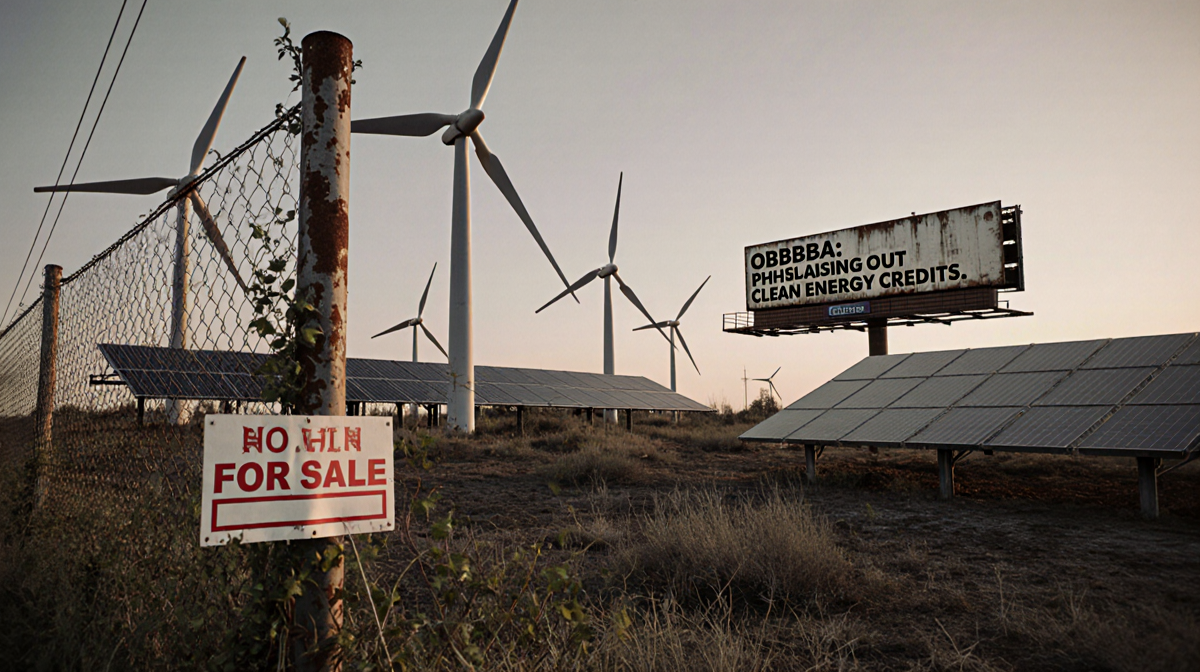
The administration pushed Congress to pass the Big Beautiful Bill Act (OBBBA), which phases out tax credits for wind, solar, electric vehicles, and other decarbonization tools. The bill’s rollbacks forced some companies to abandon new clean-energy projects. While the OBBBA preserved credits for nuclear and geothermal power, it eliminated incentives that had driven recent growth in renewable energy.
> “He is not changing law,” said Elaine Kamarck, former Clinton-era official and founding director of the Brookings Institution’s Center for Effective Public Management. “He is changing practice.”
The OBBBA’s subtractive nature-removing incentives rather than adding new ones-reflects a strategy to counteract President Biden’s climate legacy.
Impact on Fossil Fuel Industries
The EPA delayed a requirement that oil and gas operators reduce methane emissions for a full year, allowing the sector to postpone costly compliance. The Interior Department’s $625 million investment targeted the reopening of a Michigan coal plant on the verge of closure.
> “It has been an extraordinarily destructive year,” said Rachel Cleetus, climate and energy policy director at the nonprofit Union of Concerned Scientists.
Trump also signed an executive order to reinvigorate America’s beautiful clean coal industry, granted coal-fired power plants temporary exemptions from emissions limits, and ended a federal moratorium on coal leasing. These actions provide short-term relief but are unlikely to reverse the long-term decline of coal, which is driven by economics and competition from natural gas and solar.
Climate Policy Reversals and International Commitments
The administration’s withdrawal from the Paris Agreement and severing of ties with the United Nations framework removed the U.S. from the global climate-change coordination mechanism. The U.S. also reopened coastlines to drilling and imposed a blanket ban on offshore wind leases, labeling the industry as “so pathetic and so bad.”
> “We like to point out that the baseload clean energy credits were maintained,” said Luke Bolar, head of external affairs and communications at ClearPath.
Sean Casten, a Democratic U.S. Representative from Illinois, noted that the goal of ensuring cost-competitive clean energy has largely been achieved, even with parts of the law repealed.
> “Every single zero-carbon power source … is still cheaper on the margin than a fuel energy source,” he said.
Legal and Regulatory Consequences
The EPA’s relinquishment of authority to regulate emissions-an agency mission core to protecting human health-could be challenged in court. Even if deemed legal, future administrations could undo these actions in a similar fashion.
> “You can’t make up for the lost time, the increased emissions, and the extent that new areas are opened up for [fossil fuel] exploration,” said Michael Burger, executive director of the Sabin Center for Climate Change Law at Columbia University.
The OBBBA’s tax-credit rollbacks, however, would require new congressional legislation to restore incentives, making the changes more permanent.
Expert Commentary
- Josh Freed, senior vice president for climate and energy at Third Way, said the administration’s focus on political dominance over lasting change explains the fragility of its policy moves.
- Sean Feaster, energy analyst at the Institute for Energy Economics and Financial Analysis, warned that government intervention signals an industry that is not competitive.
> “When you have to get the government to step in to put its thumb on the scale in order to help your industry, it’s a sign that you’re not particularly competitive, right?” he told colleagues.
What It Means for the Future
Trump’s climate blitzkrieg illustrates the pendulum swing of U.S. climate policy. While the administration’s actions may create short-term headlines, they are unlikely to leave a lasting legacy. Future presidents will have the opportunity to reverse these moves, but the damage to momentum and trust in environmental governance may endure.
—
Key Takeaways
- Executive orders reversed major climate protections and revived coal.
- The OBBBA rolled back tax credits for renewables, preserving only nuclear and geothermal.
- EPA’s regulatory rollbacks could be undone by future administrations, but the OBBBA’s changes require new congressional action.
- Experts warn that the policy shift reflects political strategy more than sustainable energy planning.
—
This article originally appeared in Brianna Q. Lockwood.