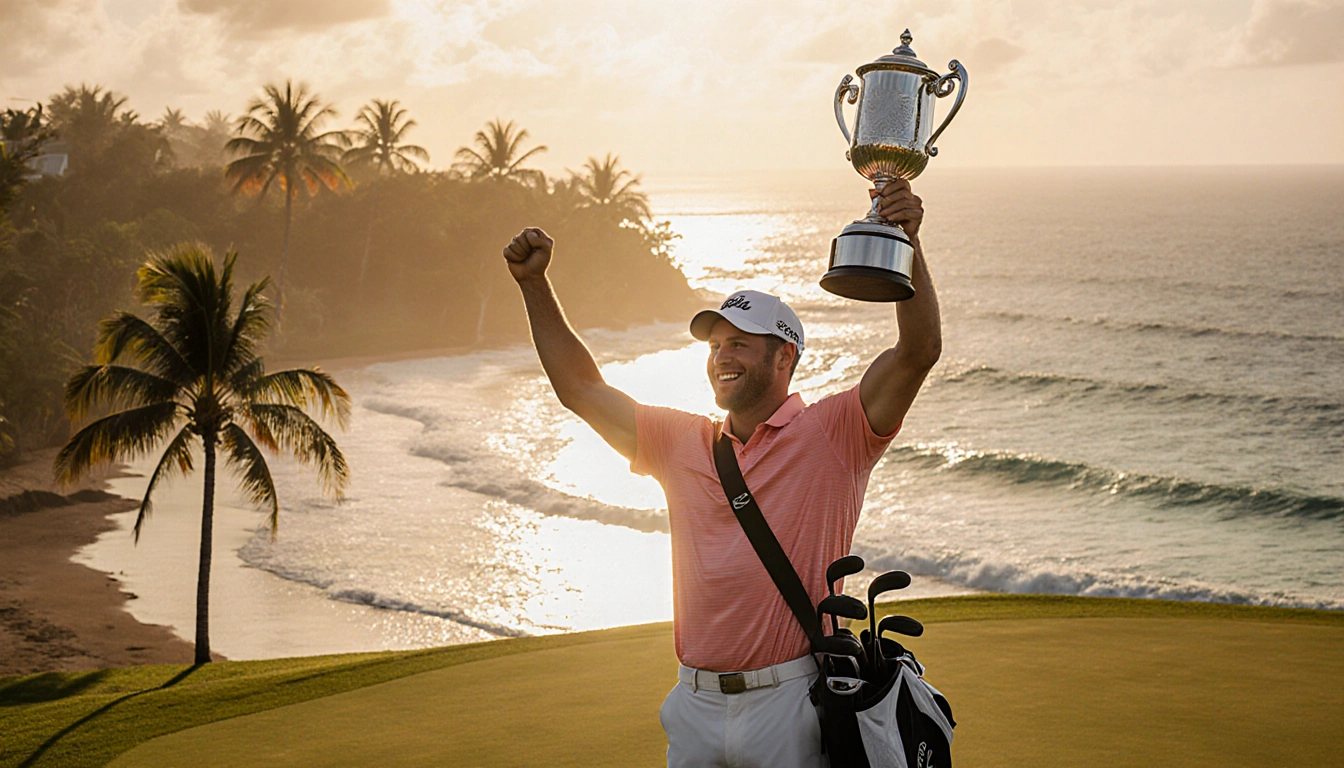
Ryan Gerard’s 10,000-mile journey to Mauritius proved worth every mile. The Australian golfer entered the co-sanctioned Mauritius Open while ranked No. 57 in the world. He needed a top-four finish to move into the top 50 of the Official World Golf Ranking. Gerard finished runner-up, losing a playoff to Jayden Schaper after a fourth-place finish. His performance propelled him into the top 50, securing a Masters invitation. The result also added a new name to the list of 86 players likely to compete. Gerard’s drive underscores the global nature of the ranking system. His achievement highlights the importance of international events for Masters qualification.
With Gerard added, the Masters field now stands at 86 players likely to compete. The roster includes high-profile names such as Tiger Woods, who has yet to confirm his participation. The total remains below the 100-player cap that the tournament has maintained since 1966. The field includes seasoned champions and emerging talent, reflecting the diversity of the sport. The list is still subject to last-minute changes based on final rankings. However, the current count suggests a tightly controlled field that the Masters organizers aim to preserve.
Players can still earn invitations by winning a PGA Tour event-excluding opposite-field tournaments-or by finishing in the top 50 a week before the Masters. The final world ranking will be released a week later, but the OWGR has already projected the top 50. Sam Stevens is expected to finish at No. 50, narrowly ahead of Taylor Pendrith of Canada. The projected rankings confirm that 13 additional players will qualify through the year-end list. The remaining spots will be filled by winners of national opens and other qualifying criteria. The timing of the final ranking release ensures that all players have a clear deadline to improve their standings. The system balances performance on the PGA Tour with global ranking points.
Alex Noren, ranked No. 11, is the highest-ranked player not already eligible, thanks to two victories in England, including the BMW PGA Championship at Wentworth. Kristoffer Reitan of Norway captured the Nedbank Golf Challenge, adding to his world ranking points. Michael Kim of France won the French Open, while Sami Valimaki of Finland triumphed at the RSM Classic. Michael Brennan of the United States secured the Utah Championship, further boosting his position. These fall titles helped each player secure a spot in the top 50. Additional players set to finish inside the top 50 include Aaron Rai, Max Greyserman, Rasmus Hojgaard, Min Woo Lee, Si Woo Kim, and Johnny Keefer. Si Woo Kim finished third at the Australian Open, earning enough points to move into the top 50. The combination of European and American events demonstrates the global spread of qualifying opportunities. These players illustrate the depth of talent competing for Masters berths.
Brennan and Keefer represent unique cases. Brennan spent most of 2025 on the PGA Tour Americas circuit, winning three events and recording nine other top-10 finishes before receiving a sponsor exemption to the Bank of Utah Championship. He won his first PGA Tour title there, moving him into the top 50. Keefer, a Korn Ferry Tour player, secured two victories that allowed him to break into the top 50 and maintain his position. Both players used lower-tier tours as stepping stones to reach the Masters qualification threshold. Their journeys highlight the flexibility of the ranking system. Brennan’s success on the Americas circuit demonstrates the opportunities available outside the main PGA Tour. Keefer’s performance on the Korn Ferry Tour shows that strong play in developmental tours can translate into world ranking gains. Their inclusion in the Masters field underscores the diverse pathways to the championship.
The Masters has altered its qualification criteria this year, removing invitations to FedEx Cup Fall events and replacing them with national opens worldwide. Rasmus Neergaard-Petersen of Denmark earned a spot by winning the Australian Open, while Marco Penge of Spain qualified through the Spanish Open. Tom McKibbin of LIV Golf secured a berth by winning the Hong Kong Open. These changes reflect a shift toward rewarding success in international tournaments. The tournament remains focused on keeping the field under 100 players, a target it has met since 1966. The new criteria broaden the geographic representation of the field. They also align with the Masters’ tradition of inviting winners of major national championships. The adjustments aim to balance the prestige of the event with inclusivity.
Tiger Woods has not played a tournament in 2025, first due to a ruptured Achilles tendon and then a seventh back surgery. His recovery is close to allowing him to play, and he is likely to be healthy enough before the Masters. Woods’ potential participation remains a key uncertainty as the field solidifies. The absence of a player of Woods’ stature could impact the tournament’s viewership and competitive dynamics. His status is monitored closely by fans and analysts alike. The Masters organizers are preparing for both scenarios, with or without Woods in the field. His decision will be announced closer to the tournament date.
There are 12 main PGA Tour events scheduled before the Masters, running from April 9 to 12, with four of those being major tournaments that will already determine eligibility for most of the field. The final world ranking will be published a week after the last event, cementing the list of 86 players. Players still on the cusp can improve their standings in the remaining tournaments to secure a Masters berth. The schedule includes events that offer significant ranking points, such as the PGA Championship and the U.S. Open. Performances in these majors will directly influence the final top 50 list. The timing of the ranking release ensures that all players have a clear deadline to improve their standings. The system balances performance on the PGA Tour with global ranking points. Players who excel in these events may leapfrog others in the rankings. The Masters field will be finalized shortly after the final ranking publication.
Key Takeaways
- Ryan Gerard secures a Masters spot after a runner-up finish in Mauritius.
- The field is poised at 86 players, with Tiger Woods yet to confirm participation.
- New qualification rules favor national opens over FedEx Cup Fall events.
- Alex Noren remains the highest-ranked non-eligible player at No. 11.
- Kristoffer Reitan, Michael Kim, Sami Valimaki, and Michael Brennan secured fall titles that moved them into the top 50.
- Brennan and Keefer used lower-tier tours to reach the Masters qualification threshold.
- Rasmus Neergaard-Petersen, Marco Penge, and Tom McKibbin earned berths through national opens.
- The Masters field will stay under 100 players, a target maintained since 1966.
- Final rankings will be released a week after the last PGA Tour event, solidifying the lineup.
As the Masters approaches, the convergence of ranking projections, new qualification criteria, and player recoveries will shape the final lineup. Fans can expect a competitive field that balances seasoned champions with emerging talent. The tournament’s organizers remain vigilant as the last rankings are published and players confirm their participation.