
A silver steward at the Élysée Palace has been arrested for stealing priceless silverware.
The theft, which involved items of table service worth thousands of euros, was uncovered this week.
Three men will stand trial next year as the investigation continues.
The case has drawn attention to security protocols at France’s presidential residence.
The silver steward was accused of taking silverware and table service from the official residence.
Investigators say the items were removed without permission and hidden for later sale.
The disappearance was reported by the Élysée Palace’s head steward.
The head steward’s report triggered a swift police response.
The head steward documented the loss and forwarded details to the prosecutor’s office.
He noted that the missing items were part of the palace’s national heritage collection.
His report included a preliminary estimate of the value of the stolen goods.
This estimate guided the initial scope of the investigation.
Officials estimate the loss to range between 15,000 and 40,000 euros.
In dollars, this translates to approximately $17,500 to $47,000.
The wide range reflects the difficulty in appraising antique silverware.
The valuation is critical for determining the severity of the charges.
The Sèvres Manufactory supplied most of the furnishings at the Élysée Palace.
It identified several missing items by cross-referencing online auction listings.
The manufactory’s records helped narrow the list of potential suspects.
Their cooperation was essential in locating the stolen pieces.
Investigators searched popular auction websites for the missing silverware.
They found listings that matched the description of the stolen items.
These online postings provided evidence linking the theft to specific individuals.
The discovery underscored the role of digital marketplaces in art theft investigations.
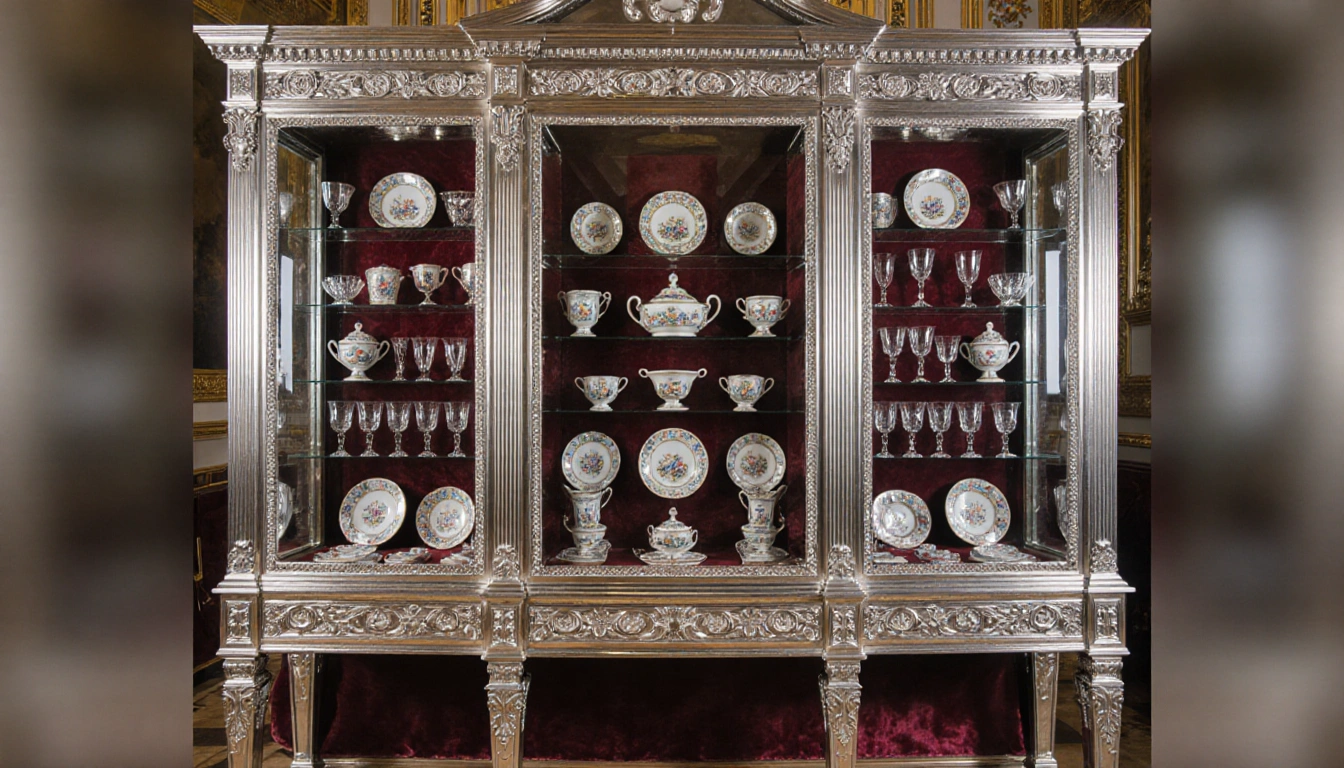
Suspicions fell on one of the silver stewards working at the palace.
His inventory logs suggested he had access to the stolen items.
The logs also hinted at possible future theft plans.
These findings prompted a deeper inquiry into his background.
The steward’s inventory records showed irregularities that raised alarms.
They indicated that he had moved silverware in a manner inconsistent with normal duties.
Such anomalies are red flags for potential theft.
The police used this data to focus their surveillance efforts.
Further investigation revealed the steward was in a relationship with a manager.
The manager runs a company specializing in online sales of objects.
Their partnership raised questions about how stolen goods might be marketed.
The relationship became a key element of the case.
Investigators accessed the steward’s Vinted account during their probe.
The account contained a plate stamped with “French Air Force” and “Sèvres Manufactory.”
It also held ashtrays not available to the general public.
These items suggested a deliberate attempt to conceal the theft.
The plate and ashtrays were unique to the French Air Force and Sèvres.
Such exclusivity indicated that the steward had special knowledge of the items.
The presence of these pieces on a public marketplace was suspicious.
They helped confirm the steward’s involvement in the theft.
Around 100 objects were recovered during the investigation.
They were found in the steward’s personal locker, vehicle, and home.
The items ranged from everyday silverware to high-value collectibles.
Their discovery was a major breakthrough for law enforcement.
Recovered pieces included copper saucepans, Sèvres porcelain, a René Lalique statuette.
Baccarat champagne coupes were also among the recovered goods.
These items are valued for both their material and historical significance.
Their return to the Élysée Palace restored part of the lost heritage.
The steward and two associates were arrested on Tuesday.
Their arrests were carried out by the Paris police.
The police cited evidence of possession and intent to sell stolen goods.
The arrests were part of a broader effort to prevent further thefts.
Investigators identified a single receiver of the stolen goods.
The receiver was believed to have facilitated the sale of the items.
He was not present during the initial arrests.
His involvement added another layer to the legal proceedings.
The recovered items were promptly returned to the Élysée Palace.
The palace’s security team verified the authenticity of the pieces.
This step helped restore confidence in the residence’s protection.
The return also served as evidence for the court case.
The three suspects appeared in court on Thursday.
They faced charges of jointly stealing movable property listed as national heritage.
The court session highlighted the seriousness of the offense.
The defendants were represented by legal counsel.
The offense carries a maximum penalty of ten years in prison.
A fine of 150,000 euros is also imposed for the crime.
Additionally, the defendants face charges of aggravated handling of stolen goods.
These penalties reflect the gravity of theft from a presidential residence.
The trial was postponed to February 26.
The delay allows prosecutors to gather additional evidence.
It also ensures that all witnesses can be properly prepared.
The new date reflects the court’s commitment to thorough proceedings.
The defendants were placed under judicial supervision.
They are banned from contacting each other during the trial.
They are also prohibited from appearing at auction venues.
Furthermore, they are barred from engaging in their professional activities.
Key Takeaways
- A silver steward was arrested for stealing thousands of euros worth of silverware from the Élysée Palace.
- Over 100 stolen items were recovered, including rare porcelain and luxury glassware.
- The case will be tried next year, with defendants facing up to ten years in prison and a €150,000 fine.
The investigation illustrates the vulnerability of even the most secure institutions to insider theft.
Law enforcement’s swift response and detailed evidence gathering have set a precedent for future cases.
The outcome of the trial will signal how France protects its national heritage.