
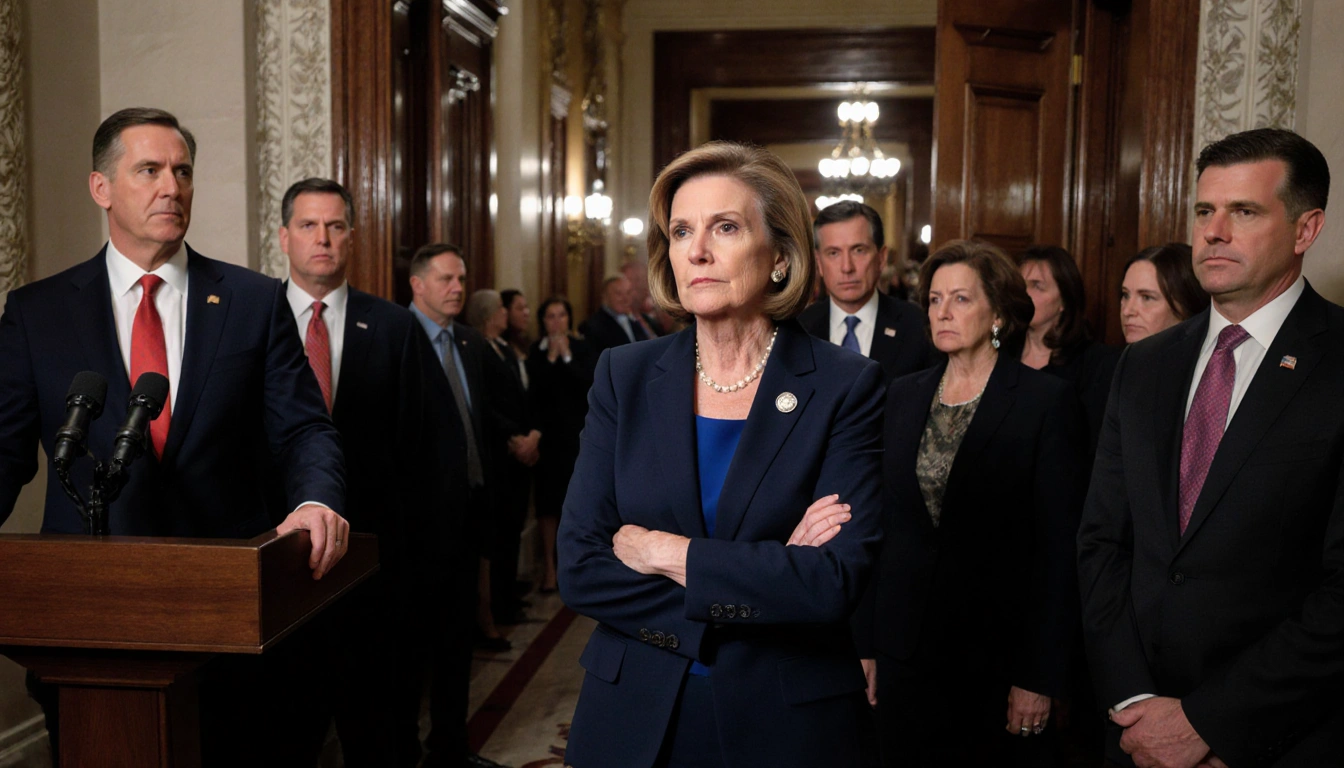
On Tuesday, a surprise decision by Speaker Mike Johnson set off a firestorm among moderate Republicans, threatening to derail the GOP’s health-care agenda.
Background on Johnson’s Backtrack
Johnson had just backtracked on a plan to hold a vote this week on extending Affordable Care Act subsidies, a move that had been promised to moderates when Republican leaders unveiled a partisan health-care package on Friday.
Moderates Lash Out
Moderates lashed out, accusing leadership of political malpractice. Rep. Mike Lawler (R-N.Y.) said refusing to allow a vote was “political malpractice.” He added, “I am p—ed for the American people. This is absolute bulls—,” Lawler said.
Tense Lunch Meeting
Hours later, the anger culminated in a tense lunch meeting in a subterranean chamber of the Capitol. Raised voices spilled outside as members of the Republican Governance Group confronted Johnson over the amendment vote. Rep. Nicole Malliotakis (R-N.Y.) said, “It’s a frustration from members who feel that we have a good compromise solution here to address a real problem, and that leadership is shutting it down.”
Speaker Reverses Again
Johnson had made clear his opposition to the subsidies, yet after the meeting he reversed course yet again, indicating there were “ideas on the table that could work.”
Kevin Kiley’s Comment
Kevin Kiley (R-Calif.) echoed, “There’s unfortunately been a lack of leadership on this issue,” and added, “The idea just seemed to dawn on leadership … like, in December, [and it] doesn’t actually address the crisis that is coming on Dec. 31.”
Malliotakis on Policy
Malliotakis also said, “We don’t want to stop good policy from advancing because we’re not getting everything that we want. Does it make the current situation better … yes. Do we think it’s enough? Could we go further? We believe yes, because we have this bipartisan bill that is, I think, a better solution,” Malliotakis said.
Amendments to Rules Committee
Before the meeting, moderates had submitted multiple amendments to the House Rules Committee to extend the subsidies in some fashion, including versions that offset the substantial costs that had been a roadblock over the weekend.
Chip Roy’s Criticism
Rep. Chip Roy (R-Texas), a prominent member of the House Freedom Caucus and a Rules Committee member, criticized the last-minute amendment effort. He said, “Throwing a last-minute amendment in there that I haven’t really looked at is not something I’m really supportive of.”
Rules Committee Decision
Despite the moderates’ confidence heading into the hearing, the Rules Committee did not place any of their amendments in order. Even if a vote had been granted, the amendment would have faced opposition from conservatives who are staunchly opposed to ObamaCare and the enhanced subsidies, and a Democratic vote would have turned it into a poison pill for the overall GOP health-care package.
GOP Health-Care Package
The GOP health-care package, expected to hit the floor Wednesday, is a grab-bag of smaller reforms favored by Republicans. It does not address the enhanced subsidies that expire at the end of the month, nor does it include funding for health savings accounts, a major GOP priority.
Moderates’ Voting Intent
Nonetheless, moderates said they still intend to vote for the GOP health bill on Wednesday even if they did not get an amendment vote on the subsidies. Rep. Nick LaLota (R-N.Y.) said, “All we ask for is a vote.” Lawler added, “I’m not against the basis of the bill. I’m not going to vote against something out of spite.”
Discharge Petitions
Moderates also dismissed the prospect of signing on to a discharge petition led by House Minority Leader Hakeem Jeffries (D-N.Y.) to extend the subsidies as-is for three years. All Democrats have signed that petition, and it would need signatures from four Republicans to force GOP leadership to bring it to the House floor.
Bipartisan Alternatives
Instead, they argued that Jeffries should support one of their bipartisan proposals. Rep. Brian Fitzpatrick (R-Pa.) is leading a discharge petition to extend the subsidies for two years paired with some eligibility reforms that has support from 13 Republicans and 12 Democrats. Rep. Josh Gottheimer (D-N.J.) is leading another bipartisan proposal to extend the subsidies for one year with less stringent changes to eligibility that has support from 12 Republicans and 29 Democrats.
Jeffries and Moderates
Rep. David Valadao (R-Calif.), chair of the Republican Governance Group, said, “Jeffries said himself the other day on CNN that Democrats and Republicans need to work together,” adding, “There’s two discharge petitions now with bipartisan support, and he’s expecting us all to just fold and sign on to his. And I think he’s making a mistake.”
Kiggans and the Petition
Rep. Jen Kiggans (R-Va.), one of the lead advocates for extending the subsidies, will not sign the Jeffries discharge petition, according to a source familiar with her thinking. Some moderate members, like Kiley and Fitzpatrick, have declined to completely rule out the Jeffries petition. Kiley said, “I haven’t wrote anything out,” “But I view that very negatively, because he could, you know, come out and endorse one of these compromise measures, and that would get it over the line.”
Deadline Pressure
With the deadline for ACA plans approaching-Monday for coverage beginning Jan. 1 and Jan. 15 for plans starting Feb. 1-moderates are navigating a tight window. They are united in their desire to extend subsidies temporarily while opposing a full repeal, a stance that pits them against GOP leaders and their conservative wing. The GOP’s dilemma has sharpened as the midterms loom, forcing the conference to choose between preserving a law they have opposed for 15 years or risking a spike in costs for millions of Americans.
Key Takeaways
- Speaker Johnson’s last-minute reversal on ACA subsidies ignited a backlash among GOP moderates.
- Moderates have submitted amendments to extend subsidies, but the Rules Committee rejected them and the GOP health-care package does not cover the subsidies.
- Moderates plan to vote for the GOP health bill on Wednesday while pursuing bipartisan discharge petitions to extend subsidies.
Closing

Ultimately, the clash between moderates and hard-liners over the ACA subsidies underscores the GOP’s struggle to unite on health-care policy ahead of the 2026 midterms.