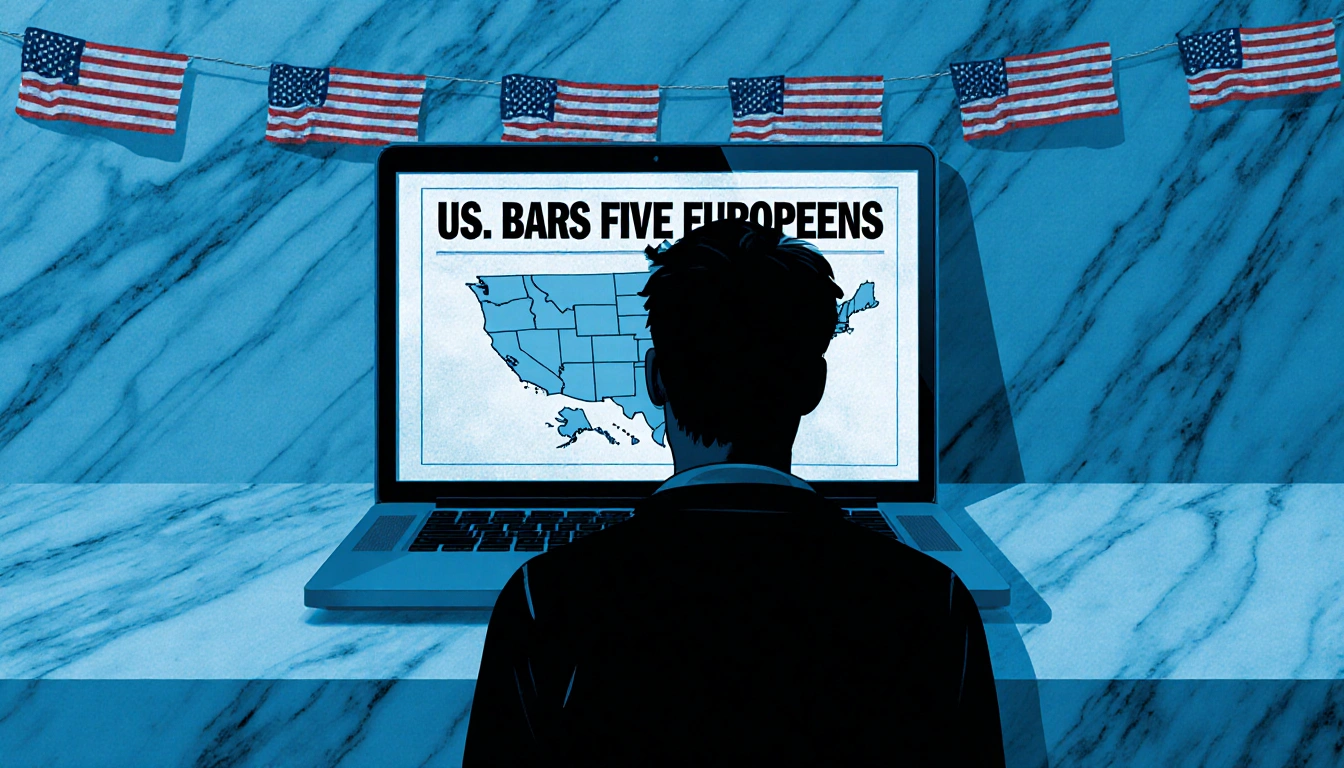
The State Department announced Tuesday it would bar five European citizens from entering the United States because they allegedly led campaigns to pressure U.S. tech firms to censor American viewpoints.
A New Visa Policy Targets Censorship
In May, the Trump administration unveiled a visa policy designed to restrict foreigners deemed responsible for censorship of protected speech in the United States. The policy is part of a broader effort to counter foreign influence over online speech, and it uses immigration law instead of platform regulations or sanctions.
Rubio Calls Out “Radical” Activists
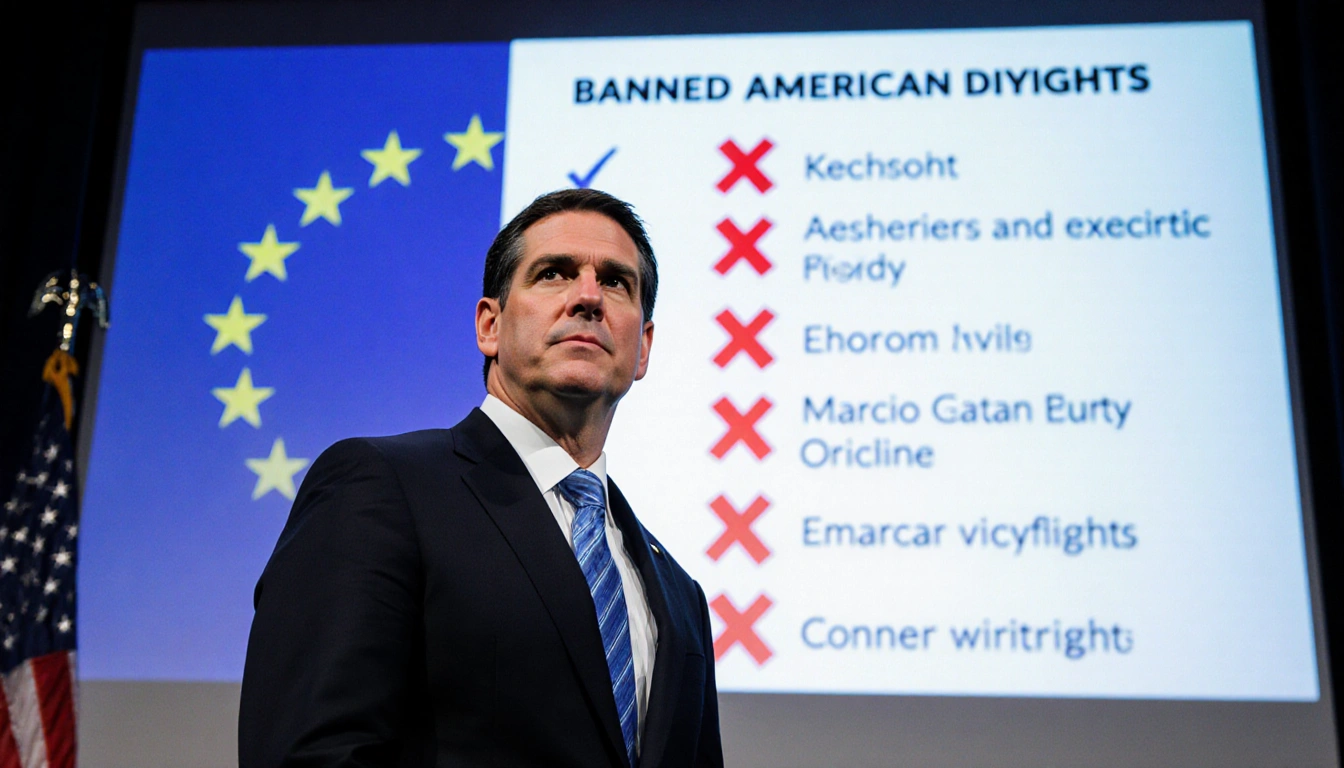
Secretary of State Marco Rubio posted on X that “For far too long, ideologues in Europe have led organized efforts to coerce American platforms to punish American viewpoints they oppose.” He added, “The Trump Administration will no longer tolerate these egregious acts of extraterritorial censorship.”
Sarah Rogers Identifies the Five
Sarah Rogers, the under secretary of state for public diplomacy, used a series of posts on social media to name the individuals she says are responsible for these efforts. Her posts highlighted leaders of organizations addressing digital hate and a former European Union commissioner.
The Five Europeans
The five people named by Rogers are:
- Imran Ahmed, chief executive of the Centre for Countering Digital Hate;
- Josephine Ballon and Anna-Lena von Hodenberg, leaders of HateAid, a German organization;
- Clare Melford, who runs the Global Disinformation Index;
- Thierry Breton, former EU Commissioner responsible for supervising social media rules.
Breton and the Digital Services Act
Rogers called Breton the “mastermind” behind the EU’s Digital Services Act (DSA), a set of strict requirements that aim to keep internet users safe by flagging harmful or illegal content such as hate speech. She noted that Breton warned Elon Musk of a possible “amplification of harmful content” by broadcasting Musk’s livestream interview with Donald Trump in August 2024, when Trump was running for president.
Breton Responds
Breton posted on X on Tuesday, noting that all 27 EU members voted for the DSA in 2022. He wrote, “To our American friends: ‘Censorship isn’t where you think it is.'”
French Reaction
French Foreign Minister Jean-Noël Barrot said France condemns the visa restrictions on Breton and the other four. He also posted on X that the DSA was adopted to ensure that “what is illegal offline is also illegal online.” Barrot added, “It has absolutely no extraterritorial reach and in no way concerns the United States.”
HateAid Leaders Speak Out
A statement from Ballon and von Hodenberg, the co-CEOs of HateAid, called the bans “an act of repression by a government that is increasingly disregarding the rule of law and trying to silence its critics by any means necessary.”
Visa Waiver Program and DHS Flagging
Most Europeans are covered by the Visa Waiver Program, meaning they normally do not need visas to enter the country. However, they must complete an online application before arrival under a system run by the Department of Homeland Security. A U.S. official said, speaking on condition of anonymity, that at least some of the five people may have been flagged to DHS.
Other Visa Restrictions Announced This Year
The administration has also announced visa restrictions targeting foreign visitors from certain African and Middle Eastern countries and the Palestinian Authority. For some countries, visitors may be required to post a financial bond when applying for a visa.
Key Takeaways
- The State Department will bar five Europeans linked to efforts to pressure U.S. tech firms to censor American viewpoints.
- The action is part of a new visa policy that targets those deemed responsible for censorship of protected speech.
- French officials and the leaders of HateAid have condemned the bans as repressive.
The announcement underscores the administration’s willingness to use immigration tools to address what it sees as foreign interference in online speech.