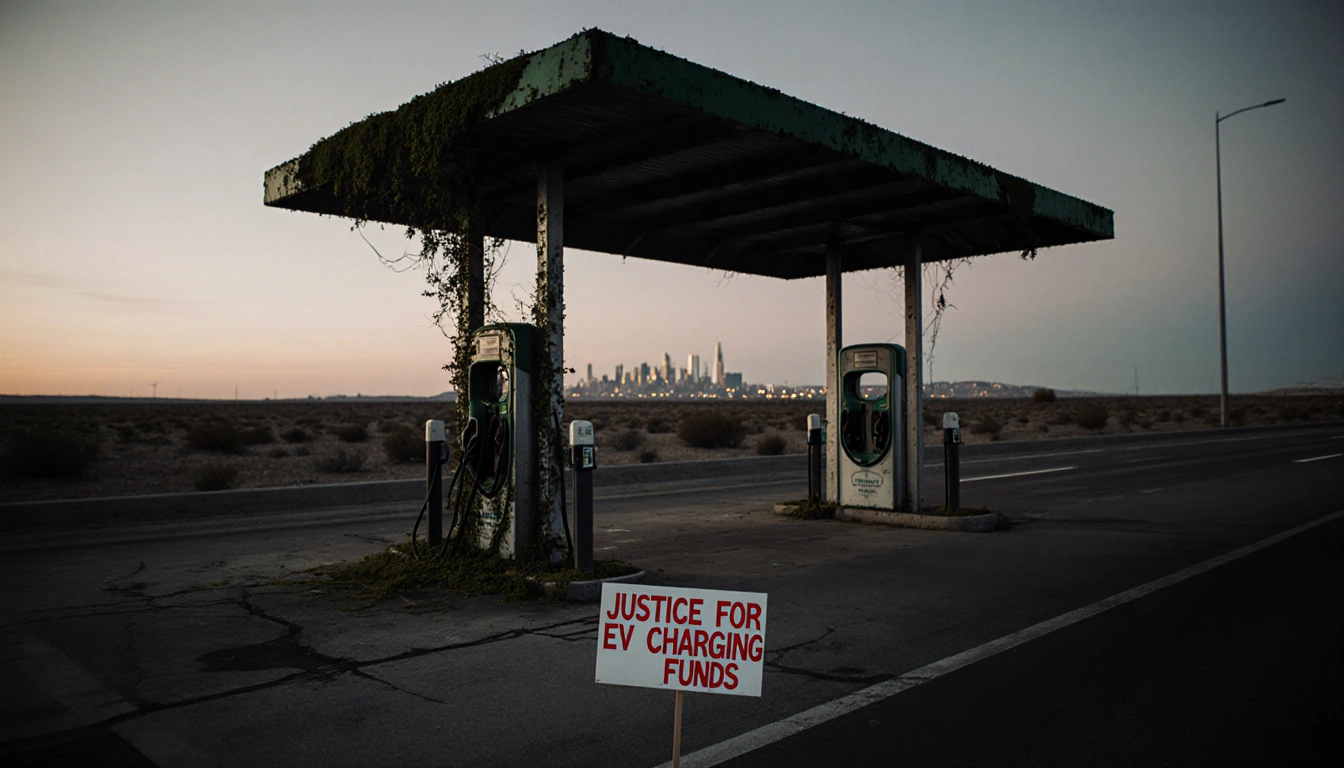
In a move that could reshape the U.S. electric-vehicle landscape, sixteen states and the District of Columbia have filed a federal lawsuit against the Trump administration, alleging that it has unlawfully withheld more than $2 billion in funding for two federal charging programs.
Legal Battle Over EV Infrastructure Funding
The lawsuit, filed Tuesday in Seattle, is the latest legal confrontation initiated by Democratic-led states over federal money that, according to them, was obligated to them by Congress under the Biden administration. The states argue that the Department of Transportation and the Federal Highway Administration have “impounded” the money, preventing the construction of charging stations nationwide.
Trump’s Hostile Stance on EVs
Since taking office in January, President Donald Trump has taken a hard line against electric vehicles, dismantling several Biden-era policies that favored cleaner cars and trucks. In February, the administration ordered states to halt spending on EV charging that had been allocated under the bipartisan infrastructure law. Trump has repeatedly denied the need for an “EV mandate,” claiming that the federal government had no obligation to provide charging infrastructure.
The Funding Programs at Issue
The lawsuit targets three specific programs: the $5 billion National Electric Vehicle Infrastructure program, the $1.8 billion Charging and Fueling Infrastructure Grant program, and the roughly $350 million Electric Vehicle Charger Reliability and Accessibility Accelerator program. A federal judge later ordered the administration to release a significant portion of the charging funding for more than a dozen states, but the Trump administration has continued to delay disbursements.
Court Orders, Guidance, and State Awards
Transportation Secretary Sean Duffy issued revised guidance intended to streamline funding applications for states and accelerate charger deployment. According to Loren McDonald, chief analyst at EV data firm Chargeonomics, at least four states-Georgia, Illinois, Maryland, and Wisconsin-have announced awards under the vehicle infrastructure program.
Attorney General Involvement and Key Statements
The lawsuit is led by attorneys general from California and Colorado and joined by those of Arizona, Delaware, Illinois, Maryland, Massachusetts, Michigan, New Jersey, New York, Oregon, Rhode Island, Vermont, Washington, Wisconsin, and the District of Columbia, with the governor of Pennsylvania also participating. “The Trump administration’s illegal attempt to stop funding for electric vehicle infrastructure must come to an end,” California Attorney General Rob Bonta said in a release. “This is just another reckless attempt that will stall the fight against air pollution and climate change, slow innovation, thwart green job creation, and leave communities without access to clean, affordable transportation.”
Impact on Electric-Vehicle Adoption
The lawsuit arrives amid a slowdown in U.S. EV sales, as mainstream buyers remain wary of charging availability and vehicle prices. According to Kelley Blue Book, new EVs sold last month averaged $58,638, compared with $49,814 for a new vehicle overall. The lack of federal support has contributed to slower infrastructure rollouts and heightened consumer uncertainty.
Corporate Shifts in the EV Space
Earlier this week, Ford Motor Co. announced it was pivoting away from its once-ambitious, multi-billion-dollar electrification strategy in favor of hybrid-electric and more fuel-efficient gasoline-powered vehicles. In the spring, Honda Motor Co. also announced a significant step back from its EV efforts, reflecting broader industry caution.
Key Takeaways
- Sixteen states and D.C. sue the Trump administration for withholding over $2 billion in EV charging funds.
- The lawsuit targets the National Electric Vehicle Infrastructure program, the Charging and Fueling Infrastructure Grant program, and the Charger Reliability and Accessibility Accelerator program.
- A federal judge ordered partial release of funding, but the administration has continued to delay disbursements, prompting renewed legal action.
The legal dispute underscores the tension between federal policy and state expectations for electric-vehicle infrastructure, as well as the broader challenges facing the U.S. EV market amid shifting corporate strategies and consumer concerns.