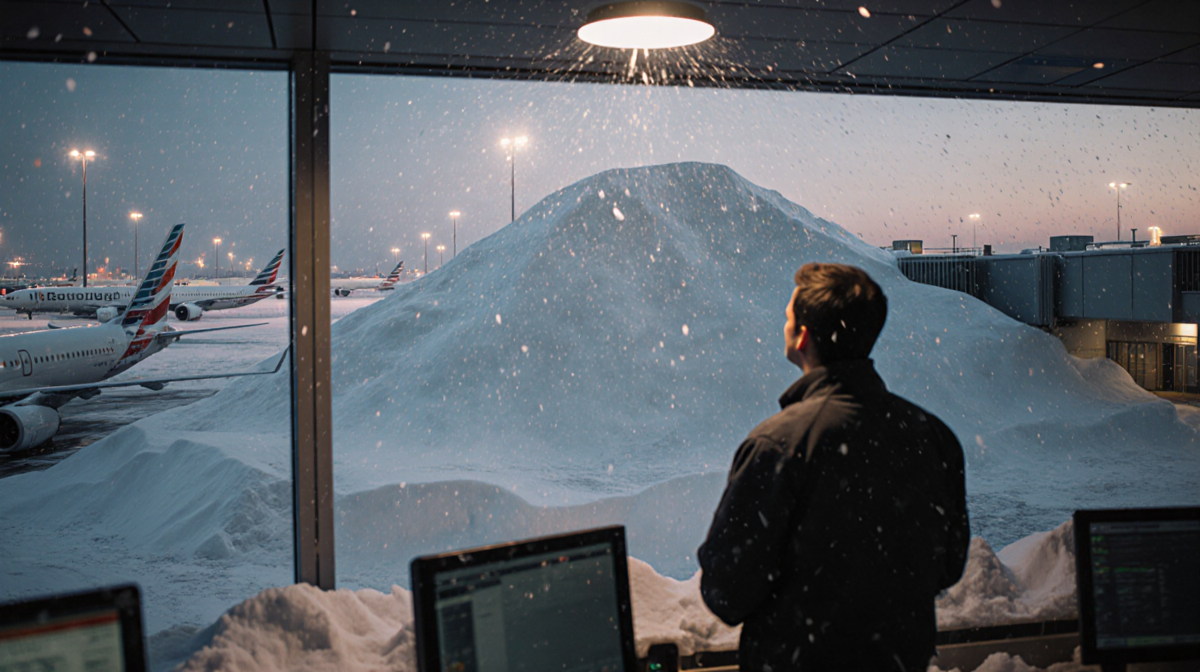
At a Glance
- storm slammed the U.S. from New Mexico to New England, affecting more than 140 million people-over 40% of the U.S. population.
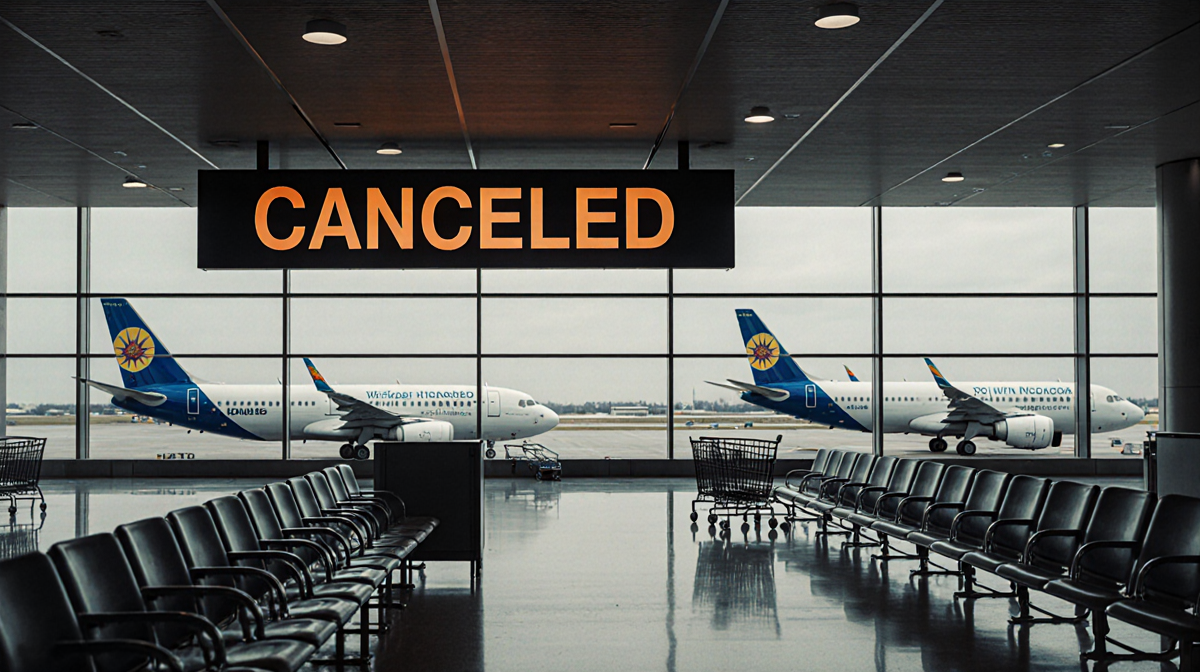
- Roughly 11 000 flights were canceled over the weekend, with major hubs like Dallas-Fort Worth, Nashville and Charlotte hit hardest.
- The storm produced a band of ice up to a quarter-inch (0.6 cm) thick, causing 95 000 power outages nationwide, including 36 000 in Texas and 10 000 in Virginia.
- Why it matters: The storm’s severity, combined with widespread power loss and travel disruptions, threatens to shut down daily life for days and could rival hurricane-level damage.
A massive winter storm that swept across the United States from New Mexico to New England has left the country reeling with canceled flights, widespread power outages, and icy roads. More than 11 000 flights were grounded over the weekend, and roughly 95 000 power outages have been reported, affecting communities from Texas to Virginia. Officials warn that the storm’s ice and cold temperatures could cause damage comparable to a hurricane.
Flight and Road Disruptions
All Saturday flights were canceled at Will Rogers International Airport in Oklahoma City, and all Sunday morning flights were also called off, as officials aimed to restart service Sunday afternoon at Oklahoma’s biggest airport.
- Dallas-Fort Worth International Airport
- Nashville International Airport
- Charlotte Douglas International Airport
According to flight tracking data, almost 4 000 flights were canceled Saturday and 7 600 flights were called off for Sunday.
By midday Saturday, a quarter-inch of ice was reported in parts of southeastern Oklahoma, eastern Texas and portions of Louisiana, turning roads into hazardous surfaces. The ice band stretched from east Texas to North Carolina, affecting highways in Texas suburbs north of Dallas, Mississippi counties (one-third of them), and Arkansas, where sleet and snow covered the state.
Power Outages and State Responses
Utility companies are bracing for prolonged outages as ice-coated trees and power lines continue to fall. 95 000 outages have been reported nationwide, 36 000 in Texas and 10 000 in Virginia.
“All of the power lines are above ground, so it doesn’t take very much to end up in the dark,” said Chris Plank Saturday morning.
Governors in more than a dozen states declared emergencies or urged people to stay home. President Donald Trump said via social media that his administration was coordinating with state and local officials and “FEMA is fully prepared to respond.”
Emergency declarations requested included:
- South Carolina
- Virginia
- Arkansas
- Kentucky
- Louisiana
- Maryland
- North Carolina
- Tennessee
- West Virginia
Georgia’s senior state meteorologist Will Lanxton warned that the state could face “perhaps the biggest ice storm we have expected in more than a decade.”
“Ice is a whole different ballgame than snow,” Lanxton said. “Ice, you can’t do anything with. You can’t drive on it. It’s much more likely to bring down power lines and trees.”
Georgia Department of Transportation Commissioner Russell McMurry said crews began treating highways with brine after midnight Saturday, with 1 800 workers on 12-hour shifts.
“We’re going to do what we can to keep the ice from sticking to the roads,” McMurry said. “This is going to be a challenge.”
Community Impact and Future Outlook
The storm forced many communities to cancel or move events. Churches moved Sunday services online, the Grand Ole Opry held its Saturday night radio performance without fans, and Mardi Gras parades in Louisiana were canceled or rescheduled.
Schools and universities closed or canceled classes. Superintendents in Philadelphia and Houston announced closures for Monday, and universities such as the University of North Carolina at Chapel Hill and the University of Mississippi’s main campus in Oxford canceled Monday classes.
In the Midwest, wind chills as low as minus 40°F were reported. In Rhinelander, Wisconsin, a minus 36°F reading on Saturday was the coldest in almost 30 years. In Bismarck, North Dakota, wind chill reached minus 41°F.
“I’ve been here awhile and my brain stopped working,” said Colin Cross.
The Orange Tent Project, a Chicago nonprofit, sent out volunteers to check on those who could not seek shelter.
“Seeing the forecasted weather, I knew we had to come out and do this today,” said CEO Morgan McLuckie.
After sweeping through the South, the storm is expected to move into the Northeast, dumping about a foot (30 cm) of snow from Washington through New York and Boston. Temperatures reached minus 29°F just before dawn in rural Lewis County and other parts of upstate New York.
Officials warn that ice can add hundreds of pounds to power lines and branches, making them more susceptible to snapping, especially if windy.