
ThinkPad P1 Gen 8 is a new thin workstation that promises a blend of performance and portability. Released late in 2025, the laptop sits in a slim 16-inch chassis, yet it houses a powerful Intel Core Ultra 7 255H and an Nvidia RTX Pro 2000 GPU. The price starts at $3,525, but higher-end configurations can exceed $4,305.
At a Glance
- Weight: starts at 4.06 pounds
- Display: 16-inch, 3.2K tandem OLED, 120Hz, 1,500 nits HDR
- CPU: Intel Core Ultra 7 255H, 16-core/16-thread, 5.1 GHz boost
- GPU: Nvidia RTX Pro 2000, 16 GB DDR7 VRAM
- Battery: 90 Wh, 140W GaN charger, 0-80% in ~1 hour
Why it matters: The P1 Gen 8 offers a rare combination of a professional-grade display, solid battery life, and a thin profile that fits in a backpack.
Design & Build
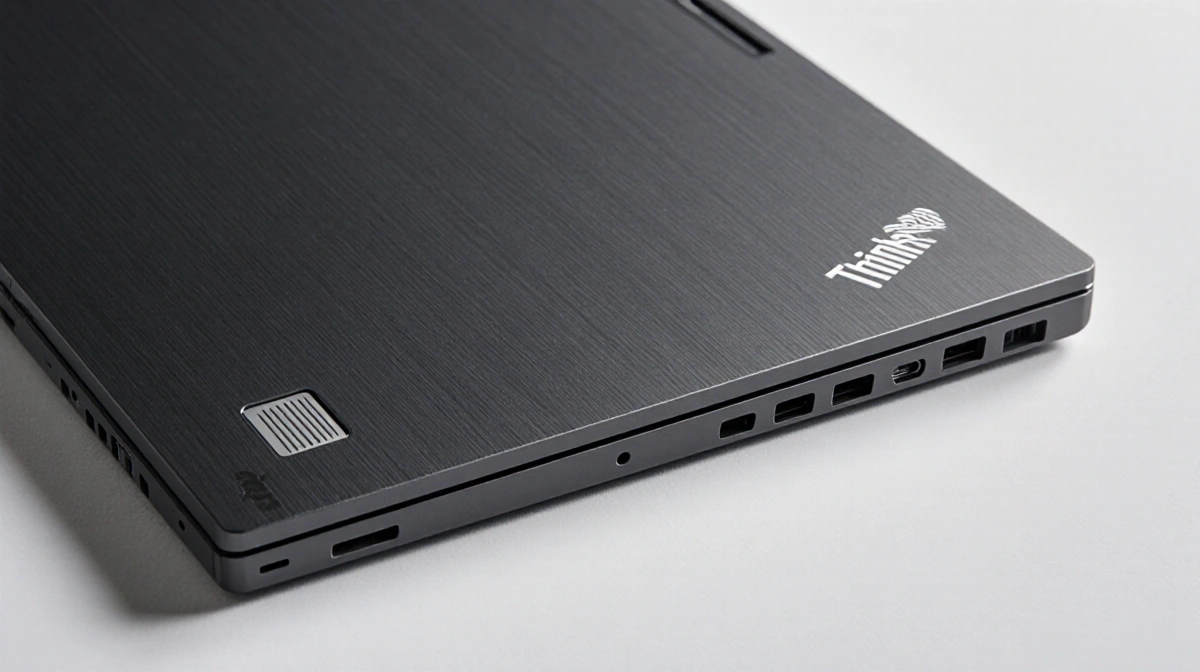
The first glance at ThinkPad P1 Gen 8 reveals a chassis that feels more like a piece of fine leather than a rugged laptop. Its all-aluminum body weighs a little over four pounds, which is surprisingly light for a machine that packs a full-size SD card reader, a pair of Thunderbolt 5 USB-C ports, and a single USB-A port. The laptop’s matte finish reduces glare, and the embedded fingerprint reader doubles as a power button.
- Ports: 2× Thunderbolt 5, 1× Thunderbolt 4, 1× USB-A, HDMI 2.1, headphone jack, SD card reader
- Keyboard: Classic ThinkPad layout with a TrackPoint nub and a tactile haptic touchpad
- Audio: Two 2-W stereo speakers; supports Dolby Atmos but best suited for calls and casual media
The device is intentionally minimalist, reflecting the ThinkPad tradition of prioritizing function over flashy design.
Display
The 16-inch screen is a 3.2K tandem OLED that delivers a peak brightness of 1,500 nits in HDR. Unlike a single-layer OLED, the tandem design layers two diodes to achieve higher brightness without compromising contrast. The matte coating keeps the display from reflecting ambient light, making it usable outdoors.
| Feature | Detail |
|---|---|
| Resolution | 3,200 × 2,000 pixels |
| Refresh Rate | 120 Hz (fixed) |
| Brightness | 1,500 nits HDR |
| Touch | Yes, capacitive |
| Privacy | Built-in webcam shutter |
The display also supports variable refresh rate (40 Hz-120 Hz), which can help with battery life during light gaming or video playback.
Performance
CPU
The Intel Core Ultra 7 255H is an Arrow Lake processor with 16 cores and 16 threads, maxing out at 5.1 GHz. In Geekbench 6, it scores roughly equal to an AMD Ryzen AI 7 350 in single-core tests and outperforms the chip in multi-core by about 4,000 points. However, it lags behind Intel’s HX variants by 300 single-core and 3,000 multi-core points.
GPU
The Nvidia RTX Pro 2000 is a Blackwell GPU with 16 GB of DDR7 VRAM. While it matches a last-gen RTX 4060 in some benchmarks, it is not designed for high-end gaming or heavy rendering workloads. In Blender tests, it completes a BMW scene 21 seconds slower than a Razer Blade 14’s RTX 5070.
Benchmark Summary
| Test | Score |
|---|---|
| Geekbench 6 (single-core) | ~1,200 |
| Geekbench 6 (multi-core) | ~5,200 |
| 3DMark (graphics) | ~5,500 |
| Blender (render) | 21 s |
Overall, the P1 Gen 8 sits between a thin-and-light notebook and a heavier desktop-grade laptop, offering decent battery life but limited gaming capability.
Battery & Charging
Despite its powerful components, the ThinkPad P1 Gen 8 delivers near-all-day battery life. In everyday writing and light photo editing, the laptop ran for about six hours before entering battery-saving mode, with an extra two hours of use possible.
| Usage | Battery Life |
|---|---|
| Light work | 6 h (normal) |
| Light work + full-screen | 4 h |
| Heavy GPU use | 2 h |
The 140W GaN charger supports fast charging: from near zero to just below 80 % in under an hour. The 90 Wh battery is compact, yet the GaN design keeps the power brick small.
Verdict
ThinkPad P1 Gen 8 excels in portability, build quality, and a professional-grade display. Its price starts at $3,525, but higher configurations can push it above $4,305. The machine is ideal for professionals who need a thin, durable laptop with solid battery life, but it falls short for heavy gaming or extreme rendering tasks. If you value a slim design, a high-contrast OLED screen, and a robust build, the P1 Gen 8 is a compelling choice.
—