At a Glance
- Earth losing gravity for 7 seconds on August 12, 2026 is a false claim.
- NASA has no evidence of a Project Anchor or a gravitational wave collision.
- A total solar eclipse will occur that day, with no impact on gravity.
- Why it matters: The rumor spreads panic and misleads the public about science and NASA.
The claim that Earth would lose gravity for 7 seconds on August 12, 2026 began as a viral Instagram reel posted by user @mr_danya_of on December 31, 2025. The video showed a man in a car with no dialogue, overlaying text that referenced a leaked NASA document titled Project Anchor. The document supposedly budgeted $89 billion and promised protection against a predicted gravitational anomaly. The reel also mentioned a 94.7 % probability that two gravitational waves from black holes would intersect on the specified date.
Conspiracy Claims
The reel’s text outlined several assertions:
- The anomaly would cause Earth to lose gravity for 7 seconds.
- NASA is aware of the event and is deliberately withholding information.
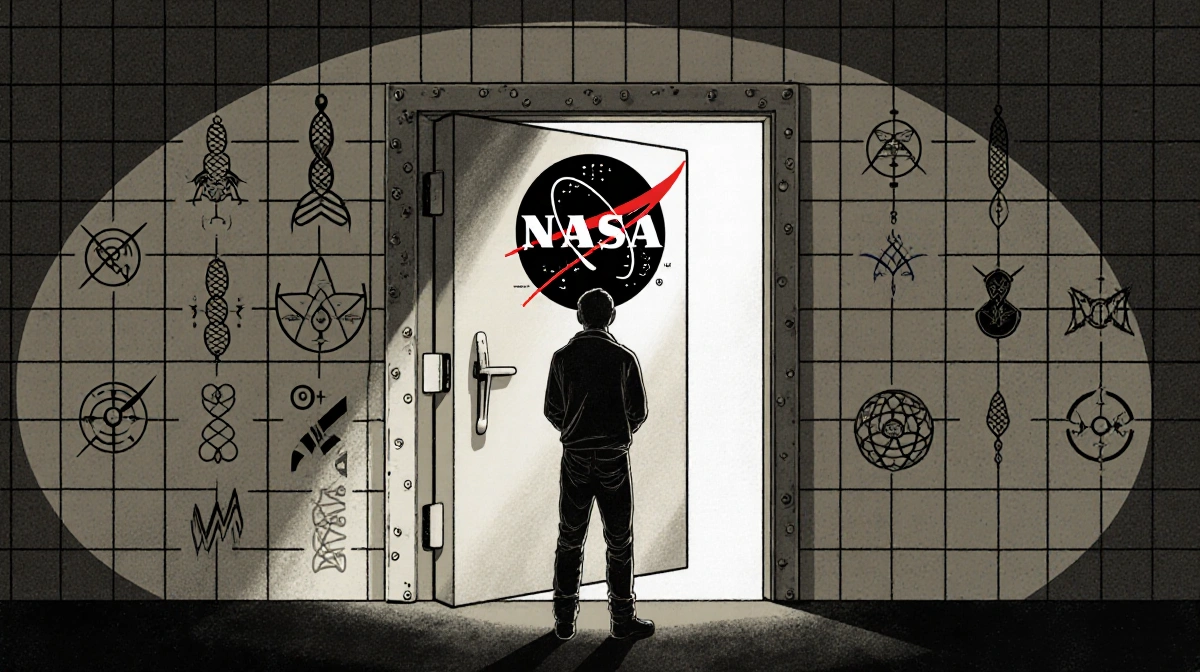
- The agency is building underground bunkers for government leaders, scientists, military personnel, and “selected citizens with genetic diversity.”
- The event is tied to a Project Anchor budget and a secret NASA document.
These claims were spread on social media, leading many users to fear a mass casualty event. The Instagram account was deactivated a few days after the post, amplifying the mystery.
NASA’s Response
When Snopes contacted NASA, a spokesperson said, “That’s not how gravity works.” The agency reiterated that Earth’s gravity is determined by its mass and that no known event could cause a temporary loss of gravity.
A NASA spokesperson also explained that the intersection of two gravitational waves from black holes would not affect Earth’s mass or gravity. The spokesperson added that the only way Earth could lose gravity would be if the combined mass of its core, mantle, crust, oceans, terrestrial water, and atmosphere decreased.
The NASA spokesperson noted that a total solar eclipse would occur on August 12, 2026. They clarified that the eclipse has no unusual impact on Earth’s gravity, only on tidal forces. The agency confirmed that the gravitational attraction of the Sun and Moon is well understood and predictable.
The Science of Gravity
General relativity describes gravity as the curvature of spacetime caused by mass. Massive objects like planets warp spacetime, and smaller objects move along the resulting curved paths. A common analogy is a bowling ball on a rubber sheet, creating a depression that pulls a ping-pong ball toward it.
No scientific evidence supports the idea that a gravitational wave collision could cause Earth to lose mass. The theory has been tested rigorously and remains the best explanation for gravity.
Solar Eclipse Details
The total solar eclipse on August 12, 2026 will be visible from Greenland, Iceland, Spain, Russia, and a small part of Portugal. Much of Europe, Africa, and North America will see a partial eclipse. The event offers a chance for observers to witness a rare celestial phenomenon without any danger to human life.
| Region | Eclipse Visibility |
|---|---|
| Greenland | Total |
| Iceland | Total |
| Spain | Total |
| Russia | Total |
| Portugal | Partial |
| Europe (other) | Partial |
| Africa | Partial |
| North America | Partial |
Key Takeaways
- The claim of a 7-second gravity loss is unsubstantiated and contradicted by NASA.
- Project Anchor and the associated budget of $89 billion are not documented by NASA.
- A 94.7 % probability of a gravitational wave collision is a fictional figure.
- The total solar eclipse on August 12, 2026 poses no threat to gravity or human safety.
- Fact-checkers like Snopes and reputable outlets have found no evidence supporting the rumor.
The misinformation illustrates how quickly a single viral post can spread panic. NASA’s clear explanation helps demystify the science and reassure the public that no such event is imminent.