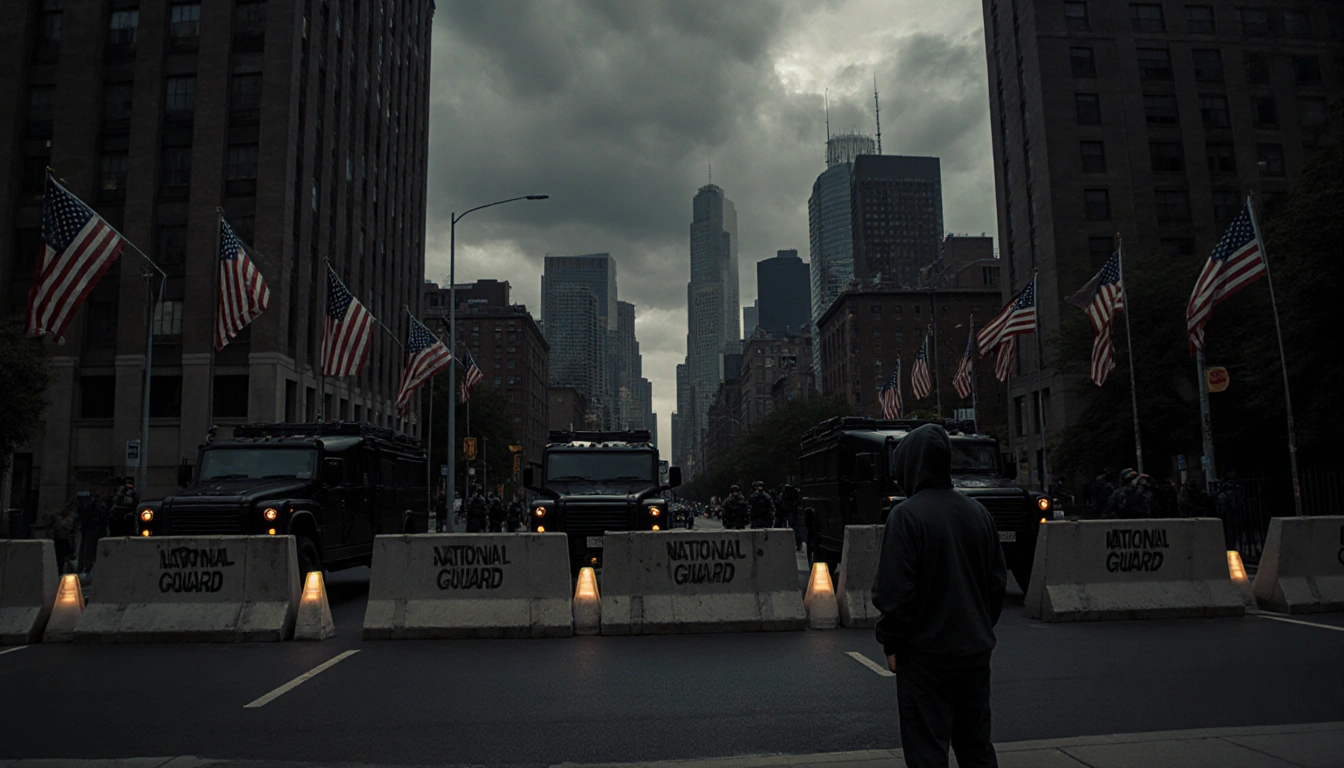
On Tuesday, the Supreme Court ruled that President Trump cannot deploy the National Guard to Chicago, a blow to the president’s effort to send troops into Democratic-led cities.
Court Decision
After more than two months of consideration, the court refused to pause a district judge’s ruling temporarily blocking hundreds of National Guard members from being federalized and deployed across Illinois, rejecting the government’s emergency request in an apparent 6-3 decision. The unsigned order states, “At this preliminary stage, the Government has failed to identify a source of authority that would allow the military to execute the laws in Illinois,” underscoring the court’s view that the president lacks the legal basis to mobilize the Guard for this purpose.
Legal Rationale
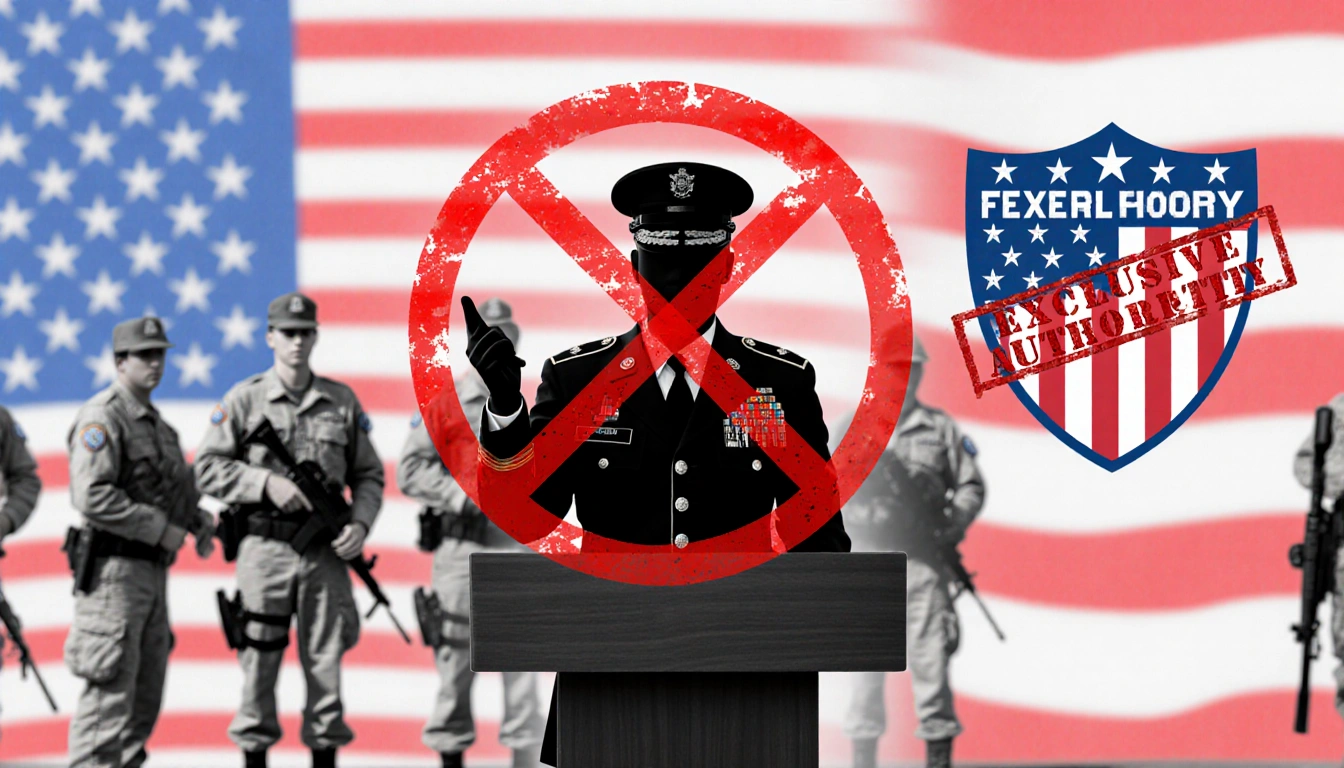
The court explained that to justify calling up the National Guard, a president must be unable to execute laws with the regular forces of the U.S. military. Such a situation would require “exceptional” circumstances because of the Posse Comitatus Act, which generally bars federal troops from participating in civilian law enforcement. Trump has relied on what he calls “inherent constitutional authority” to protect federal personnel and property, but the court found that he had not shown the law permits him to federalize and deploy the Guard for that aim.
Solicitor General D. John Sauer argued that the statute Trump invoked was lawful and consistent with a “long historical tradition” tracing back to President George Washington’s response to the Whiskey Rebellion. “Most fundamentally, the decision whether to call up the National Guard in order to protect federal personnel and federal property is for the President to make – not the State of Illinois or a federal district court,” the solicitor general wrote, calling the lower court’s determination “indefensible.”
Justice Opinions
Justice Brett Kavanaugh sided with the majority but wrote a separate opinion in which he said he would have ruled more narrowly. He preferred to deny the administration’s request over Trump’s lack of a determination about whether he could execute federal law without the military, instead of undertaking any further legal analysis.
Justice Samuel Alito, in a dissent joined by Justice Clarence Thomas, argued that the high court “unnecessarily and unwisely departed from standard practice” by explaining its reasoning more fully-an approach typically avoided by the justices in orders from their so-called emergency docket. Alito warned that the court’s “tentative views” expressed on “highly important issues” come with little briefing and no oral argument. “I am not prepared at this point to express a definite view on these questions,” he wrote, “but I have serious doubts about the correctness of the Court’s views.”
In a separate dissent, Justice Neil Gorsuch listed a series of “sensitive and gravely consequential” questions he has about the roles the National Guard and military may play in domestic law enforcement, but said he’s not yet comfortable venturing to answer any of them. He said he would have decided the administration’s application narrowly, likely ruling in its favor due to declarations submitted by federal law enforcement officials. “I would hazard no opinion beyond that, leaving instead all the weighty questions outlined above for another case where they are properly preserved and can receive the full airing they so clearly deserve,” Gorsuch wrote.
Background of the Deployment
Illinois and Chicago officials sued over Trump’s National Guard takeover in October, citing concerns about unfettered military involvement in domestic affairs. The first move toward deployment came on Sept. 26, when DHS requested assistance protecting ICE facilities in the state. Trump then invoked Title 10, a federal law that lets the president call National Guard troops into federal service in specific circumstances. Department of Defense Secretary Pete Hegseth authorized the federalization of the Illinois National Guard on Oct. 4, and in an undated call-up directed 400 Texas troops to be sent to Chicago; Portland, Ore.; and other locations “where needed.”
Sauer portrayed the case as one facet of a “disturbing and recurring pattern,” describing “prolonged, coordinated, violent resistance” against federal officers attempting to enforce immigration law in cities across the country. It’s a contrast pervasive across all the challenges to Trump’s deployments, as local leaders have rejected the government’s accounts of the scenes on the ground. A federal judge in Oregon earlier ruled that Trump unlawfully called up and planned to deploy troops to Portland, the first decision on the underlying legal merits of Trump’s push to send military boots into the streets of Democratic-led cities where protests have centered on federal immigration facilities.
The administration alleges “substantial interference” with the Department of Homeland Security’s ability to enforce federal immigration law, but Illinois and Chicago officials told the high court there is “no credible evidence” to support such a conclusion. Court papers note that rubber bullets, pepper balls and tear gas have been fired at demonstrators, while employees of the facility have sought escorts into the building and had their tires slashed. A local gang leader also placed a $10,000 bounty on the murder of a top Border Patrol official, the government says.
Still, protests have drawn “only small groups,” the local officials said- even after DHS announced an immigration crackdown dubbed “Operation Midway Blitz,” which ramped up Immigration and Customs Enforcement efforts in the city. Demonstrations have generally featured fewer than 50 people and not exceeded “a few hundred people” at the ICE facility in Broadview, Ill., a western Chicago suburb that has been the focus of protests.
Key Takeaways
- The Supreme Court’s 6-3 decision blocks President Trump’s request to deploy the National Guard to Chicago.
- The court cited lack of legal authority and the Posse Comitatus Act as key reasons for its ruling.
- Dissents highlight concerns about the court’s expanded reasoning and the broader implications for domestic military use.
The ruling, updated at 5:28 p.m., marks the first time the high court has weighed in on the legal fight over Trump’s aggressive use of the National Guard on U.S. soil, as challenges to the president’s efforts move through the courts.