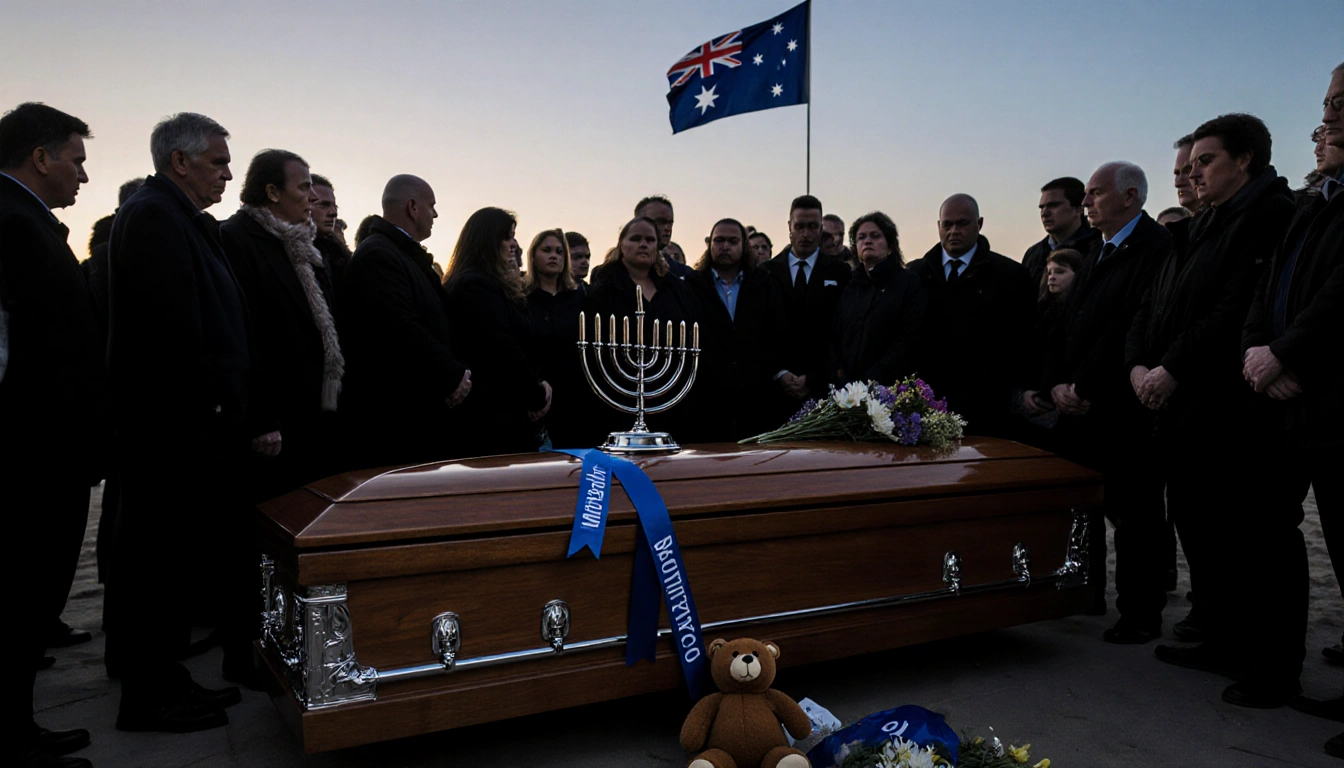
In a stark reminder of the violence that struck Australia’s Jewish community, hundreds gathered at a Sydney funeral on Thursday for 10-year-old Matilda, who was gunned down during a Hanukkah celebration on Bondi Beach.
The Tragic Loss
Matilda, whose family has asked her last name to remain private, was enjoying a petting zoo at the festivities on Sunday before she was killed along with 14 other people in a mass shooting that targeted Jews. The suspects, a father and son, were inspired by the Islamic State group, Australian authorities said.
Beaming photos of Matilda have become a focal point for Australia’s grief at one of the worst hate-fueled attacks ever committed in the country. The massacre has prompted a national reckoning about antisemitism and questions about whether the country’s leaders took the threat to Australian Jews seriously enough.
Family’s Story
Matilda’s parents, who arrived in Australia from Ukraine, said they “moved away from war-torn Eastern Europe to come here for a good life,” Rabbi Dovid Slavin told the Associated Press as he entered the service. He added, “They did something that a parent is OK to do, take their child to a family event at Bondi beach. If it ended this way, it’s something for collective responsibility for every adult in this country.”
At the service, a rabbi read a tribute from teachers at the 10-year-old’s school, who described her as “our little ray of sunshine.” Matilda had been delighted to win a national literacy prize two days before she died and “had an incredible gift to bring joy to those around her,” her school’s tribute said.
Bumblebee balloons, a nod to her family nickname, bobbed in the afternoon breeze. Mourners and reporters alike were handed stickers featuring a smiling cartoon bumblebee holding a menorah, with Matilda’s name printed in purple.
Albanese’s Hate-Crime Reform Plan
Speaking to reporters in Canberra at the same service, Prime Minister Anthony Albanese unveiled a tranche of legislative plans he said would curb radicalization and hate. Among his proposals were:
- Broader definition of hate-speech offences for preachers and leaders who promote violence.
- Stricter punishments for such crimes.
- Designation of some groups as hateful.
- Allowing judges to consider hate as an aggravating factor in cases of online threats and harassment.
Officials would also gain greater powers to reject or cancel visas for those who spread hate and division, or who would do so if allowed to come to Australia, Albanese added. He did not suggest a timeline for the reforms, citing their legal complexity.
Home Affairs Minister Tony Burke echoed the call, saying, “There have been organizations which any Australian would look at and say their behaviour, their philosophy and what they are trying to do is about division and has no place in Australia.” He added, “Yet for a generation, no government has been able to successfully take action against them because they have fallen just below the legal threshold.”
Albanese also referenced his pledge to tighten Australia’s gun controls, already some of the toughest in the world, and said his government would work with states and territories on a buyback scheme for banned and illegal guns.
Despite these promises, Albanese has not attended the funerals of Matilda or other victims, with local media reporting he has not been invited, hinting at the fury some Australian Jews feel toward the leader.
Albanese said measures his government has already enacted, including a ban in February on Nazi salutes, show that he has taken the threat of antisemitism seriously. “I of course acknowledge that more could have been done and I accept my responsibility for the part in that as prime minister of Australia,” he said Thursday. “But what I also do is accept my responsibility to lead the nation and unite the nation.”
Investigation into the Suspects
Meanwhile, investigators continued to probe the suspected gunmen’s links in Australia and their travel to the Philippines before the attack, said Krissy Barrett, the country’s police chief. Authorities earlier divulged that the younger shooting suspect, Naveed Akram, 24, was investigated for six months by Australia’s security services in 2019.
The older shooter, Sajid Akram, 50, who was shot dead on Sunday, had amassed the guns used in the massacre legally. His gun licence was granted in 2023, after his son came to the attention of authorities.
Philippine National Security Adviser Eduardo Año told the Associated Press on Thursday that there was no indication that the two received any training for the attack in the Philippines. He said the suspected gunmen had stayed in a budget hotel in downtown Davao city for the whole of their visit in November. Año, a former military chief of staff, said in a statement that “the duration of their stay would not have allowed for any meaningful or structured training.”
Naveed Akram is being treated at a Sydney hospital and was charged Wednesday with 59 offences, including murder and committing a terrorist act. He has not entered a plea and many details of the case against him are suppressed by a judge.
Health authorities said Friday that 15 other people are being treated in hospitals across Sydney.
Additional Funerals and Community Response
As investigations unfolded, Sydney’s closely-knit Jewish community made their way to funeral after funeral. In addition to the service Thursday for Matilda, mourners attended a funeral for the oldest victim, 87-year-old Holocaust survivor Alex Kleytman. The Holocaust survivor was protecting his wife when he was shot dead, she told reporters outside a hospital this week.
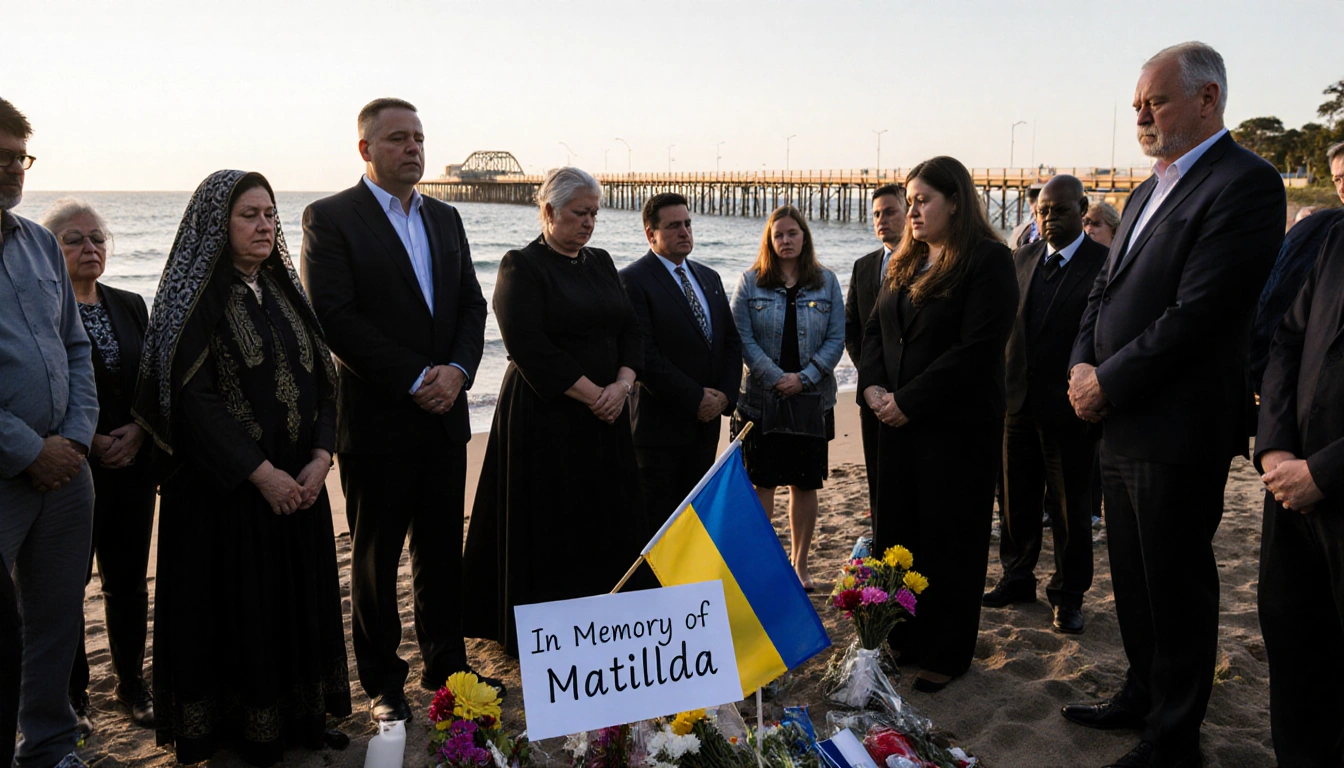
Other victims included rabbis, a man shot while throwing bricks at one of the gunmen, and a married couple who were fatally shot when they tried to tackle one shooter as he got out of his car to begin the attack.
Key Takeaways
- Matilda, a 10-year-old, was killed in an antisemitic mass shooting at Bondi Beach, killing 15 people total.
- Prime Minister Albanese unveiled hate-crime reforms, including broader hate-speech offences and stronger visa powers.
- Investigators are probing the suspects’ links to the Philippines; Naveed Akram faces 59 charges, Sajid Akram was legally licensed to own the guns.
The funeral, the reforms, and the ongoing investigation underscore a nation grappling with violence and the need for stronger protections for its Jewish community.