After more than 17 years in exile, Tarique Rahman, the son of former Bangladeshi prime minister Khaleda Zia, landed in Dhaka on Thursday, promising to build a safer country.
Return to Dhaka
A flight carrying Rahman, his wife and daughter arrived at Hazrat Shahjalal International Airport in the capital, Dhaka, late Thursday morning amid tight security measures.
Mass Support and Crowd
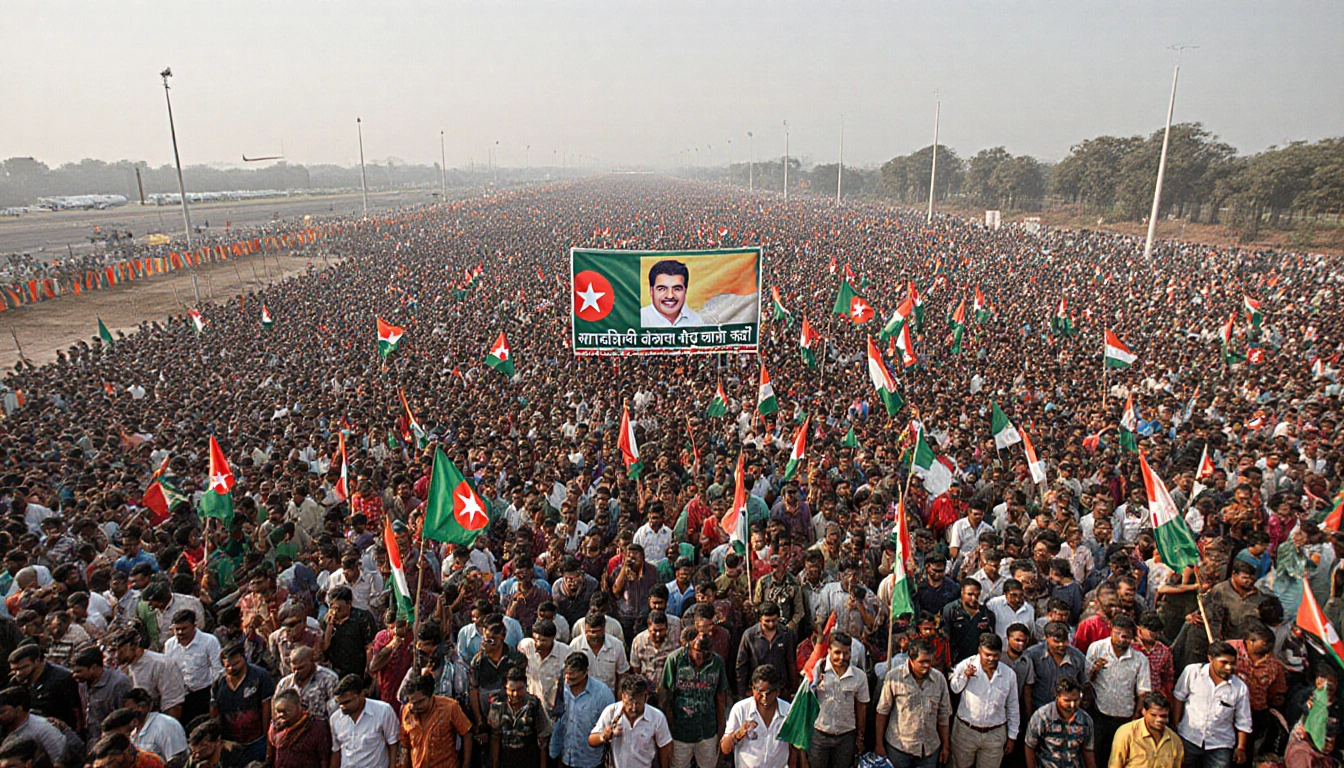
Massive crowds of supporters spread across an area about 2 kilometers (1.2 miles) between the airport and a reception venue, where many had stayed overnight. A sea of people also waited at the venue. Rahman’s senior party leaders said earlier they expected ‘millions.’
The Journey to the Stage
Rahman needed about four hours to reach a makeshift stage set up on a major thoroughfare as a bus carrying him struggled to navigate the crowds. He told the audience he would work to establish a safe Bangladesh for all and promised to uphold communal and religious harmony.
> “I have a plan for the people of my country. Let us build a safe Bangladesh,” he said as his supporters cheered. “We want peace, peace, peace … we will build a Bangladesh that a mother dreams of.”
Visiting His Mother
After the speech, Rahman said he would go to a hospital to visit his critically ill mother, former Prime Minister Khaleda Zia, who led a coalition government from 2001 until a non-elected government backed by the military came to power during a period of political chaos.
Background on Khaleda Zia
Zia, a former housewife, entered politics after her husband, former military chief and then President Ziaur Rahman, was assassinated in a military coup in 1981. She held power for the first time in 1991 after becoming a key leader in a nine-year movement against a former military dictator who was forced to resign during a mass uprising in 1990.
Political Landscape
Zia is considered one of two key figures in Bangladesh politics along with Sheikh Hasina, who was sentenced to death in absentia in November. Hasina was convicted on charges of crimes against humanity involving the crackdown on a mass uprising that ended her 15-year rule in 2024. India has not approved requests to extradite Hasina since she fled there last year.
Rahman’s Role in BNP
In recent years, Rahman has been a de-facto leader of the Bangladesh Nationalist Party. He regularly joined meetings and rallies online from London, keeping his party united. He was not openly challenged by any party insiders during his absence.
Interim Government Challenges
Bangladesh is now at a political crossroads. The interim government headed by Nobel Peace Prize laureate Muhammad Yunus is struggling to maintain law and order and restore confidence while attempting a return to democracy after Hasina’s long premiership.
Global human rights groups including Human Rights Watch and Amnesty International have accused the Yunus government of eroding democratic rights. Liberals in Bangladesh expressed concerns over press freedom and minority rights and accused Yunus of presiding over a visible rise of Islamists.
Complex Relations
Rahman supported Yunus when he took over as the government’s chief adviser, but the relationship with his party has been shaky.
Legal History
Rahman was convicted in several criminal cases during Hasina’s 15-year rule since 2009. Appeals courts under the Yunus government have acquitted him of all criminal charges, including involvement in grenade attacks on a Hasina rally in 2004.
Key Takeaways
- Tarique Rahman returns after 17 years in exile, pledges to build a safe Bangladesh.
- He visits his critically ill mother, former PM Khaleda Zia.
- Bangladesh faces political uncertainty amid interim government and human rights concerns.
The return of Rahman signals a potential shift in Bangladesh’s political dynamics as the country prepares for its upcoming election on Feb. 12.