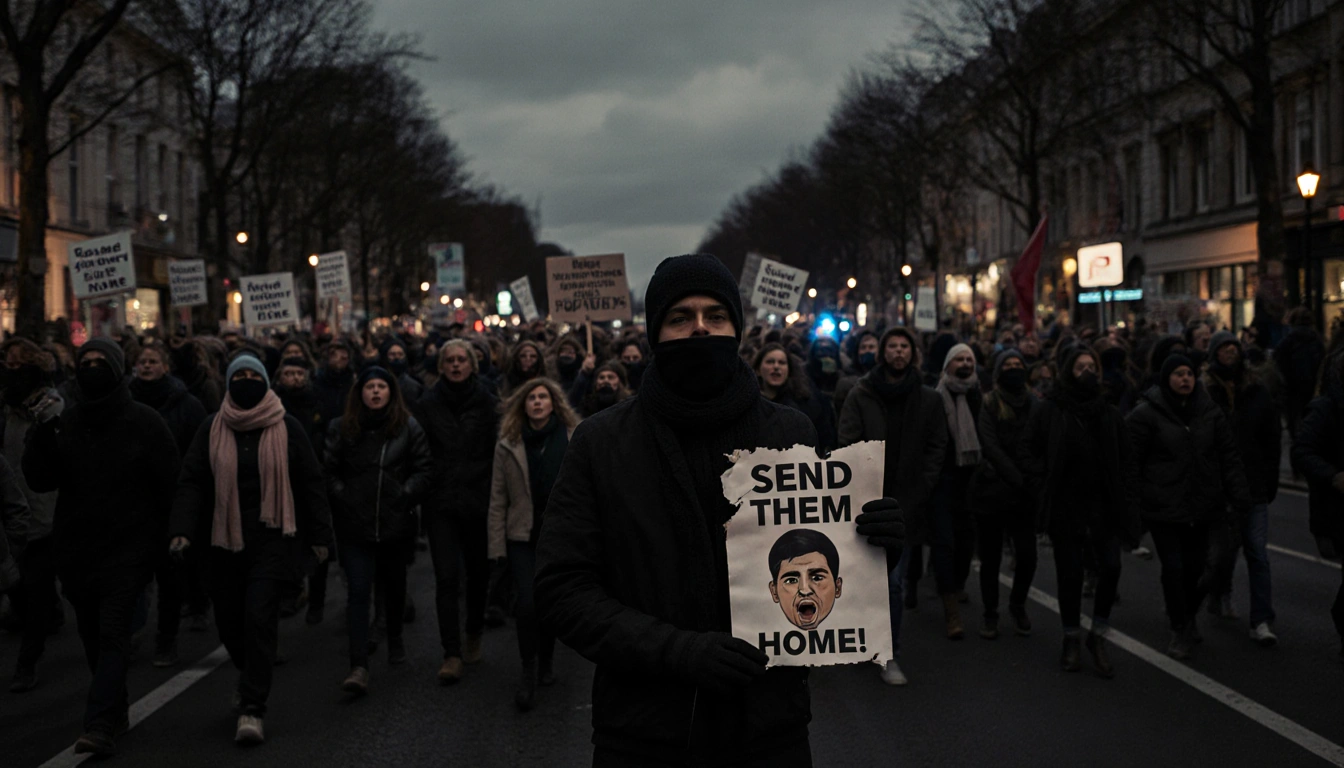
In a stark display of rising hostility, tens of thousands marched through London last year chanting “send them home!” The protest, part of a broader wave of anti‑immigrant sentiment, came after a British lawmaker complained about seeing “too many non‑white faces on TV” and senior politicians called for the deportation of long‑time U.K. residents born abroad.
A Europe‑Wide Surge of Anti‑Immigrant Rhetoric
Across the continent, parties that favour mass deportations and portray immigration as a threat to national identity have climbed the polls. In the U.K., Reform UK leads opinion polls; Germany’s AfD and France’s National Rally also sit near the top. The trend is mirrored in the United States, where President Donald Trump recently referred to Somali immigrants as “garbage” and issued a national security strategy that frames Europe as a “collection of countries facing economic decline and civilizational erasure” because of immigration.
Kieran Connell, a lecturer in British history at Queen’s University Belfast, notes that “what were once dismissed as being at the far extreme end of far‑right politics has now become a central part of the political debate.”
Hate Crimes, Racial Abuse and Rising Violence
The rise in divisive language has translated into more frequent hate crimes. Police in England and Wales recorded over 115,000 hate‑crime incidents in the year to March 2025—a 2% increase from the previous twelve months. Dawn Butler, a Black British lawmaker, says the vitriol she receives on social media “is increasing drastically, and has escalated into death threats.”
In July 2024, anti‑immigrant and anti‑Muslim violence erupted after three girls were stabbed to death at a Taylor Swift‑themed dance class. Authorities blamed online misinformation that wrongly identified the U.K.-born teenage attacker as a Muslim migrant.
Protests in Ireland and the Netherlands have also turned violent. Demonstrators outside municipal meetings in communities where new asylum centres are proposed have, on occasion, thrown fireworks at riot police.

In September, more than 100,000 people marched through London chanting “We want our country back.” The protest was organized by far‑right activist and convicted fraudster Tommy Robinson. French far‑right politician Eric Zemmour spoke to the crowd, claiming that France and the U.K. face “the great replacement of our European people by peoples coming from the south and of Muslim culture.”
Political Responses and the Push for Harder Migration Controls
The U.K. government, while denouncing racism, is tightening immigration rules. It has announced policies to make it harder for migrants to settle permanently, citing Denmark’s success in reducing asylum applications by offering only short‑term residence.
Reform UK’s platform includes stripping immigrants of permanent‑resident status even after decades of residence, while the Conservative opposition promises to deport British citizens with dual nationality who commit crimes. A Reform UK lawmaker complained in October that advertisements were “full of Black people, full of Asian people,” and Conservative justice spokesman Robert Jenrick remarked that he “didn’t see another white face” in an area of Birmingham.
Human rights advocates warn that appeasing the right can lead to more extreme measures. Council of Europe human rights commissioner Michael O’Flaherty told The Guardian that “for every inch yielded, there’s going to be another inch demanded,” questioning what will happen next.
Center‑Left Rhetoric and the Risk of Escalation
Even mainstream politicians have been criticized for adopting far‑right language. British Prime Minister Keir Starmer, in May, warned that Britain risked becoming an “island of strangers,” echoing a 1968 anti‑immigration speech by Enoch Powell. He later said he was unaware of the echo and regretted using the phrase.
Germany’s center‑right Chancellor Friedrich Merz has intensified his language on migrants as the Alternative for Germany gains power. In October he sparked outrage by saying Germany had a problem with its “Stadtbild,” implying that people who don’t look German do not belong. Merz later clarified that “we need immigration,” noting that certain sectors, including health care, would cease to function without it.
Bobby Duffy, director of the Policy Unit at King’s College London, urges politicians to be responsible. He says the perception that divisiveness works has taken hold, but believes it is a “quite forlorn hope.”
Key Takeaways
- Anti‑immigrant rhetoric is rising across Europe, with right‑wing parties gaining poll support.
- Hate‑crime incidents in the U.K. have risen, with over 115,000 recorded in the year to March 2025.
- Both far‑right and mainstream politicians are using divisive language, risking further polarization.
The wave of hostility, amplified by social media and political rhetoric, underscores a growing national divide that threatens to push more people toward extreme positions. As governments respond with tougher migration controls, the risk of escalating violence and discrimination remains high.