
On a Wednesday in Austin, Texas Attorney General Ken Paxton unveiled an online complaint form that allows Texans to file grievances against publicly owned facilities. The move marks the first statewide initiative to enforce the provisions of Senate Bill 8 (SB 8), a law that has sparked debate across the state.
The New Complaint Tool
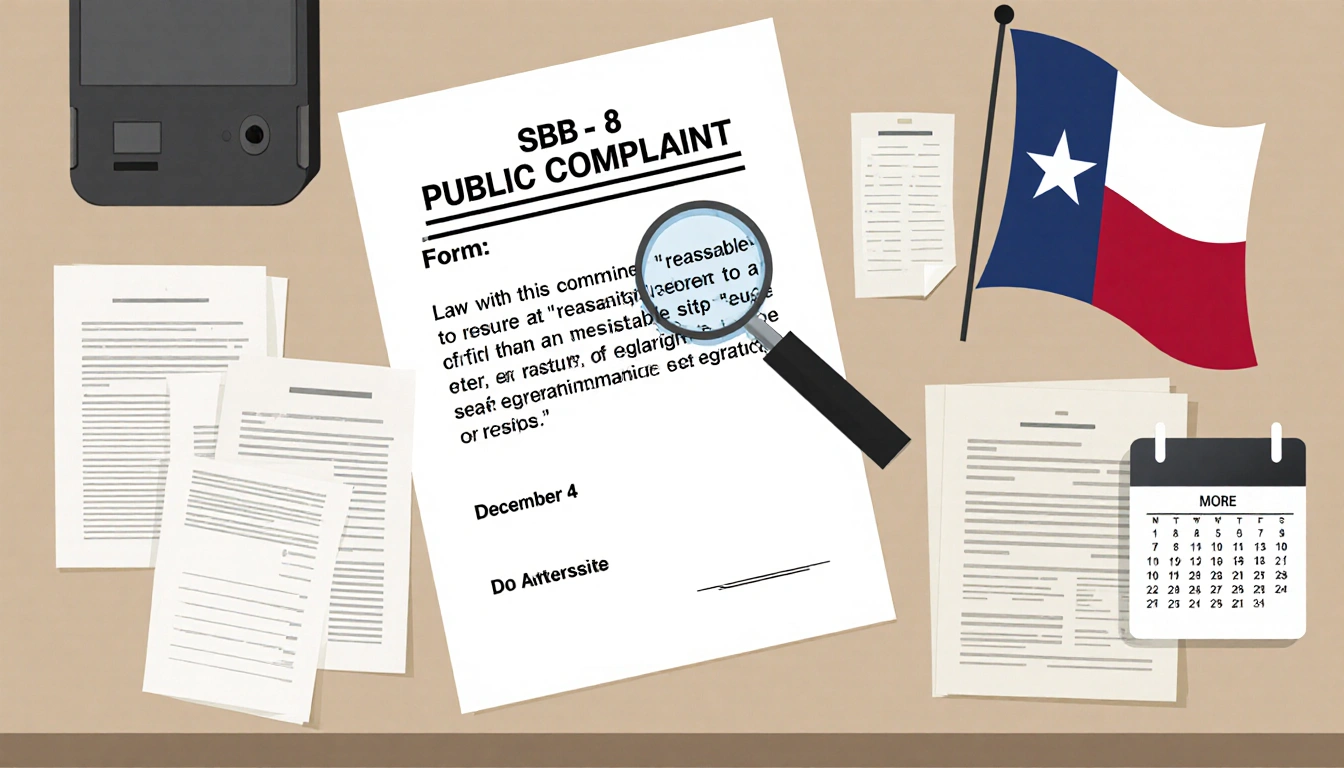
The form, posted on the AG’s website, is designed to collect detailed information from anyone who believes a government-owned, sex-segregated private space-such as a restroom-has violated SB 8. Users must provide their name, contact details, and home address. They are also required to describe the alleged incident, including the date, location, and a “description of evidence.” The form includes upload fields for the complainant’s letter to the facility and any supporting photographs.
Before the AG can take legal action, the complainant must first send a written letter to the facility in question. The letter, coupled with the filer’s willingness to testify or sign an affidavit, constitutes the minimum evidence needed for the AG to consider issuing a fine if the facility’s managers fail to remedy the alleged violation.
What SB 8 Demands
Enacted earlier this year, SB 8 became effective on December 4. The law requires state agencies and political subdivisions to take “reasonable steps” to ensure that people use government-owned, sex-segregated private spaces that correspond to their sex assigned at birth. Importantly, SB 8 does not prohibit private individuals from using these spaces, nor does it allow other private individuals to impede their use. The primary enforcement mechanism is the AG’s ability to levy fines on entities that fail to comply after receiving a written complaint.
Legal Context: Recording in Restrooms
While the complaint form focuses on enforcement of SB 8, the broader legal landscape around photographing restroom users remains fraught. Texas law still classifies invasive visual recording as a state-jail felony. In a recent appellate decision on December 9, judges from the U.S. Fifth Circuit clarified that taking photographs of transgender women in restrooms is likely not protected by the First Amendment.
The judges wrote:
> “It is highly unlikely, to say the least, that there is a First Amendment right to distribute, without their consent, images of a person’s genitalia or other anatomy … while utilizing bathroom facilities,” and “It is also far from clear that there is a First Amendment right to capture and distribute an image, without their permission, of a fully clothed adult while in a public bathroom.”
These rulings underscore the legal risks associated with recording in restroom settings and provide context for the AG’s complaint process.
How the Complaint Process Works
- Letter to the Facility – The complainant must send a written letter detailing the alleged violation.
- Filing the Online Form – The form requires personal information, a narrative of the incident, and evidence uploads.
- AG Review – The AG’s office reviews the complaint and determines whether to issue a fine.
- Potential Fine – If the facility’s managers fail to remedy the violation, the AG can impose fines.
The process is deliberately structured to ensure that complaints are substantiated before the AG takes action. The requirement for a letter and the option to testify or sign an affidavit are key safeguards.
The Role of Public Participation
By opening a formal channel for complaints, the AG is inviting public participation in the enforcement of SB 8. Texans who believe a government-owned facility has failed to meet the law’s requirements can now submit evidence directly to the AG’s office. This step reflects the AG’s commitment to ensuring that state agencies and political subdivisions comply with the law’s mandates.
Key Takeaways
- Texas AG Ken Paxton has launched an online complaint form to enforce Senate Bill 8.
- SB 8 requires government agencies to ensure sex-segregated spaces match a person’s sex assigned at birth, effective December 4.
- The complaint process demands a written letter to the facility and evidence uploads before the AG can act.
- The Fifth Circuit’s December 9 ruling clarifies that photographing restroom users is likely not protected by the First Amendment.
Closing Thoughts
The new complaint form represents a concrete step toward enforcing Senate Bill 8, while the recent appellate decision highlights the legal complexities surrounding restroom photography. Together, these developments illustrate the evolving legal landscape in Texas as the state grapples with balancing regulatory enforcement and individual rights. Texans now have a clear, documented avenue to voice concerns about publicly owned facilities, and the AG’s office is poised to act on substantiated complaints.
Video Reference
The information above is based on KXAN coverage that aired on September 22, 2025, which included a video of the AG’s announcement and a snapshot of the complaint form on the official website.