
> At a Glance
> – Texas AG Ken Paxton barred from enforcing Chapter 56, a rule that would force 13 large counties to hand over prosecutorial data.
> – A 15th Court of Appeals panel of Republican judges upheld a temporary injunction blocking the rule.
> – The rule applies only to counties with 400,000+ residents, a threshold met by 13 counties.
> – Why it matters: Local prosecutors face a costly, constitutionally challenged oversight that could divert resources from crime-fighting.
In a decisive move, the 15th Court of Appeals ruled that Texas Attorney General Ken Paxton lacks the authority to enforce Chapter 56, a rule that would force district attorneys in the state’s largest counties to hand over extensive prosecutorial data. The ruling follows a temporary injunction by a Travis County judge and a coalition of seven district attorneys who argue the rule oversteps constitutional limits and imposes a financial burden. The decision sends the case back to district court and confirms that local prosecutors retain control over their files.
Court Decision and Legal Background
The court, composed entirely of Republican judges, confirmed that Paxton’s office cannot compel district attorneys to submit documents under Chapter 56. The rule was originally proposed in September 2024 and became effective in April, targeting 13 counties with populations of 400,000 or more. The injunction from Travis County Judge Catherine Mauzy, issued in May, halted the rule before its first report was due on June 30.
- The rule requires district attorneys to provide all documents or communications produced or received by their offices, including confidential information.
- Counties must submit quarterly reports on 12 subjects, such as indictments of police officers and election-code violations.
- Failure to provide requested documentation could result in “official misconduct” and removal of a district attorney.
District Attorneys’ Lawsuits
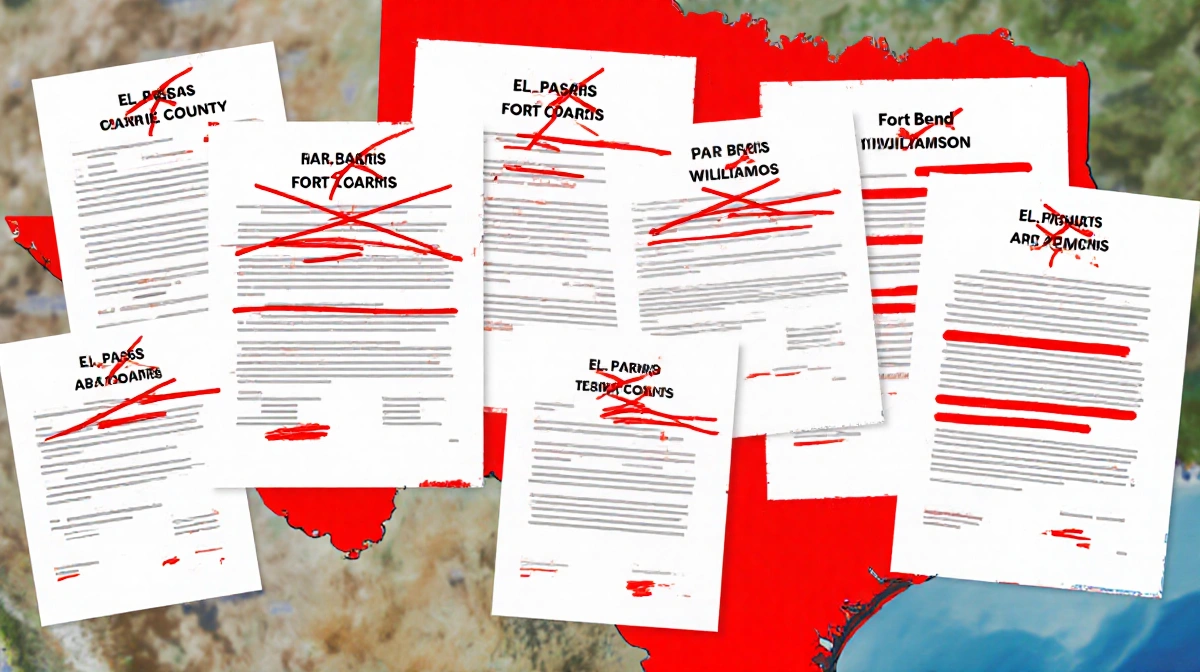
Seven district attorneys from Travis, El Paso, Harris, Dallas, Bexar, Fort Bend and Williamson counties filed separate lawsuits seeking to block the rule. They claim the rule violates the Texas Constitution’s separation of powers and federal law, and would force offices to produce “terabytes” of data. The suits argue the rule’s broad disclosure of privileged information serves a political objective rather than public safety.
Christian Menefee stated:
> “This is another clear victory for Harris County and for local governments across Texas. Once again, a court has confirmed that Ken Paxton does not have the authority to carry out this plan to look over the shoulder of locally elected officials.”
Joe Gonzales said:
> “These reporting requirements do not make communities safer. They do not identify trends, improve transparency, or enhance public trust. Instead, they create barriers that divert limited resources away from what matters most, which is prosecuting violent offenders and protecting our community.”
Paxton’s Defense and Rule Details
Paxton praised the rule as a “straightforward, common-sense measure” that would expose rogue district attorneys who refuse to prosecute dangerous crimes. He argued the rule imposes minimal fiscal impact and that it would help citizens judge prosecutors’ performance. The rule would allow the AG’s office to request entire case files at its discretion, and failure to comply could lead to official misconduct charges and removal of a district attorney.
| Feature | AG’s Request | DA’s Obligation | Potential Impact |
|---|---|---|---|
| Document Scope | All case file materials | Provide all documents, correspondence, notes | “Terabytes” of data |
| Quarterly Reports | 12 subjects, including officer indictments | Submit reports | Resource-intensive |
| Oversight Committee | Can request files | Must comply or face misconduct | Removal possible |
Implications and Next Steps
The appeals court’s decision returns the case to the district court, where the plaintiffs expect a trial that could affirm the injunction and solidify limits on the AG’s oversight powers. The ruling is seen as a victory for local governments and may influence future attempts to regulate district attorneys across Texas. The case underscores the tension between state oversight and prosecutorial independence.
Key Takeaways
- Texas AG Ken Paxton cannot enforce Chapter 56, limiting state oversight over 13 large counties.
- Seven district attorneys argue the rule violates constitutional limits and imposes a costly burden.
- The 15th Court of Appeals upheld a temporary injunction, sending the case back to district court.
The ruling marks a significant check on the Texas Attorney General’s reach, preserving the autonomy of district attorneys in the state’s largest counties and highlighting the ongoing debate over accountability versus local control.