Texas has faced a combination of devastating floods and a surge in population, pushing the state to look for new ways to manage its water resources. A recent report from Texas 2036 points to water markets as a promising tool.
Water Markets Explained
The report focuses on two existing water markets in Texas: the Lower and Middle Rio Grande Valley and the Edwards Aquifer area. These markets are small regions where water can be sold directly between users within the same area, unlike broader water-marketing programs that move water between regions.
“They essentially identify a price of water within the given region or the given market,” said Jeremy Mazur, director of infrastructure and natural resource policy with research and advocacy group Texas 2036.
“Once you assign an economic value to water within a specific region, you’re a lot smarter with regard to how you use it,” Mazur added.
How Markets Operate
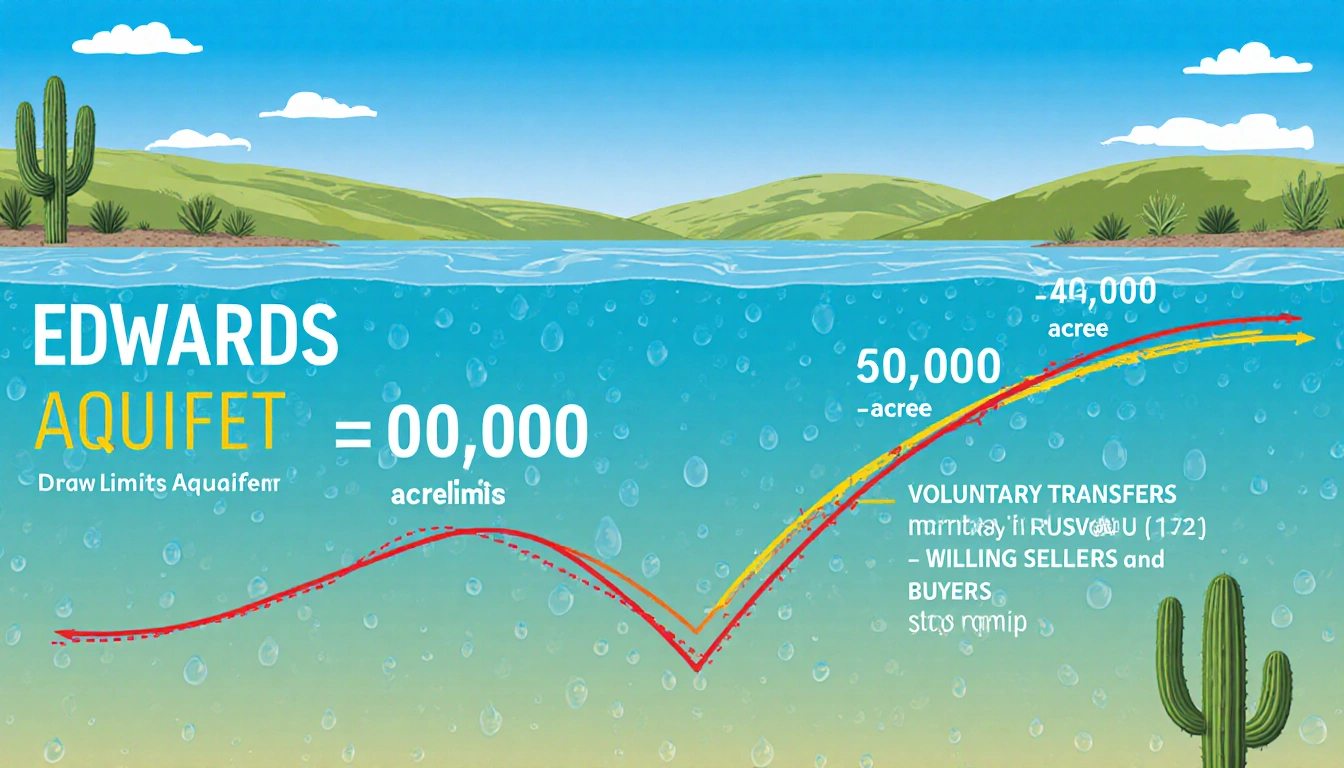
In the Edwards Aquifer market, users face annual draw limits set by caps. The Edwards Aquifer Authority, a regulatory body, oversees these limits and facilitates voluntary transfers of water between willing sellers and buyers.
“(Within these markets, they) have enabled the voluntary transfer of water between willing sellers and interest in buyers. This voluntary transfer of water resources has proven beneficial,” Mazur said.
Because water carries a direct monetary value in these markets, conservation and smart water use have improved. Similar gains have been noted in the Rio Grande market, which relies on surface water.
Proposition 4 and the Texas Water Fund
Earlier this year, voters approved Proposition 4, a constitutional amendment that will channel $1 billion per year for 20 years into the Texas Water Fund (TWF). The TWF finances infrastructure projects across the state.
“Half of the fund will go to finding new water supplies, while the other half will go towards repairing older systems,” the report notes.
House Speaker Dustin Burrows, R-Lubbock, emphasized the urgency of the issue. “People want to come here because of our economy, because of our culture, and they are coming here with U-hauls,” he said in June. “If they show up and they turn on that spigot, and water doesn’t come out, those U-hauls are going to go the absolute opposite direction.”
Future Outlook
The Texas Water Development Board projects that the Lower Colorado River region’s population will almost double by 2070. Over the next 45 years, water needs in the area are expected to grow by almost 13%.
Mazur argues that expanding water markets statewide could help planners better anticipate and meet these rising demands.
Key Takeaways
- Texas has two operational water markets that enable voluntary water trading within specific regions.
- Proposition 4 will fund $1 billion annually for 20 years, split between new supply projects and system repairs.
- Population growth in the Lower Colorado River region will nearly double by 2070, increasing water demand by 13% over 45 years.
Texas’s exploration of water markets reflects a broader effort to balance rapid growth, environmental challenges, and the need for reliable water infrastructure.