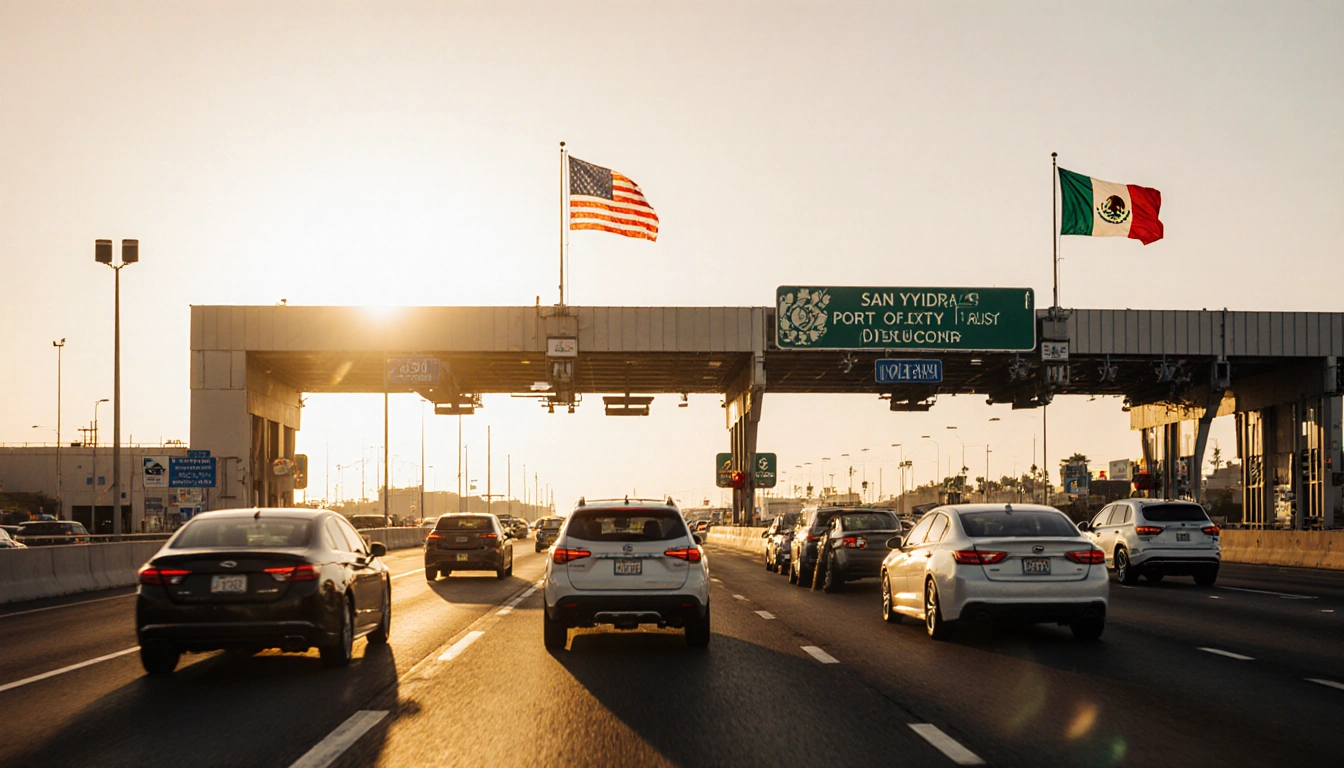
Crossing times from Tijuana into San Diego through the San Ysidro Port of entry have dropped by 10 to 18 percent, a development that could reshape daily commutes for thousands of motorists.
Improved Crossing Times
Pedro Montijo Peterson, Secretary of Tijuana’s Economic Development, credited a joint effort by the city and U.S. Customs and Border Protection for the 10-18 percent reduction in wait times. He emphasized that the goal is to make crossings even faster, stating, “We need to make them even faster,” he said. “Faster crossing times improve the quality of life for motorists at the border.” The percentage decline was observed across all lane categories during the recent assessment period.
City’s Strategic Plans
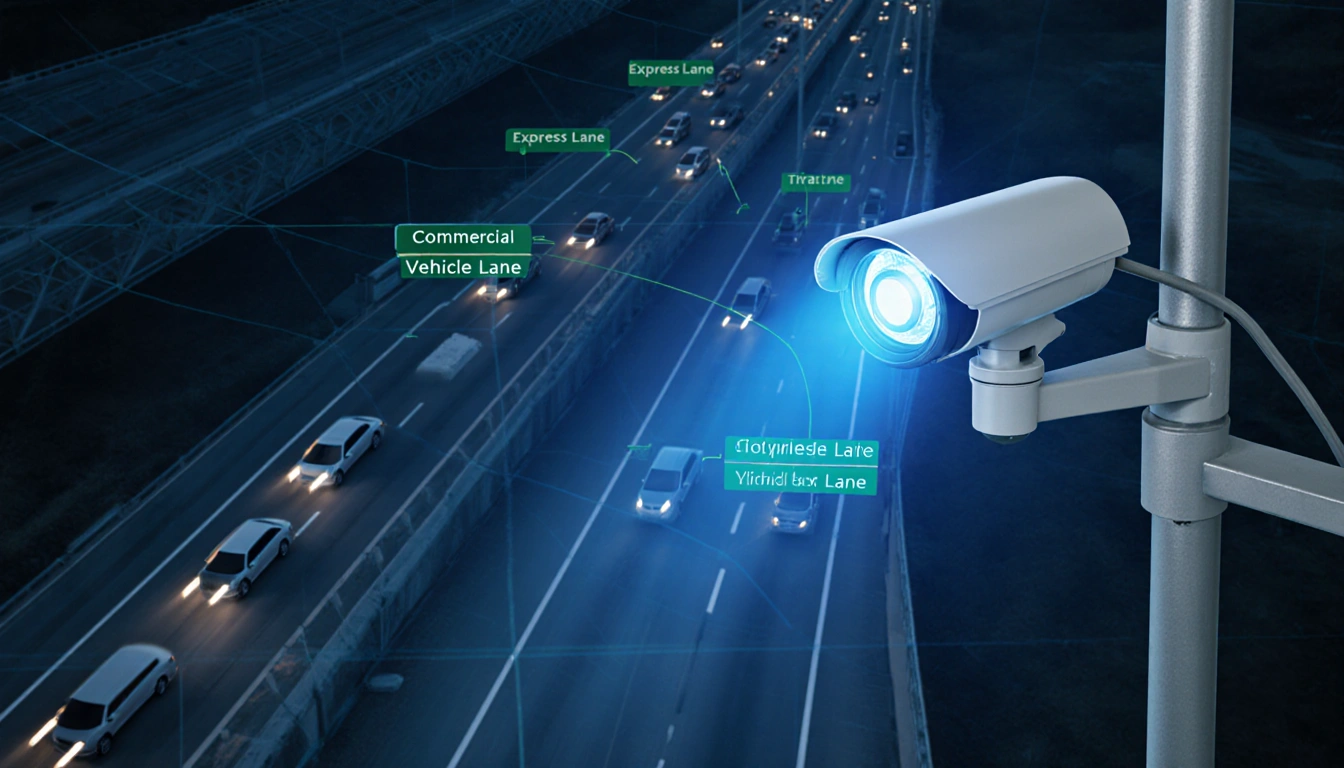
To sustain and further improve traffic flow, the city plans to install cameras on the south side of the port of entry. The cameras will allow CBP agents to monitor lane congestion in real time. “If they see a lot of congestion on certain lanes, they could add more personnel to staff those lanes,” Peterson explained. The installation is part of a broader strategy to use technology for operational efficiency.
Lane Categorization
The San Ysidro Port of entry currently separates traffic into three distinct lanes. SENTRI lanes are reserved for travelers who have completed an extensive pre-screening process. Ready lanes are available to those holding an RFID-enabled travel document, such as a U.S. passport card or an enhanced driver’s license. General lanes accommodate all other motorists. Each lane type is designed to streamline processing for specific traveler profiles.
Recent Lane Re-arrangement
Last month, the city re-arranged the traffic lanes heading into the San Ysidro Port of Entry, with a particular focus on SENTRI card holders. Those travelers can now access the border crossing via Second Street in downtown Tijuana. Peterson said the new configuration appears to be working well, noting that early feedback from commuters is positive.
Data Collection Efforts
The city expects to gather more precise data on crossing times in January and February. “Right now, during the holiday season it’s hard to gauge because there are normally more people crossing the border into the United States, so we’ll have to wait a few months to see how things are working,” Peterson told the El Sol Newspaper of Tijuana. The planned data collection will account for seasonal traffic variations.
CBP Response Status
Border Report reached out to CBP to confirm whether traffic crossing times have diminished lately at the San Ysidro Port of Entry. The agency has yet to reply. The lack of a response leaves some questions about official verification of the reported improvements.
Impact on Motorists
Shorter wait times translate directly into less congestion on the roads that connect to the port. Motorists benefit from reduced travel times, lower fuel consumption, and decreased stress during the busy holiday period. The city’s emphasis on speed reflects a broader commitment to improving the daily experience for border commuters.
Economic Development Perspective
As Secretary of Economic Development, Peterson views the port’s efficiency as a key driver of regional commerce. Faster crossings can attract more trade, encourage tourism, and support local businesses that rely on cross-border traffic. The city’s partnership with CBP is a strategic investment in the region’s economic vitality.
Technology Implementation
The planned camera system will provide continuous video feeds that CBP can analyze to identify bottlenecks. By correlating camera data with lane usage, officials can make informed decisions about staffing levels and lane assignments. This technology aims to reduce manual monitoring and accelerate response times.
Future Outlook
More comprehensive data will be available after the holiday season, allowing city officials to assess the effectiveness of recent changes. The expectation is that the observed 10-18 percent improvement will continue or even increase as new measures take effect.
Key Takeaways
- Crossing times at San Ysidro have fallen 10-18 percent.
- The city will install cameras to monitor lane congestion.
- Recent lane re-arrangement favors SENTRI holders.
- More data will be available after the holiday season.
The collaborative efforts between Tijuana’s city officials and U.S. Customs and Border Protection signal a continued focus on streamlining border crossings, with tangible benefits for motorists and the local economy.