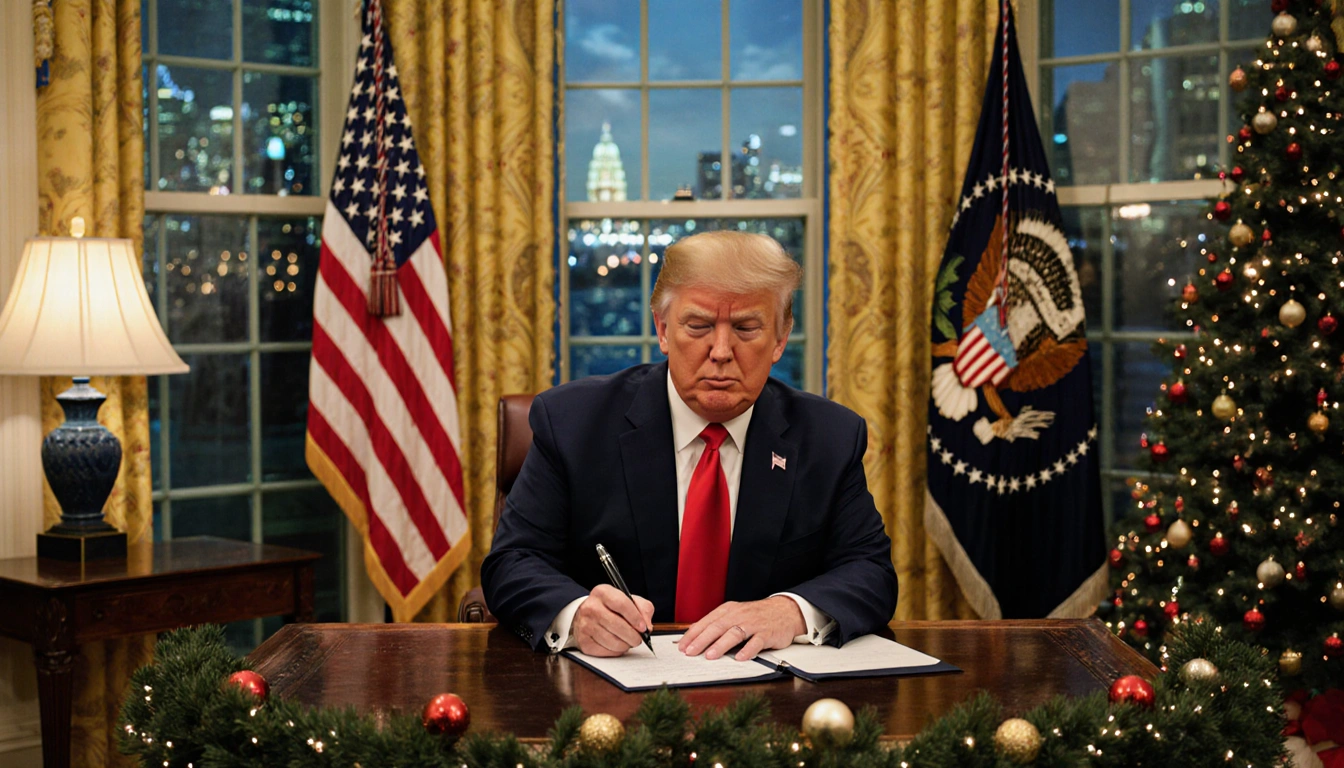
On Thursday, President Donald Trump signed an executive order that will see federal agencies shut down for the next three days. The order designates Christmas Eve and December 26 as federal holidays for this year. This addition will add to the already busy holiday schedule in Washington. The move comes as part of a broader pattern of holiday proclamations by the administration.
Under the new directive, federal employees will be excused from duty on Wednesday, Thursday, and Friday of the holiday week. The closure will affect agencies across the federal government. The order specifically names the dates of December 24, 25, and 26. The executive order clarifies that Christmas Day remains a holiday.
The executive order also allows flexibility for agency heads. It states that “agency heads may determine that certain offices and installations of their organizations, or parts thereof, must remain open and that certain employees must report for duty” on December 24 or 26. This provision gives agencies discretion to maintain essential services. Employees may be required to report for duty on either of those dates.
During his first term, Trump had already declared Christmas Eve a federal holiday in 2019 and 2020. In those years, December 24 fell on a Tuesday and a Thursday, respectively. The decision mirrored President Obama’s earlier action. Obama had made December 26 a holiday in 2014.
President Obama’s 2014 proclamation came when the day after Christmas fell on a Friday. The holiday was meant to provide a longer weekend for Americans. It followed the tradition of extending holiday observances. The decision was well received by the public.
In May of this year, Trump declared two additional national holidays. November 11 was chosen to honor World War I victories. May 8 commemorated World War II triumphs. These proclamations added to the federal holiday calendar.
November 11 is already observed as Veterans Day. The White House clarified that the holiday would not be renamed. Press Secretary Karoline Leavitt explained that the administration would issue an additional proclamation. The proclamation highlighted the Allies’ victory in World War I.
Karoline Leavitt clarified that “the administration will not rename the holiday”. She said the administration would issue an additional proclamation commemorating the Allies’ victory in World War I. The clarification was issued in May. The statement emphasized that Veterans Day would retain its name.
The May 8 holiday aligns with the anniversary of the end of World War II. The proclamation serves as a reminder of the sacrifices made during the war. It also underscores the administration’s focus on military history. The holiday will be observed across federal agencies.
With the two new holidays in May, the federal calendar now lists thirteen holidays for the year. The list includes New Year’s Day, Martin Luther King Jr. Day, President’s Day, Memorial Day, Juneteenth, Independence Day, Labor Day, Columbus Day, Veterans Day, Thanksgiving Day, Christmas Eve, Christmas Day, and December 26. This tally reflects the administration’s emphasis on historical observances.
To make a holiday permanent, Congress must pass legislation and the president must sign it into law. The executive order does not create a permanent holiday. It merely designates a temporary observance for the current year. This distinction is important for legal clarity.
The most recent permanent federal holiday was added in 2021. President Joe Biden signed Juneteenth into law as a federal holiday. The addition recognized the significance of emancipation. It marked a milestone in American history.
The executive order’s impact extends beyond federal workers. State and local governments may choose to observe the holidays. Private businesses may adjust their operating schedules. Employees may plan vacations accordingly.
Federal agencies will need to coordinate staffing for essential services. The order allows agencies to keep critical operations running. Employees required to report for duty will receive notice. The decision balances holiday observance with public service needs.
Public reaction to the new holidays has been mixed. Some citizens welcome the additional time off. Others question the necessity of extra holidays. The administration has framed the decision as a tribute to history and service. Supporters argue it honors veterans and workers.
The executive order also reflects the administration’s broader holiday strategy. The May proclamations align with the theme of honoring military victories. The December holidays echo the tradition of extended Christmas weekends. The pattern demonstrates a consistent approach to holiday observances.
The order’s language is concise and direct. It lists the dates and provides guidance to agencies. The flexibility clause ensures continuity of essential functions. The order is signed in Washington, D.C.
The executive order will be published in the Federal Register. It will be available to the public for review. Federal agencies will incorporate it into their holiday calendars. Employees will receive official notices.
The holiday designations may influence travel and tourism. Families may plan trips during the extended weekend. Airlines and hotels may adjust pricing. The tourism industry could see increased activity.
The holiday decisions also intersect with labor policies. Workers may negotiate time off with employers. The order clarifies federal employee status. Private sector employers will interpret the guidance independently.
The executive order demonstrates the President’s willingness to use executive power. It showcases how holiday proclamations can serve as political statements. The administration’s approach has precedent in past presidents. The decision will be studied by scholars.
The order’s provisions about agency discretion highlight the balance between holiday observance and public service. Agencies may choose to stay open on December 24 or 26. The decision ensures critical services remain available. It also respects employees’ holiday time.
Federal employees will receive holiday pay for the designated days. The order clarifies that Christmas Day remains a holiday. Employees who work on the holidays may receive additional compensation. The policy aligns with federal labor regulations.
The holiday list for the year may influence public sentiment. Citizens may view the extended holiday period as a reward for service. Others may see it as an unnecessary extension. The administration’s framing will shape public perception.
In summary, President Trump’s executive order adds Christmas Eve and December 26 as federal holidays for this year. It follows a pattern of holiday proclamations by the administration. The order balances holiday observance with essential service needs. The impact will be felt across federal agencies and the broader public.
As the holiday season approaches, federal workers and the public will adjust to the new schedule. The executive order reflects the President’s focus on honoring history. The extended weekend offers Americans an opportunity for rest and reflection. The decision will be remembered as part of the holiday tradition.
Key Takeaways
- President Trump declared Christmas Eve and December 26 federal holidays for 2025.
- The order allows agencies to keep essential services open on December 24 or 26.
- The decision follows a series of holiday proclamations, including May 8 and November 11.