At a Glance
- President Donald Trump declares the operation that ousted Nicolás Maduro a success.
- He offers a plan for the U.S. to temporarily run Venezuela.
- The move draws criticism from Europe, Russia, China.
- Why it matters: The intervention raises questions about sovereignty and regional stability.
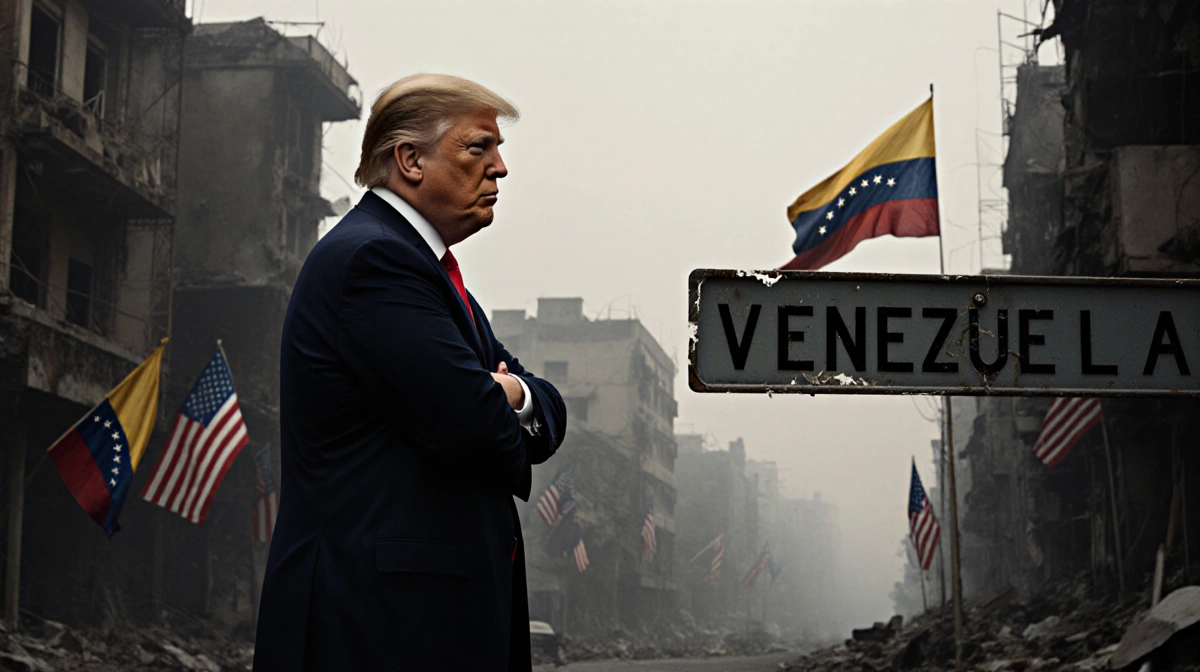
President Donald Trump announced Saturday that the U.S. operation that removed Venezuelan President Nicolás Maduro was a major success, and he outlined a plan for his administration to temporarily run the country. The claim came amid a lack of visible U.S. troops in Caracas and drew sharp criticism from European leaders, Russia, and China. The move highlights the U.S. approach to foreign intervention and the challenges of stabilizing Venezuela.
Trump’s Declaration
At a news conference at Mar-a-Lago, President Trump called the operation “one of the most stunning, effective and powerful displays of American military might and competence in American history.” He added that the U.S. would be reimbursed for all expenses and that his administration would “run” Venezuela until a transition of power.
President Donald Trump announced:
> “This was one of the most stunning, effective and powerful displays of American military might and competence in American history.”
President Donald Trump continued:
> “The money coming out of the ground is very substantial. We’re going to get reimbursed for everything that we spend.”
President Donald Trump added:
> “We’ll run it properly. We’ll run it professionally. We’ll have the greatest oil companies in the world going in, invest billions and billions of dollars. The biggest beneficiary will be the people of Venezuela.”
- Declared operation a historic display of U.S. military might
- Promised reimbursement for all U.S. costs
- Pledged to manage Venezuela temporarily
International Reactions
European leaders, Russia, and China condemned the operation as a violation of international law. The European Commission expressed “great concern,” France’s Foreign Minister said it infringed the principle of non-use of force, and Russia called it an act of armed aggression.
European Commission President António Costa said:
> “We have great concern about the situation in Venezuela following the U.S. operation.”
France’s Foreign Minister Jean-Noël Barrot stated:
> “The military operation that led to the capture of Maduro infringes the principle of the non-use of force that underpins international law.”
Russia’s foreign ministry posted:
> “Venezuela must be guaranteed the right to determine its own destiny without any destructive, let alone military, outside intervention.”
China’s foreign ministry also condemned:
> “This operation violates international law and Venezuela’s sovereignty.”
Sen. Ruben Gallego wrote on X:
> “This war is illegal, it’s embarrassing that we went from the world cop to the world bully in less than one year. There is no reason for us to be at war with Venezuela.”
Domestic Support and Opposition
Within the U.S., the operation was championed by Secretary of State Marco Rubio and other officials who had urged Trump to act against Maduro for years. Rubio praised the move and warned Cuba, while Florida Republicans celebrated it as a historic moment.
Secretary of State Marco Rubio said:
> “If I lived in Havana, and I was in the government, I’d be concerned – at least a little bit.”
Rep. Carlos Gimenez wrote on X:
> “I have spoken to Rubio and thanked Trump for having ‘changed the course of history in our hemisphere. Our country & the world are safer for it,’ he wrote, comparing Maduro’s extradition to the fall of the Berlin Wall.”
Rubio also held a long phone conversation on Saturday with Vice President Delcy Rodriguez, Trump said. In an address to the nation, she demanded the U.S. free Maduro but left open the possibility of dialogue with Trump.
Maduro’s Proposed Transition
Maduro had floated a plan to step down in three years and hand power to Vice President Delcy Rodriguez, who would finish his six-year term ending in January 2031. The White House rejected the proposal, citing Maduro’s illegitimacy and accusations of a narco-terrorist state.
- Proposed 3-year transition to Rodriguez
- Rodriguez would complete Maduro’s term ending January 2031
- White House rejected the plan
Maduro earlier this week said Venezuela was open to negotiating an agreement with the U.S. to combat drug trafficking and work with Washington on promoting U.S. further investment in the Venezuelan oil industry. Trump said Maduro was offered chances to surrender but declined.
Venezuelan President Nicolás Maduro said:
> “Venezuela is open to negotiating an agreement with the United States to combat drug trafficking and work with Washington on promoting U.S. further investment in the Venezuelan oil industry.”
President Donald Trump replied:
> “Maduro was recently offered chances to surrender but declined.”
Key Takeaways
- Trump declared the Maduro operation a major U.S. military success and pledged temporary U.S. governance of Venezuela.
- The move drew sharp criticism from Europe, Russia, China, and U.S. Democrats over violations of international law.
- Maduro’s proposed transition plan was rejected, and the U.S. remains poised to manage Venezuela until a new leadership emerges.
The operation underscores the U.S. willingness to intervene in sovereign affairs and the complex diplomatic fallout that follows.