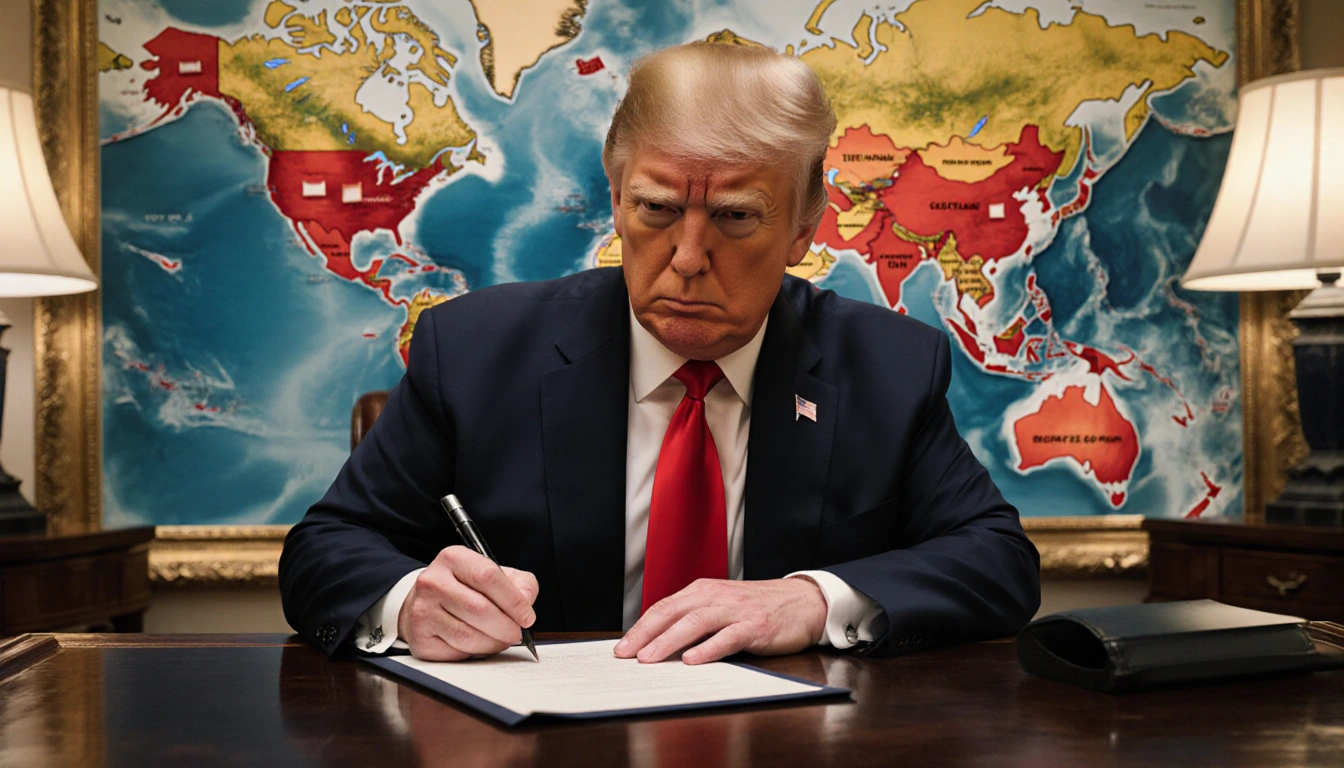
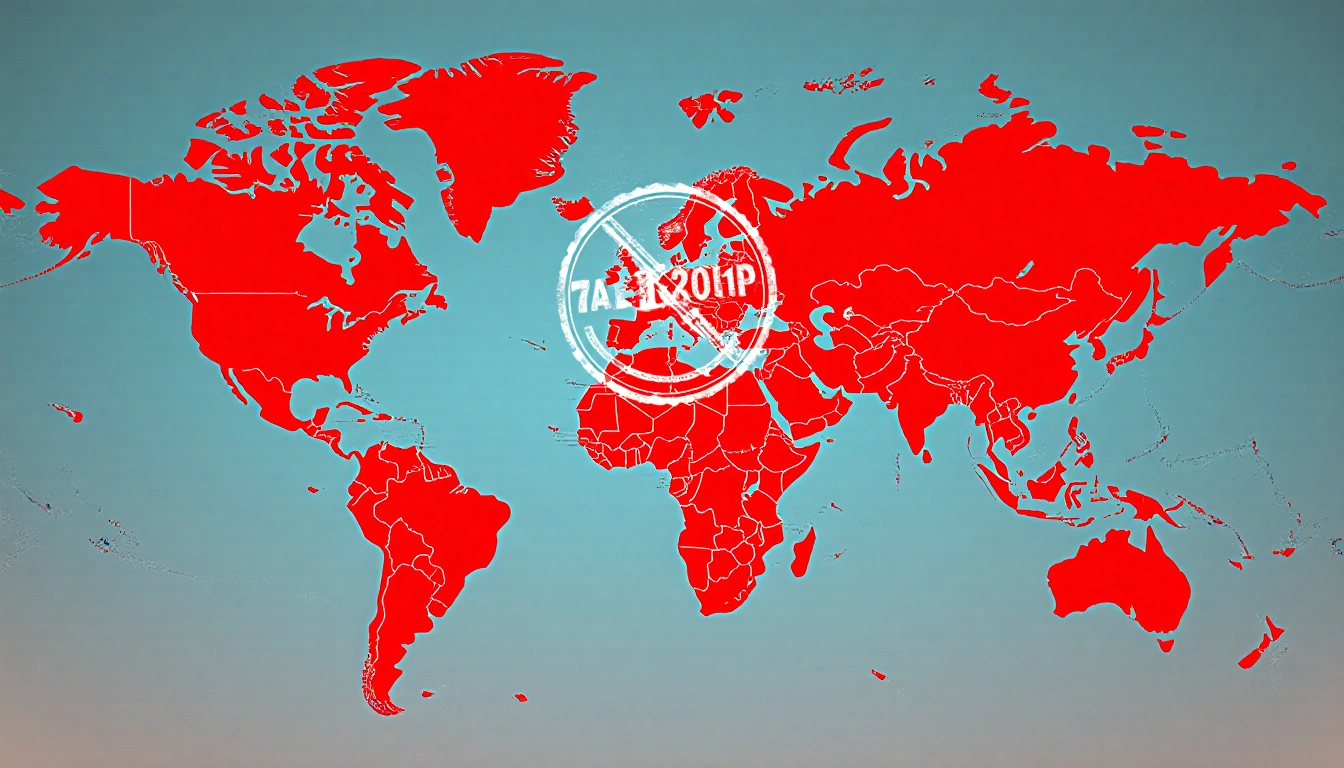
President Trump signed a new proclamation on Tuesday that broadens his administration’s travel ban to include over 30 countries.
Full Restrictions
The proclamation imposes “full restrictions and entry limitations” on travelers coming to the United States from Burkina Faso, Mali, Niger, South Sudan, and Syria. It also targets individuals holding travel documents issued by the Palestinian Authority, adding a new group to the list.
Partial Restrictions
In addition to the full bans, the administration places partial entry limits on 15 countries that had not previously been covered by the travel ban. These countries are Angola, Antigua and Barbuda, Benin, Dominica, Gabon, Gambia, Ivory Coast, Malawi, Mauritania, Nigeria, Senegal, Tanzania, Tonga, Zambia, and Zimbabwe.
The proclamation further tightens restrictions on Laos and Sierra Leone, which were already subject to partial limits under the existing travel ban policy.
Exemptions
Travelers who are lawful permanent residents, holders of existing visas, or who fall under certain visa categories for athletes and diplomats are exempt from the new restrictions.
Historical Context
The expanded ban builds on a June order that initially targeted 12 countries: Afghanistan, Chad, Republic of the Congo, Equatorial Guinea, Eritrea, Haiti, Iran, Libya, Myanmar, Somalia, Sudan, and Yemen. Those earlier restrictions remain in effect, according to the White House.
The administration claims the new measures are a matter of national security and argues that countries can be removed from the list if they improve vetting procedures or cooperate with the U.S. For example, the proclamation lifts a ban on non-immigrant visas for citizens of Turkmenistan, citing “significant progress” since the last iteration of a travel ban.
Immigration Groups Respond
The International Refugee Assistance Project blasted the move, stating:
“Subjecting more people to this policy is especially harmful given the administration’s recent invocation of the travel ban to prevent immigrants already living in the United States from accessing basic immigration benefits, including pulling them out of line at citizenship ceremonies. The expanded proclamation notably includes Palestinians and eliminates some exceptions to the original ban,” the organization said in a statement.
The group added: “This racist and xenophobic ban will keep families apart.”
Krish O’Mara Vignarajah, president and CEO of Global Refuge, criticized the policy as well:
“The administration is once again using the language of security to justify blanket exclusions that punish entire populations, rather than utilizing individualized, evidence-based screening,” Vignarajah said. “This move significantly expands the scope of the original travel ban, ensnaring families, students, workers, and people fleeing violence – many of whom have longstanding ties to the United States.”
Government Justification
Homeland Security Secretary Kristi Noem previewed the expansion earlier this month, saying the administration intended to cover more than 30 countries. Noem’s remarks followed a shooting in Washington that killed two National Guard members; the accused shooter is an Afghan native. The incident prompted Trump and other Republicans to push for tighter restrictions on foreign nationals.
President Trump has consistently sought to reduce the number of immigrants and refugees allowed into the United States. The administration has already paused all pending asylum applications for people from across the globe.
In a recent move, Trump set the refugee cap to its lowest level in history, allowing the U.S. to admit only 7,500 refugees-down from the 125,000 cap established under President Biden.
Key Takeaways
- The new proclamation expands the travel ban to over 30 countries, including Palestinians.
- Full bans apply to Burkina Faso, Mali, Niger, South Sudan, Syria, and Palestinian travel documents.
- Partial limits affect 15 additional countries and tighten restrictions on Laos and Sierra Leone.
- Exemptions exist for lawful permanent residents, existing visa holders, and certain athlete and diplomat visas.
- Immigration groups criticize the policy as racist, xenophobic, and harmful to families.
- The administration cites national security and improved vetting as justification.
The update was posted at 6 p.m. EST.
Closing
The expanded travel ban represents a significant shift in U.S. immigration policy, broadening restrictions to a wide array of nations and travel documents. While the administration frames the measures as security-driven, critics argue they target entire populations and undermine longstanding ties to the United States.
The move underscores the administration’s ongoing effort to limit immigration and refugee admissions, reflecting a broader trend of tightening entry requirements across the board.