

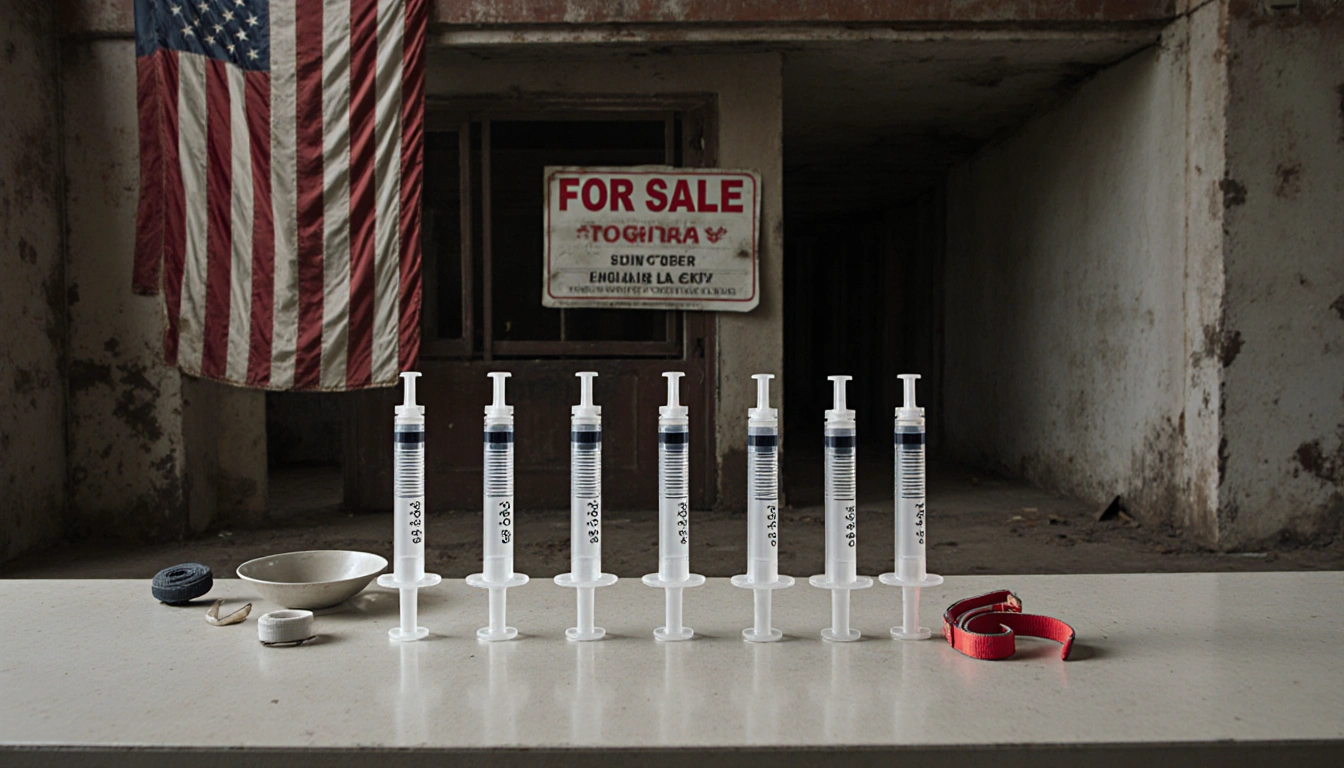
In a storage room at the Clark County Health Department, boxes marked “DO NOT USE” hold cookers and sterile water-supplies that drug users rely on to inject safely. Those items were shipped from the state and paid for with federal money, part of a harm-reduction program that swaps dirty needles for clean ones.
A Federal Executive Order That Rewrites Rules
President Donald Trump’s July executive order bars federal substance-abuse grants from covering supplies he says “only facilitate illegal drug use,” including cookers and tourniquets. Needle exchanges had already been excluded from federal funding. The order forces programs to abandon federally funded items, even as they continue to serve people who inject drugs.
Indiana’s Legal Landscape
Indiana’s 2010 law created syringe-exchange sites after the tiny city of Austin suffered the worst drug-related HIV outbreak in U.S. history. The law is set to expire on July 1, and the number of exchanges has fallen from nine in 2020 to six today. State officials have asked remaining programs to comply with the Trump order and even discard federally funded cookers and tourniquets.
Clark County’s Private-Funding Pivot
Clark County health workers have kept the program alive by purchasing supplies with private money and packaging them in “mystery bags” made by employees who are not paid with state or federal funds. The county’s Program Director, Dorothy Waterhouse, says volunteers spend about half an hour with each visitor, offering testing for HIV and hepatitis C, naloxone, and information on treatment, housing, and jobs.
The Human Stories Behind the Numbers
Joshua Gay, 44, once lived in an apartment across from the Clark County exchange and used meth daily. “The addiction took away everything… I wouldn’t even shower,” he said. After being encouraged by health workers, he entered treatment at LifeSpring Health Systems and now helps others stay sober. He credits the exchange with saving his life and giving him the naloxone that revived a friend who overdosed on heroin.
Impact of the Exchange Program
Since its 2017 launch, Clark County’s program has distributed more than 2,000 doses of naloxone, made over 4,300 referrals to drug treatment, and issued more than 4,400 referrals for HIV or hepatitis C testing. Its syringe return rate stands at 92%. Across the state, exchanges have referred more than 27,000 people to treatment and reversed nearly 25,000 overdoses, according to the nonprofit Damien Center.
Evidence That Syringe Exchanges Work
Research cited by local and national experts shows exchanges do not increase syringe litter, crime, or drug use. Every dollar invested is estimated to return $7 in avoided health-care costs. The Centers for Disease Control and Prevention reported an estimated 50% reduction in HIV and hepatitis C incidence in 2022. In Scott County, where the HIV outbreak sickened 235 people, new cases dropped to fewer than five per year in 2020 and 2021 after the program ended.
Political Backlash and Support
Republican-led Indiana and other states are divided. Curtis Hill, a former Indiana attorney general, criticized the Trump order, saying, “We don’t want to get into a situation where we’re promoting drug use.” Meanwhile, California continues to fund supplies such as pipes and syringes with state money and now hosts 70 of more than 580 exchanges listed by the North American Syringe Exchange Network.
In West Virginia, the Cabell-Huntington Health Department stopped dispensing needles but still offers naloxone, fentanyl test strips, education, disease testing, and care referrals. Health Officer Dr. Michael Kilkenny said, “We’re just not going to be dispensing syringes or the other things that are in disfavor.”
Andrew Nixon, spokesman for the U.S. Department of Health and Human Services, emailed that federal funds can still be used for “life-saving services” like education and naloxone, reflecting a “commitment to addressing the addiction and overdose crisis impacting communities across our nation.”
A Murky Future for Indiana Exchanges
Dr. Eric Yazel foresees a difficult legislative session. “We have an uphill battle coming up,” he said. Damien Center CEO Alan Witchey and advocates launched a website to contact lawmakers; a state senator has introduced a bill to extend the sunset date to 2036. “Without these programs, there will be one less tool to address the diseases of substance use disorder, hepatitis C and HIV,” Witchey warned.
Key Takeaways
- Trump’s July order bans federal funding for cookers and tourniquets, threatening Indiana syringe-exchange sites.
- Clark County keeps the program running with privately funded supplies and “mystery bags.”
- Exchanges have saved lives, reduced disease incidence, and generated significant health-care savings.
The fight over syringe exchanges in Indiana highlights the clash between public-health evidence and political ideology. As the state’s law approaches expiration, the future of these life-saving programs hangs in the balance.