At a Glance
- President Donald Trump‘s raid on Maduro marks a decisive U.S. assertion in the hemisphere.
- Right-wing leaders across Latin America cheer; left-wing presidents condemn.
- “Donroe Doctrine” reshapes regional alliances.
- Why it matters: The move deepens political divides and signals U.S. intent to assert control over Latin America.
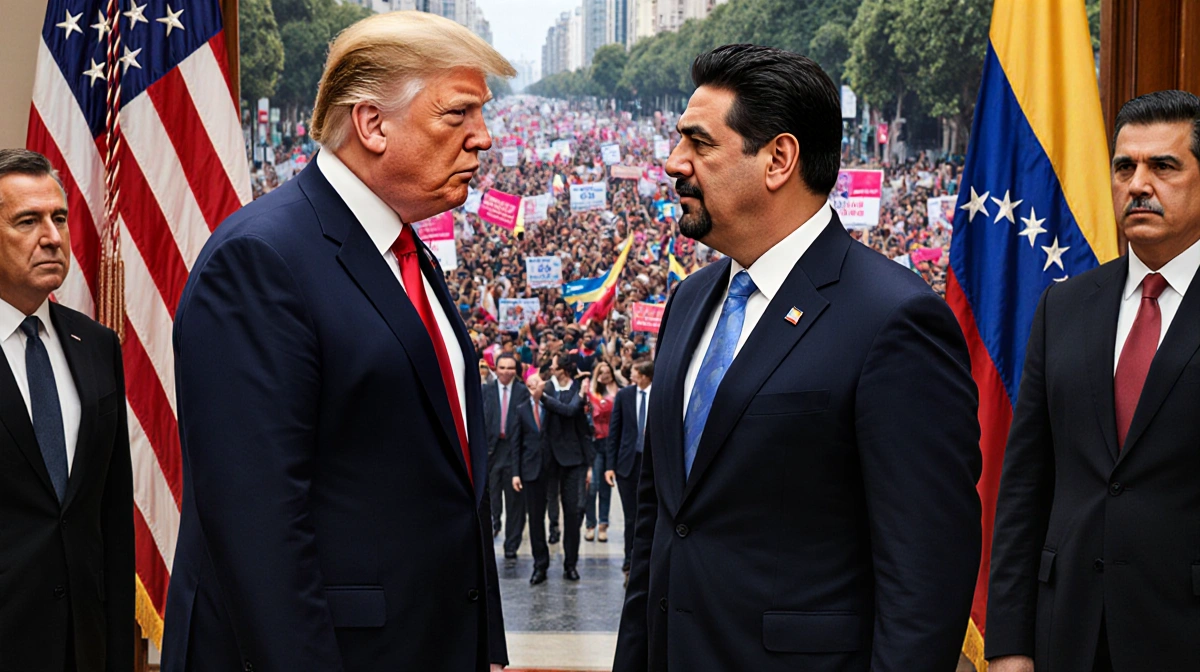
A dramatic news conference in Washington followed Maduro’s capture, with President Donald Trump declaring American dominance in the Western Hemisphere.
He also highlighted the “Donroe Doctrine,” a new policy that frames U.S. dominance in the region.
Trump’s Victory and Foreign Policy
President Donald Trump announced the raid on Maduro and vowed the U.S. would “run” Venezuela and seize its oil sector.
He also reiterated his administration’s broader goals of combating drug trafficking, halting immigration, and countering Russian and Chinese influence.
- Boat strikes against alleged drug traffickers in the Caribbean.
- Naval blockade on Venezuelan oil exports.
- Interference in elections in Honduras and Argentina.
Regional Reactions
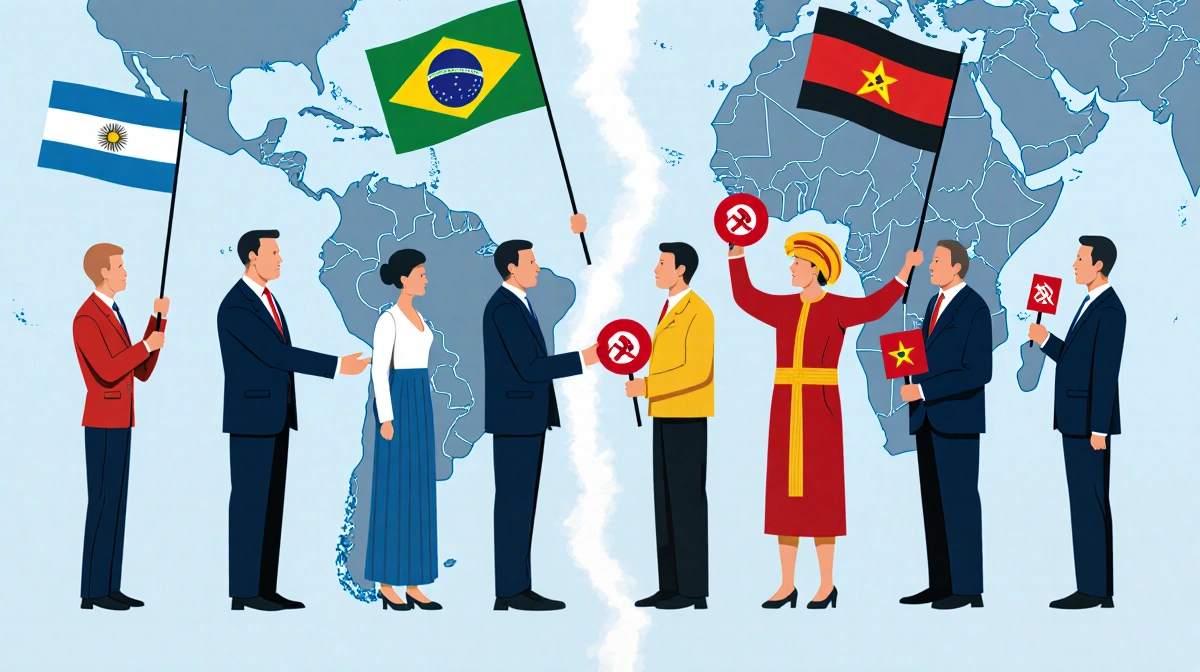
The raid split Latin America, with right-wing leaders celebrating and left-wing presidents denouncing U.S. aggression.
Their reactions highlighted the growing divide across the hemisphere.
- President Javier Milei (Argentina) praised the move as a defense of democracy.
- President Daniel Noboa (Ecuador) warned that the Bolivarian structure would collapse.
- President José Antonio Kast (Chile) hailed the raid as “great news for the region.”
- President Luiz Inácio Lula da Silva (Brazil) called it a dangerous precedent.
- President Claudia Sheinbaum (Mexico) said it jeopardizes regional stability.
- President Gabriel Boric (Chile) said it violated international law.
- President Gustavo Petro (Colombia) called it aggression against sovereignty.
| Leader | Country | Stance |
|---|---|---|
| Javier Milei | Argentina | Pro-U.S. |
| Daniel Noboa | Ecuador | Pro-U.S. |
| José Antonio Kast | Chile | Pro-U.S. |
| Luiz Inácio Lula da Silva | Brazil | Anti-U.S. |
| Claudia Sheinbaum | Mexico | Anti-U.S. |
| Gabriel Boric | Chile | Anti-U.S. |
| Gustavo Petro | Colombia | Anti-U.S. |
Gimena Sanchez stated:
> “The Trump administration in multiple different ways has been trying to reshape Latin American politics,” said Gimena Sanchez.
Alexander Gray said:
> “The president is going to be looking for allied and partner nations in the hemisphere who share his kind of broader ideological affinity,” said Alexander Gray.
President Donald Trump told reporters on Air Force One:
> “We’re in the business of having countries around us that are viable and successful, where the oil is allowed to really come out.”
He added:
> “We’re looking more at getting it fixed.”
Kevin Whitaker warned:
> “The Trump administration, it appears at this point, is making decisions about the democratic future of Venezuela without referring back to the democratic result,” said Kevin Whitaker.
Rodrigo Paz said:
> “Bolivia reaffirms that the way out for Venezuela is to respect the vote,” Paz said.
President Donald Trump also remarked:
> “Cuba’s Communist government looks like it’s ready to fall.”
He criticized Sheinbaum:
> “Something’s going to have to be done with Mexico.”
And he repeated allegations about Petro:
> “He likes making cocaine and he’s not going to be doing it very long.”
Historical Echoes
Trump’s actions recall earlier U.S. interventions, from early 1900s support for Chiquita to Cold War backing of dictators in Argentina, Brazil, Chile, Paraguay and Uruguay.
These echoes fuel both condemnation and unease among regional leaders.
Implications for Latin America
The raid signals a new U.S. strategy to build a coalition of compliant governments, while alienating left-wing leaders and deepening regional divisions.
It underscores a shift toward a more aggressive foreign policy dubbed the “Donroe Doctrine.”
Key Takeaways
- Trump’s raid on Maduro marks a renewed U.S. interventionist posture.
- Right-wing leaders across Latin America welcome the move; left-wing leaders condemn it.
- The action deepens political divides and signals U.S. intent to assert control over the hemisphere.
The event underscores how U.S. power is reshaping the political landscape across Latin America.
Its long-term effects remain uncertain.