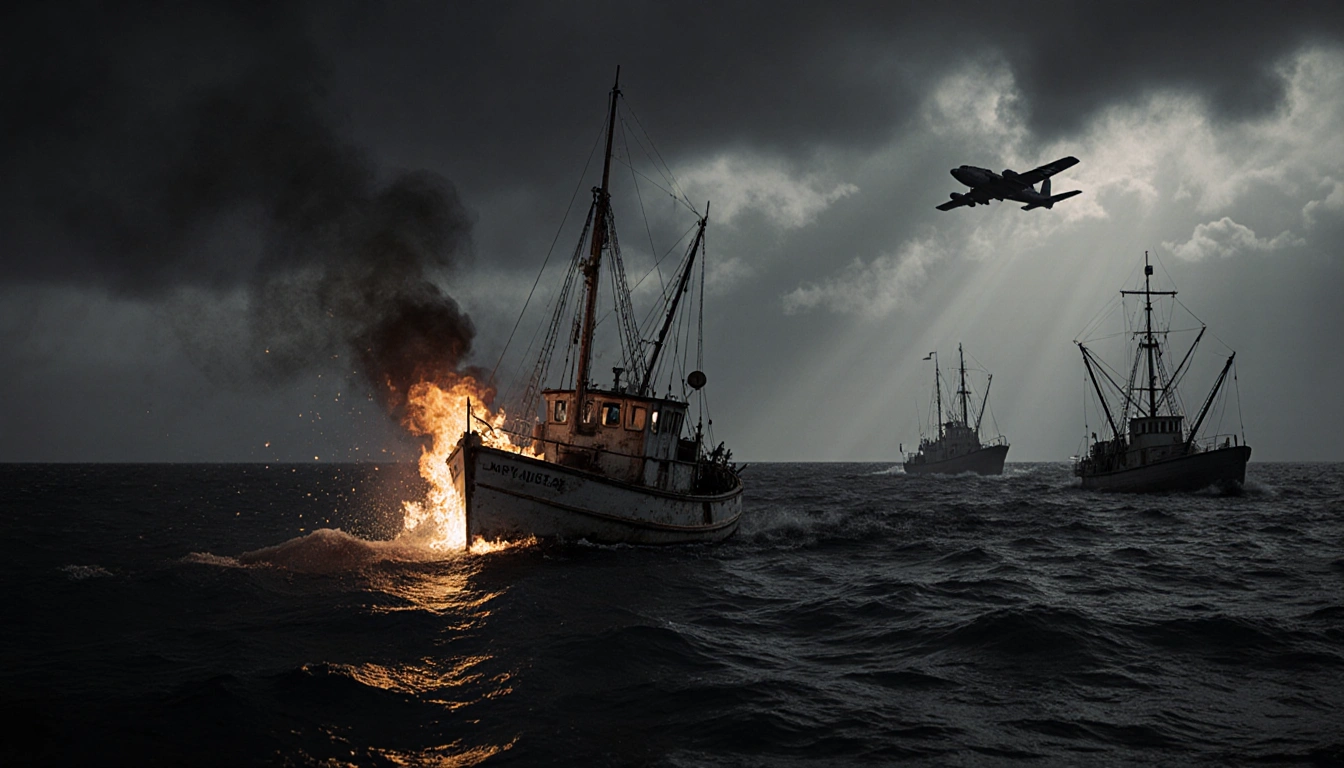
Eight people were killed when the U.S. military struck three boats in the eastern Pacific Ocean on Monday. The strikes were carried out against vessels accused of smuggling drugs, and the military said the attacks targeted “designated terrorist organizations.”
Background of the Boat Strike Campaign
The U.S. military has launched a series of attacks on boats that it claims are involved in drug trafficking. Since early September, the campaign has resulted in at least 95 deaths across 25 known strikes. A follow‑up strike in a recent operation killed two survivors who were clinging to the wreckage of a boat after the initial hit.
The military posted a video on social media showing a boat moving through water before it exploded. The statement did not provide evidence of drug trafficking, but it emphasized that the targets were linked to terrorist groups.
Details of the Latest Strikes
According to the military’s statement, the first vessel was hit and three people were killed. The second boat suffered two fatalities, and the third boat also resulted in three deaths. The attacks took place in the eastern Pacific, an area where the U.S. has intensified its presence in recent years.
President Donald Trump has defended the strikes as a necessary escalation to curb the flow of drugs into the United States. He has also described the situation as an “armed conflict” with drug cartels.
Congressional Response and Briefings
The campaign has drawn increasing scrutiny from lawmakers. On the eve of briefings on Capitol Hill, all members of Congress are expected to receive closed‑door presentations. Defense Secretary Pete Hegseth and Secretary of State Marco Rubio, along with other national‑security officials, are slated to brief the House and Senate.
Lawmakers are questioning the legality and effectiveness of the boat‑strike program, especially given the high death toll and the lack of publicly available evidence linking the targeted vessels to drug smuggling.
Impact on U.S.-Venezuela Relations
The boat‑strike campaign has also intensified pressure on Venezuelan President Nicolás Maduro. Maduro has been charged with narcoterrorism in the United States. Last week, U.S. forces seized a sanctioned oil tanker that the Trump administration accused of smuggling illicit crude.
Maduro has stated that the U.S. military operations are aimed at forcing him from office. The seizure of the tanker and the ongoing boat strikes have further strained diplomatic ties between Washington and Caracas.
Future Operations and Uncertainty
The U.S. military has built its largest presence in the region in decades. President Trump has hinted that land attacks are coming soon, though no details about locations have been released.
The future of the boat‑strike campaign remains uncertain. Congressional scrutiny and international criticism may influence the administration’s strategy, but no official changes have been announced.
Key Takeaways
- Eight people were killed in three boat strikes in the eastern Pacific.
- The campaign has resulted in 95 deaths across 25 known strikes since early September.
- Congressional briefings are underway, and the U.S. faces heightened scrutiny over the strikes.
The latest attacks underscore the tensions surrounding the U.S. anti‑drug campaign and its broader geopolitical implications, particularly in relation to Venezuela.