On Thursday, the U.S. military announced it had carried out two additional strikes against vessels it identified as drug-smuggling boats in the eastern Pacific Ocean, killing a total of five people.
The Strikes
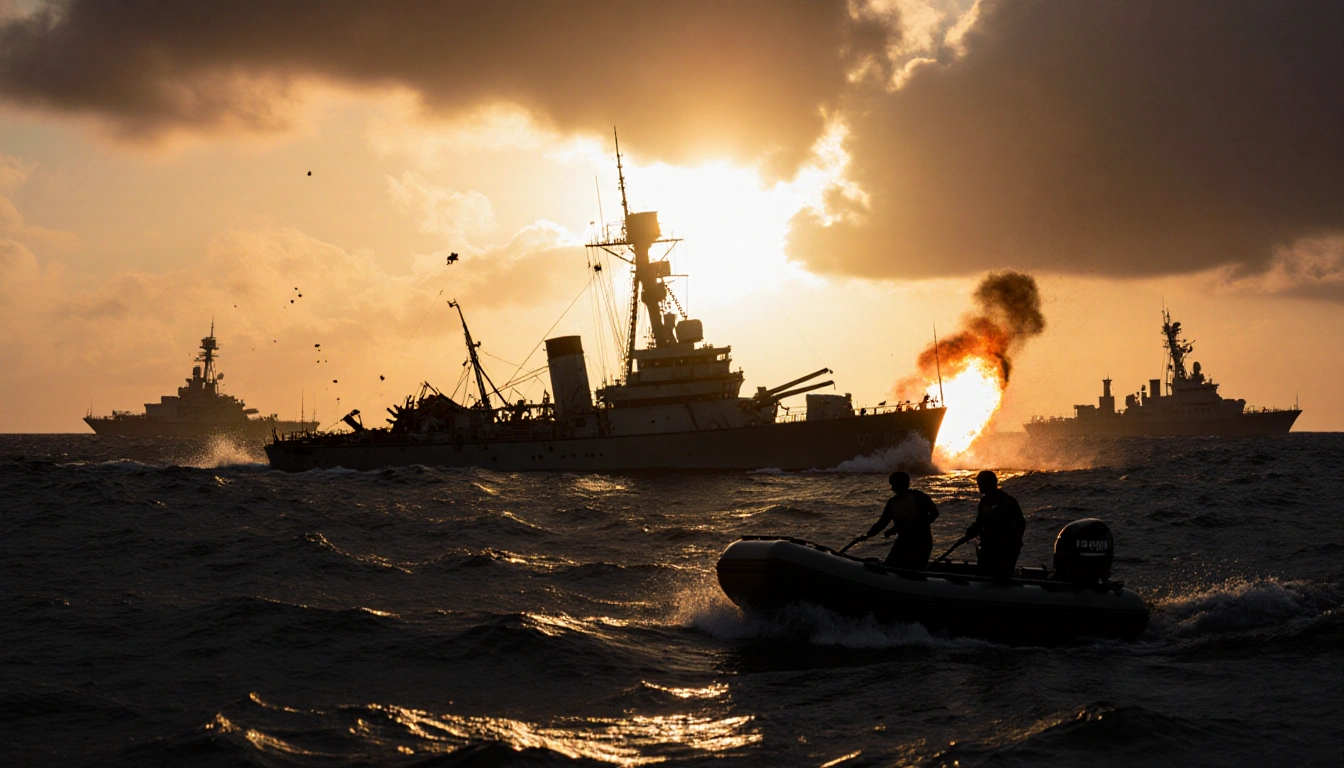
U.S. Southern Command posted a brief statement on its social-media channels, saying, “Intelligence confirmed that the vessels were transiting along known narco-trafficking routes in the Eastern Pacific and were engaged in narco-trafficking operations,” and shared videos of each boat accelerating before an explosion detonated nearby.
The videos show the vessels moving rapidly across the water, followed by a sudden burst of fire and a plume of smoke that engulfed the craft. The footage was posted without any accompanying evidence beyond the visual depiction.
The military confirmed that three individuals were killed aboard one vessel and two aboard the other.
Cumulative Impact
These attacks bring the number of known boat strikes to 28, according to data released by the Trump administration. The administration has also reported that at least 104 people have lost their lives in the campaign.
The figures are based on the U.S. military’s own reporting and the administration’s public statements. No independent verification of the numbers has been provided.
Presidential Rationale
President Donald Trump has defended the strikes as a necessary escalation to curb the flow of drugs into the United States. He has repeatedly described the U.S. as engaged in an “armed conflict” with drug cartels.
Trump’s comments come amid a broader strategy to target drug trafficking routes in the Pacific, a region that has seen an uptick in smuggling activity over recent months.
Legislative Scrutiny
The boat-strike campaign has drawn increasing attention from lawmakers, who question the legality and effectiveness of the operations. Several members of Congress have called for a review of the program’s scope and oversight.
Opponents argue that the strikes could have unintended humanitarian consequences and may violate international law. Supporters claim the actions are a decisive measure against organized crime.
Early September Incident
The first strike in the campaign occurred in early September. A follow-up attack targeted the wreckage of a boat that had already been hit, resulting in the deaths of two survivors who were clinging to the remains.
The incident highlighted the potential for secondary casualties during subsequent strikes and has been cited by critics as evidence of the campaign’s recklessness.
Key Takeaways
- Two recent strikes killed five people and were carried out against drug-smuggling vessels in the eastern Pacific.
- The campaign now totals 28 known boat strikes, with at least 104 fatalities reported by the Trump administration.
- President Trump frames the operations as part of an “armed conflict” with drug cartels, while lawmakers scrutinize the program’s legality and humanitarian impact.
The U.S. military’s continued use of kinetic force against suspected drug traffickers remains a contentious issue, as the administration balances its anti-drug objectives against growing legislative concerns and international norms.