Ukrainian Drone Hunters Deploy Sting Interceptors
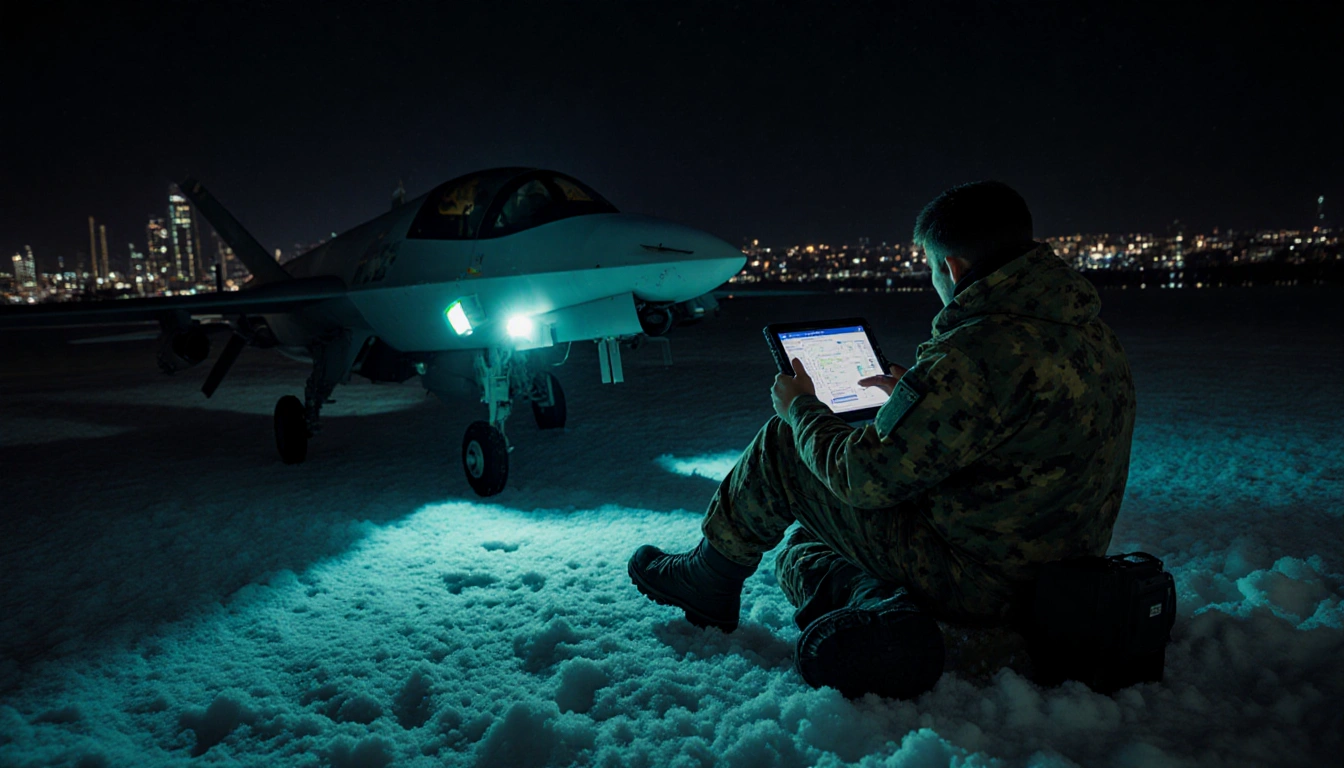
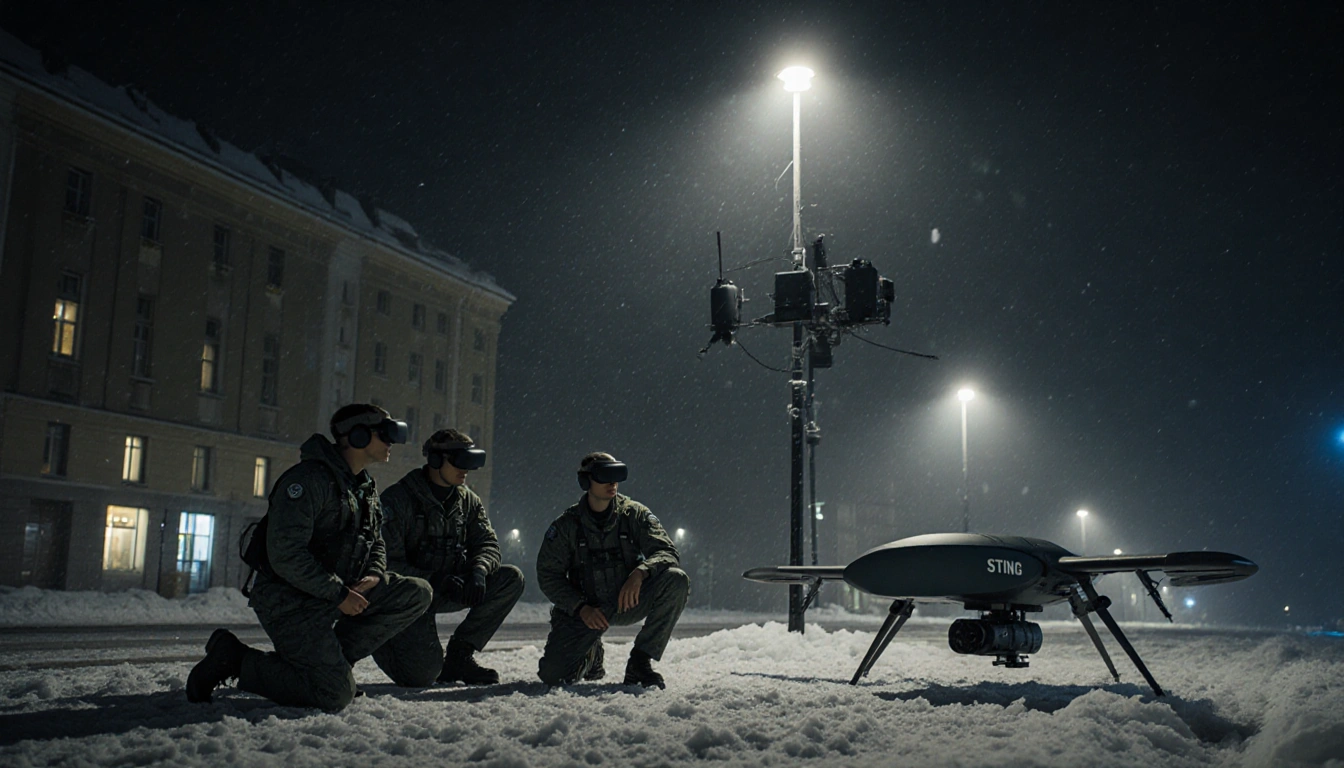
In the biting cold of Kyiv’s streets, a squad of Ukrainian drone hunters set up a night-time defense that could change the drone war. The team, operating under the call sign “Loi,” positioned antennas and sensors on a light stand to monitor the icy ground crackling beneath their boots. Monitors and controls were pulled from hard cases, ready to engage any incoming threat. A new weapon, the Sting, shaped like a flying thermos, was primed for deployment. The Sting represents Ukraine’s latest home-grown interceptor, designed to counter Russia’s evolving suicide drones. Its compact design allows pilots to fly it while watching monitors or wearing first-person-view goggles. The team’s preparation underscores the urgency of defending Ukrainian cities and power infrastructure. Nightly attacks have forced Kyiv to rewrite its air defense rule book, driving innovation in low-cost drone killers.
The Sting’s prototype quickly moved to mass production within a few months in 2025, marking a significant shift in modern warfare. The volunteer-driven startup Wild Hornets built the Sting, while the newly appeared Bullet can surge in speed before colliding with enemy drones. Both interceptors are flown by skilled pilots who rely on real-time data from attached sensors. Their low cost-just $1,000-allows Ukraine to deploy large numbers across the battlefield. This mass-production approach contrasts with the slow replacement cycle of expensive, high-tech missiles. By layering inexpensive systems into existing defenses, Ukraine can protect more targets without breaking the budget. The Sting’s design emphasizes rapid adaptation to the changing drone threat. It also demonstrates how civilian ingenuity can support national defense.
Andrii Lavrenovych, a member of the strategic council of General Cherry, which develops the Bullet, highlighted the economic impact of these interceptors. He stated that the drones they destroy cost anywhere from $10,000 to $300,000. “We are inflicting serious economic damage,” Lavrenovych said, underscoring the financial toll of Russia’s drone campaign. His comments emphasize that each intercepted drone saves more than just infrastructure; it saves money. The cost comparison also illustrates why Ukraine prioritizes affordable countermeasures. Lavrenovych noted that Russia’s use of the Iranian-designed Shahed suicide drone has led to multiple variants. These variants are equipped with jammers, cameras, and turbojet engines, creating a constant innovation race. In some areas, Russia may be one step ahead, but Ukraine continues to develop innovative solutions.
Federico Borsari, a defense analyst at the Washington-based Center for European Policy Analysis, praised interceptors as a valuable addition to Ukraine’s and Europe’s anti-drone arsenal. He said, “Cheap interceptor drones have become so important, and so quickly, that we can consider them a cornerstone of modern counter-unmanned aerial systems.” Borsari added that interceptors “realign the cost and scale equation of air defense.” Their mobility and low cost enable defenders to protect more targets than ever before. However, he cautioned that “it would be a mistake to see them as a silver bullet.” Success, according to Borsari, depends on sensors, fast command and control, and skilled operators. Interceptors fit into a broader menu of options that starts with multimillion-dollar missiles and ends with nets and antiaircraft guns. Their integration of interceptors into layered defense systems enhances overall resilience.
Defense planners in Ukraine and NATO anticipate that drone production on both sides of the conflict will continue to scale in 2026. This urgency drives European plans to create a layered air-defense system known as the “drone wall.” The network, to be rolled out along Europe’s eastern borders over two years, is designed to detect, track, and intercept drones. Ukrainian-style interceptors could play a central role in destroying threats within this system. The “drone wall” aims to provide a coordinated response across multiple countries. It will rely on shared sensors, data links, and rapid response teams. The system’s success hinges on interoperability and real-time decision making. Ukraine’s experience with low-cost interceptors informs the design of this broader European defense architecture.
Ukrainian drone makers plan to expand coproduction with U.S. and European firms next year. By merging battle-tested designs and valuable data with Western scale and funding, the collaboration would boost output. It would also embed Ukraine in NATO-member supply chains. This partnership could accelerate the deployment of interceptors across the continent. It reflects a growing trend of integrating Eastern European innovations into Western defense programs. The collaboration would bring Ukrainian expertise to bear on high-profile projects. It would also provide access to advanced manufacturing facilities and financing. Ultimately, the partnership aims to strengthen collective security against drone threats.
Lavrenovych also highlighted automation as an inevitable trend for future drone defense. He argued that mobile groups shouldn’t have to approach the front line, where they become targets. “Drones must become fully autonomous robots with artificial intelligence- as scary as that may sound-to help our soldiers survive,” he said. Automation would reduce human exposure and increase deployment flexibility. It would also allow interceptors to operate in contested environments without direct human control. The integration of AI could improve target recognition and engagement speed. However, implementing such systems requires robust cybersecurity safeguards. Ukraine’s focus on autonomous technology signals a shift toward more resilient defense solutions.
The Sting’s design, shaped like a flying thermos, reflects the ingenuity of volunteer-driven teams. Its lightweight structure enables rapid deployment across varied terrains. The interceptor’s ability to surge in speed before colliding with enemy drones gives it a tactical advantage. This capability is especially useful against high-altitude, fast-moving suicide drones. The Sting’s low cost allows Ukraine to field many units simultaneously. The mass-production approach reduces manufacturing lead times. It also lowers the financial barrier for widespread deployment. The result is a more flexible and responsive air-defense posture.
The Bullet, another interceptor from General Cherry, shares similar design principles with the Sting. It can also surge in speed before colliding with enemy drones. The Bullet’s design is tailored for rapid deployment and high maneuverability. Like the Sting, it relies on pilots monitoring data from attached sensors. Its low cost aligns with Ukraine’s strategy of mass deployment. The Bullet’s performance complements the Sting’s capabilities. Together, they form a versatile swarm of interceptors. This combination enhances coverage across multiple threat scenarios.
The economic impact of interceptors is significant, as Lavrenovych noted. Each intercepted drone saves Ukraine money and infrastructure. The cost of drones ranges from $10,000 to $300,000. Interceptors costing $1,000 each offer a high return on investment. This cost advantage enables Ukraine to field more units than expensive missiles. It also reduces reliance on limited high-tech resources. The strategy demonstrates how low-cost solutions can offset high-value threats. It underscores the importance of affordable technology in modern warfare.
Russia’s use of the Iranian-designed Shahed suicide drone continues to pose a significant threat. The drone has multiple variants with jammers, cameras, and turbojet engines. These features create a constant innovation race between the two sides. Russia may be one step ahead in some areas. However, Ukraine counters with innovative solutions that sometimes cause Russia to suffer. Lavrenovych highlighted this competitive dynamic. The exchange of technological advancements fuels the conflict’s complexity. It also drives the need for rapid adaptation on both sides.
Borsari’s comments emphasize the importance of interceptors in Europe’s anti-drone strategy. He views them as a cornerstone of modern counter-unmanned aerial systems. Interceptors realign the cost and scale equation of air defense. Their mobility and low cost allow for broader coverage. However, they are not a silver bullet. Success depends on sensors, command and control, and skilled operators. Interceptors fit into a menu of options from missiles to nets. Their integration enhances overall defense resilience.
The Ukrainian “drone wall” aims to provide a coordinated response across multiple countries. It relies on shared sensors, data links, and rapid response teams. The system’s success hinges on interoperability and real-time decision making. Ukrainian-style interceptors could play a central role in destroying threats. The network will be rolled out over two years along Europe’s eastern borders. It will detect, track, and intercept drones. The design reflects lessons learned from Ukraine’s experience. It demonstrates how small, low-cost interceptors can contribute to large-scale defense.
The collaboration between Ukrainian drone makers and Western firms will accelerate production. It will embed Ukraine in NATO-member supply chains. The partnership will bring Ukrainian expertise to high-profile projects. It will also provide access to advanced manufacturing facilities. The partnership aims to strengthen collective security. It reflects a growing trend of integrating Eastern European innovations into Western defense programs. The partnership will also allow for rapid deployment of interceptors across the continent. It ultimately strengthens collective security against drone threats.
Automation is seen as the next inevitable trend for drone defense. Mobile groups should not approach the front line. Drones must become fully autonomous robots with artificial intelligence. This will help soldiers survive. Automation reduces human exposure. It increases deployment flexibility. AI improves target recognition and engagement speed. Implementing such systems requires robust cybersecurity safeguards.
The Sting, Bullet, and other interceptors represent Ukraine’s rapid adaptation to drone threats. Their low cost and mass production allow for widespread deployment. They complement expensive missiles and other defensive measures. Ukraine’s experience informs European defense plans. The “drone wall” will incorporate these interceptors into a layered system. Collaboration with Western firms will boost output and supply chain integration. Automation will further enhance resilience. Together, these measures aim to protect Ukrainian cities and power infrastructure from suicide drone attacks.