At a Glance
- 2025 protest policing became a military spectacle, with 4,000 National Guard troops in Los Angeles.
- President Trump deployed 800 National Guard troops in Washington, DC, placing the police department under federal control.
- Operation Midway Blitz in Chicago featured barricades, tear gas, and Homeland Security Secretary Kristi Noem on the ICE facility roof.
- Why it matters: It signals a shift from traditional crowd control to performative, pre-emptive policing that reshapes civil rights and public safety.
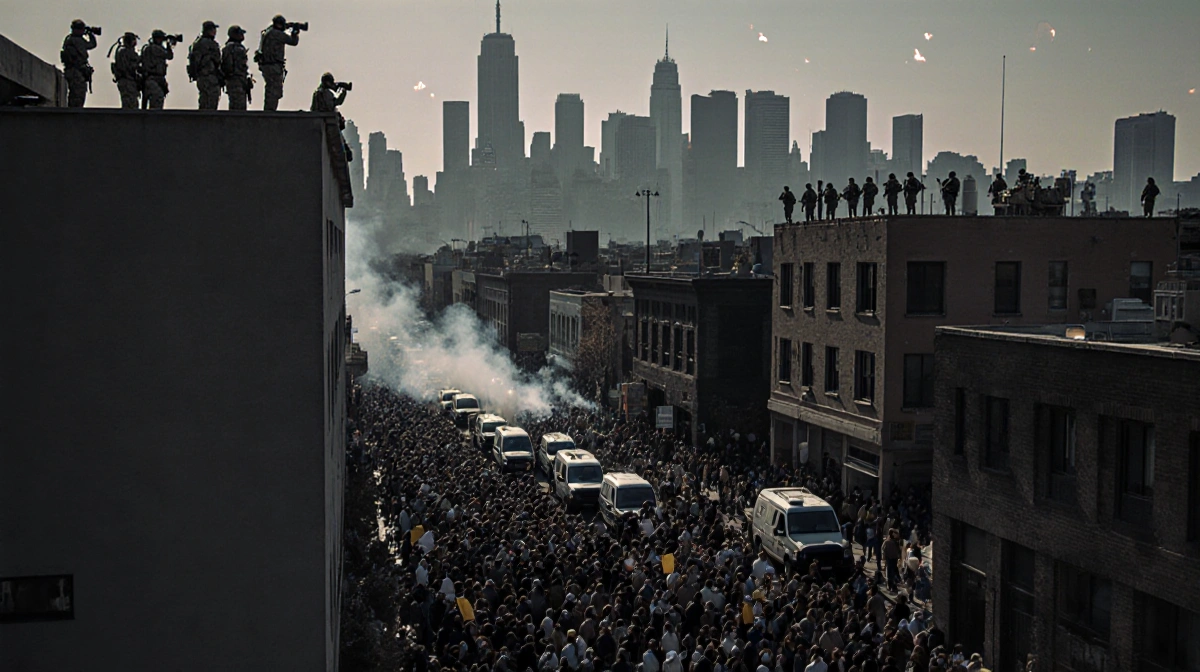
In 2025, protest policing in major US cities shifted from traditional crowd-control tactics to overt military spectacle, deploying thousands of troops and staging high-profile displays.
From Spectacle to Federal Control
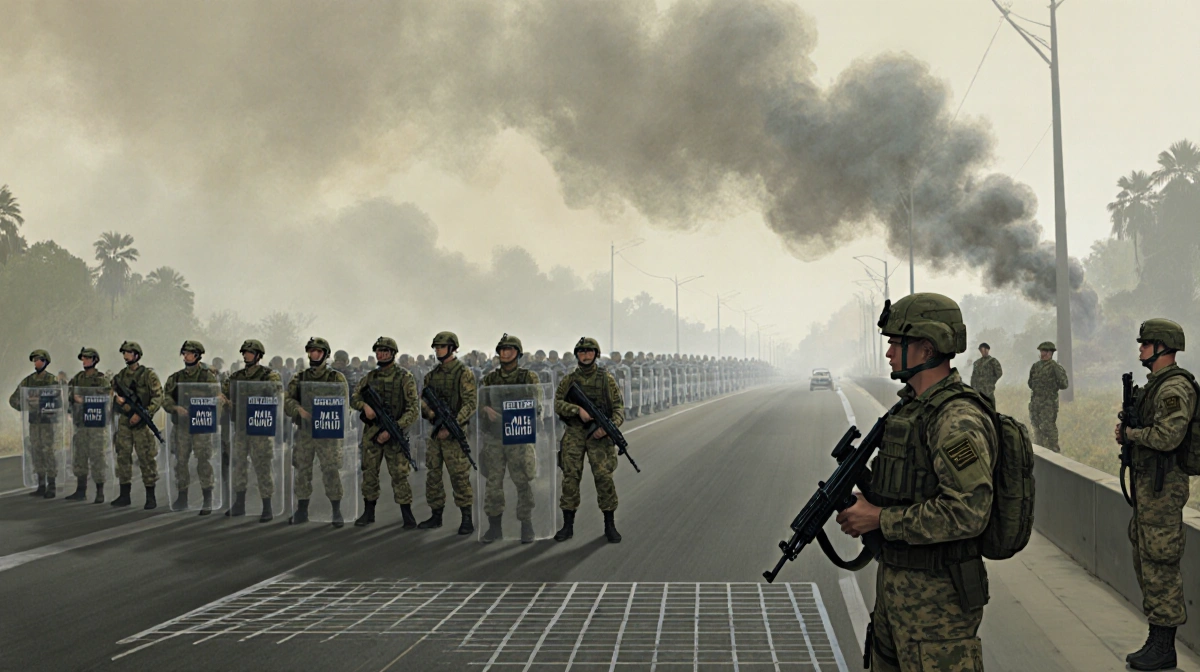
The shift began in Los Angeles, where President Donald Trump ordered roughly 4,000 federalized National Guard troops and activated about 700 Marines after June protests over ICE raids. Troops stood shoulder to shoulder with long guns and riot shields, while smoke canisters blanketed highways. The Pentagon drafted domestic use-of-force guidance that contemplated temporary civilian detention, an explicit legal gray area.
President Trump announced:
> “knock the hell out of them”
The Washington Post described Washington, DC, as a “laboratory for a militarized approach.”
- 4,000 National Guard troops in LA
- 700 Marines activated
- 800 National Guard troops in DC
- Operation Midway Blitz in Chicago
Strategic Incapacitation: The Quiet Pre-emptive Shift
Policing scholars call this pre-emptive model “strategic incapacitation,” where conditions are shaped to prevent protests from becoming effective. The toolkit overlaps with 2025 tactics: expansive surveillance, intelligence sharing, selective pre-emptive arrests, and “less-lethal” disruption.
| Date | City | Deployment | Action |
|---|---|---|---|
| June 2025 | Los Angeles | 4,000 National Guard, 700 Marines | Military staging, smoke canisters |
| August 2025 | Washington, DC | 800 National Guard | Federal control of police |
| September 2025 | Chicago | State police, federal agents | Barricades, tear gas, roof-level arrests |
The table shows how each city escalated from militarized presence to direct federal control, turning protest policing into a performance.
Key Takeaways
- Protest policing shifted from suppression to a military spectacle with large troop deployments.
- Federal authority expanded in DC, placing local police under national control.
- Strategic incapacitation pre-emptively restricts protest formation, reshaping civil-rights dynamics.
The trend underscores a new era where optics and narrative drive policing as much as force.