
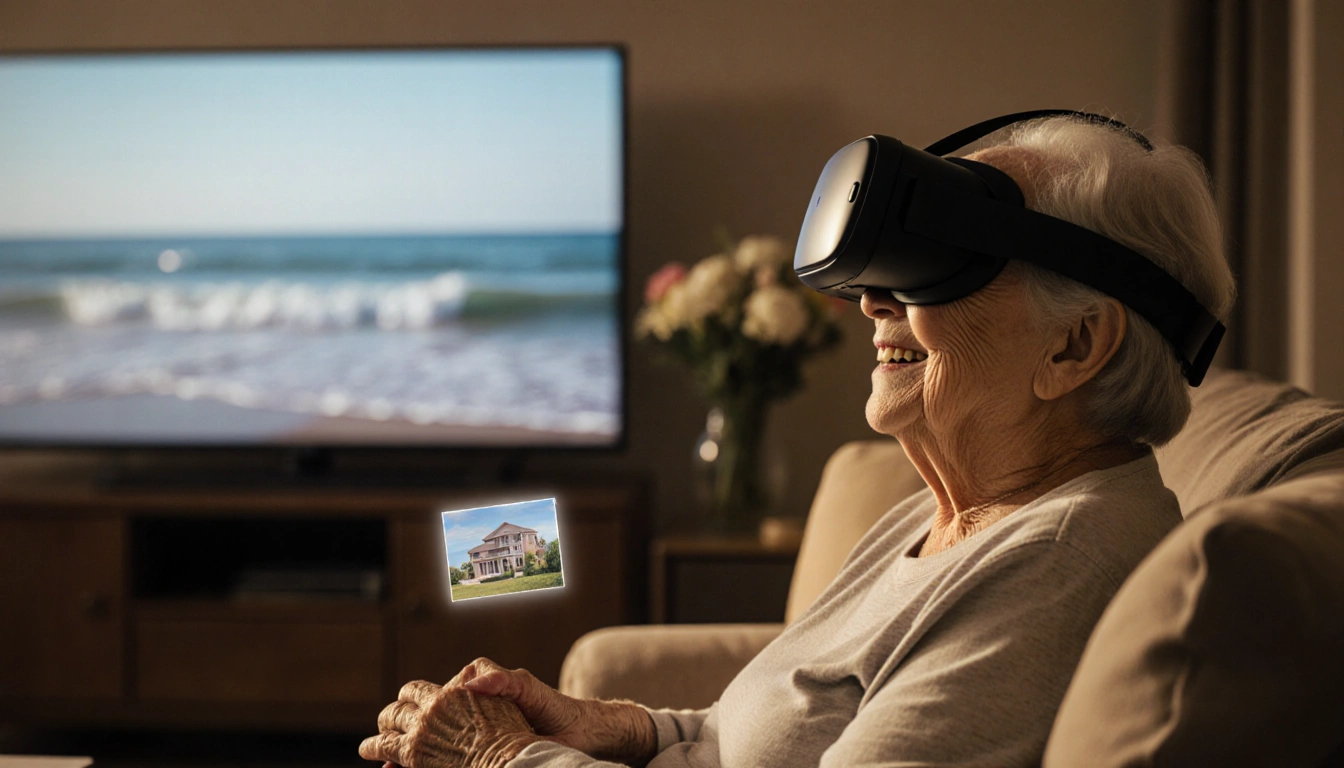
At Los Gatos’ The Terraces, VR headsets let seniors in their 80s and 90s explore oceans, hot-air balloons, and childhood hometowns, boosting social ties cognition.
Immersive Adventures for a Quiet Community
In the quiet streets of Los Gatos, California, the residents of The Terraces-many of whom are in their 80s and 90s-have found a new way to escape the limits of their everyday surroundings. Caretakers schedule special dates for the group to don virtual reality headsets, and within minutes the residents are transported to distant lands. One session had them paddling alongside dolphins, while another whisked them up in a hot-air balloon. 81-year-old Ginny Baird laughed, saying, “We got to go underwater and didn’t even have to hold our breath!”
Another resident gasped, “Oh my God!” during a balloon ride, and a third shuddered, “It’s hard to watch!” The headsets also offer trips to places the residents grew up, giving some their first chance to see hometowns after decades. A virtual tour of Queens, New York, convinced 84-year-old Sue Livingstone of the technology’s value, even though she still gets out more often than many at The Terraces. “It isn’t just about being able to see it again, it’s about all the memories that it brings back,” Livingstone explained. “There are a few people living here who never really leave their comfort zones. But if you could entice them to come down to try out a headset, they might find that they really enjoy it.”
The Technology Behind the Experience
The immersive programming is curated by Rendever, a privately owned company headquartered in Somerville, Massachusetts. Rendever has already installed its platform in 800 retirement communities across the United States and Canada. The company’s CEO, Kyle Rand, began the venture in 2016 after studying neuroengineering at Duke University, driven by a desire to help his grandmother cope with the emotional and mental challenges of aging. “What really fascinates me about humans is just how much our brain depends on social connection and how much we learn from others,” Rand said. “A group of elderly residents who don’t really know each other that well can come together, spend 30 minutes in a VR experience together and then find themselves sitting down to have lunch together while continuing a conversation about the experience.”
Rendever recently secured a grant from the National Institutes of Health that will provide nearly $4.5 million to study ways to reduce social isolation among seniors living at home and their caregivers. The grant will support research on how VR can maintain and improve cognitive functions, burnish memories, and foster social connections with family and fellow residents. “There is always a risk of too much screen time,” Katherine “Kate” Dupuis, a neuropsychologist and professor at Sheridan College in Canada, cautioned. “But if you use it cautiously, with meaning and purpose, it can be very helpful. It can be an opportunity for the elderly to engage with someone and share a sense of wonder.”
Social Connections and Cognitive Benefits
The VR sessions have become a catalyst for conversation. Adrian Marshall, The Terraces’ community life director, noted that once word spreads from one resident to another, more people become curious. “It turns into a conversation starter for them. It really does connect people,” Marshall said of Rendever’s programming. “It helps create a human bridge that makes them realize they share certain similarities and interests. It turns the artificial world into reality.”
Researchers at the University of Illinois Urbana-Champaign, including Pallabi Bhowmick, argue that VR headsets may be easier for older adults to use than smartphones or other devices that require navigating buttons. “The stereotypes that older adults aren’t willing to try new technology needs to change because they are willing and want to adapt to technologies that are meaningful to them,” Bhowmick said. “Besides helping them to relieve stress, be entertained and connect with other people, there is an intergenerational aspect that might help them build their relationships with younger people who find out they use VR and say, ‘Grandpa is cool!'”
The benefits extend beyond social interaction. In another community, the Forum in Silicon Valley, residents have used VR to slow the deleterious effects of dementia. Bob Rogallo, a Forum resident with dementia, appeared to enjoy a virtual hike through Glacier National Park in Montana. He nodded and smiled while celebrating his 83rd birthday with his wife of 61 years. His wife, Sallie Rogallo, who does not have dementia, said the experience brought back fond memories of their RV trips. “It made me wish I was 30 years younger so I could do it again,” she said. “This lets you get out of the same environment and either go to a new place or visit places where you have been.”
Almut Schultz, a 93-year-old Forum resident, laughed with delight during a virtual classical music performance at the Red Rocks Amphitheatre in Colorado. After removing her headset, she said with a big grin, “That was quite a session we had there.”
Beyond The Terraces: Competing Platforms and Future Directions
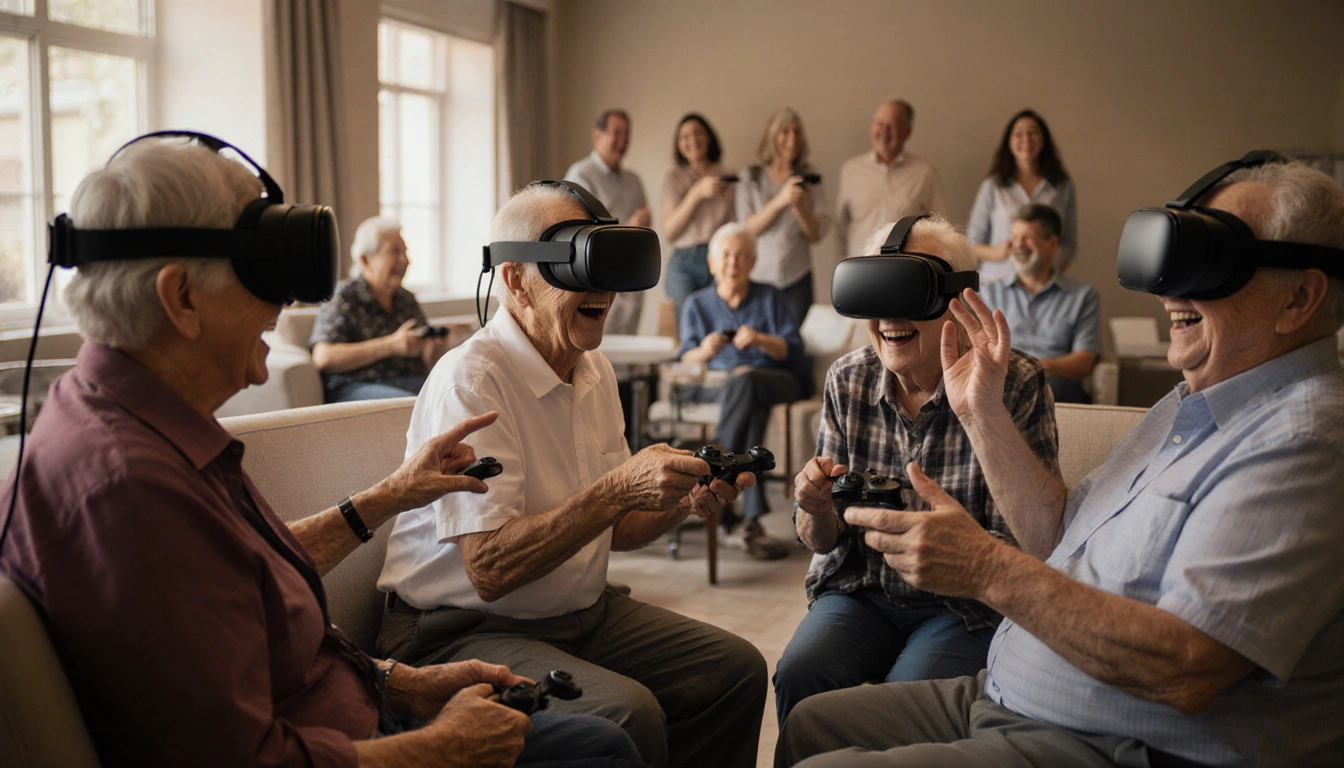
While Rendever leads the market, Dallas-based Mynd Immersive offers similar services tailored for senior living communities. Both companies have explored VR as a tool to mitigate dementia symptoms. The growing interest in VR for seniors is driven by the promise of improved cognition, memory retention, and reduced isolation. The NIH grant will help determine best practices and refine the technology for broader adoption.
Key Takeaways
- The Terraces residents in Los Gatos are using Rendever’s VR headsets to experience oceans, hot-air balloons, and childhood hometowns.
- Rendever’s platform, supported by a $4.5 million NIH grant, aims to reduce social isolation and improve cognitive function among seniors.
- VR has proven effective in fostering social connections, engaging residents in conversation, and even aiding those with dementia in communities like the Forum.
In the quiet hills of Los Gatos, the once-silent residents of The Terraces are finding new horizons through virtual reality, proving that age is no barrier to adventure and connection.