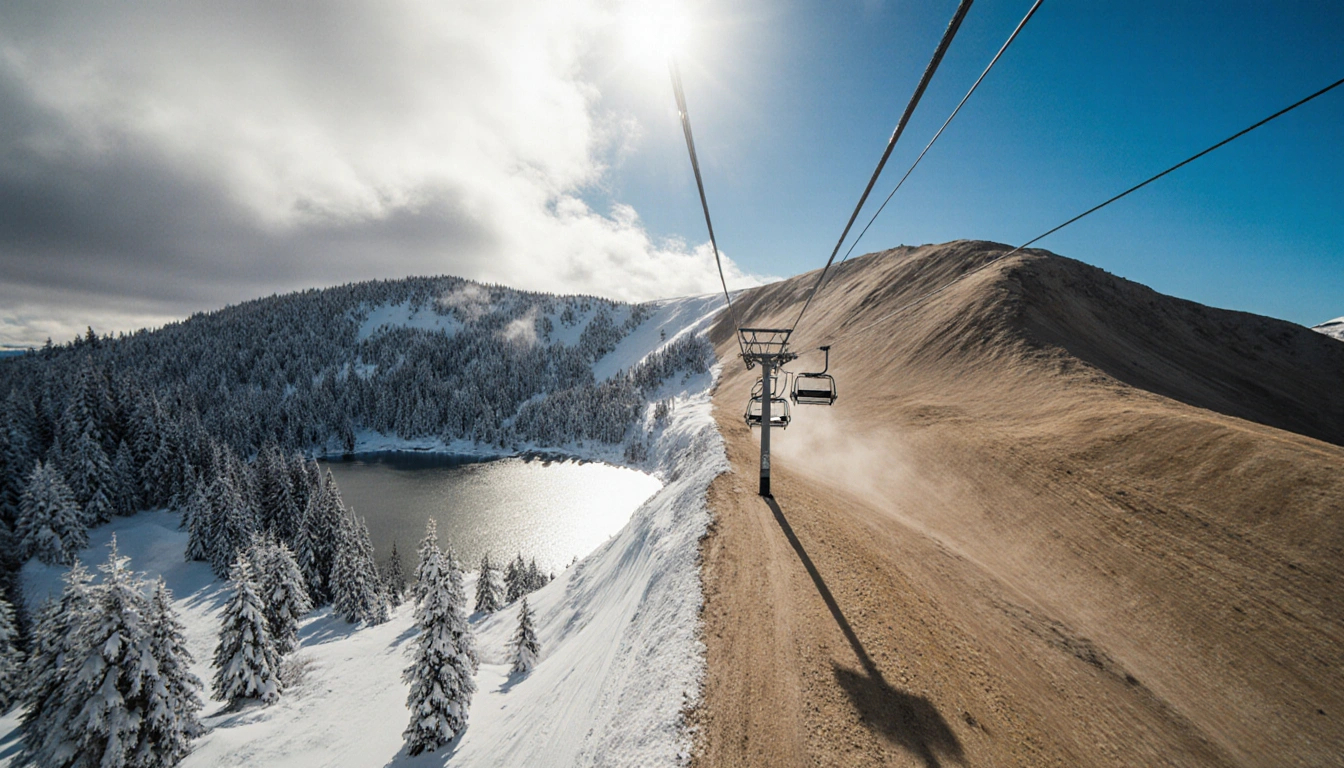
In the western United States, a prolonged heat wave has kept temperatures high and snowfall scarce, leaving ski resorts scrambling to keep lifts running and visitors disappointed. Meanwhile, the Midwest and Northeast have been blanketed by record-breaking snow this December, turning the region into a winter wonderland for skiers who normally chase the West.
Western Snow Shortage
At Lake Tahoe, the ski racing organization Kirkwood Ski Education Foundation reports that only a small percentage of lifts remain open and that snow depths are far below the average for this time of year. Kevin Cooper, president of the foundation, said, “Mother Nature has been dealing a really hard deck.” The lack of snow is part of a larger trend across the West, where warm weather has produced well-below-average snowpack.
In Utah, the Midway Ice Castles-an attraction that requires cold temperatures to freeze water into large palatial structures-has been postponed indefinitely. The area, located 45 minutes east of Salt Lake City and part of the 2034 Winter Olympics venue, has seen temperatures 7-10 degrees (3-5 degrees Celsius) above normal in recent weeks, according to the National Weather Service.
Near Vail, Colorado, Bearcat Stables owner Nicole Godley is hoping that riding wagons will satisfy customers in place of sleighs. “It’s the same experience, the same ride, the same horses,” Godley told reporters. “It’s more about, you know, just these giant horses and the Western rustic feel.”
The Northwest has also felt the heat. Torrential rain has washed out roads and bridges and flooded homes, and while heavy mountain snow finally arrived late this week in Washington state, flood-damaged roads may remain closed for months, cutting access to some ski resorts.
In Oregon, the Upper Deschutes Basin has had the slowest start to snow accumulation in records dating back to 1981. Oregon, Idaho, and western Colorado experienced their warmest Novembers on record, with temperatures ranging from 6-8.5 degrees (2-4 degrees Celsius) warmer than average, the National Oceanic and Atmospheric Administration reported.
Water Supply and Drought Concerns
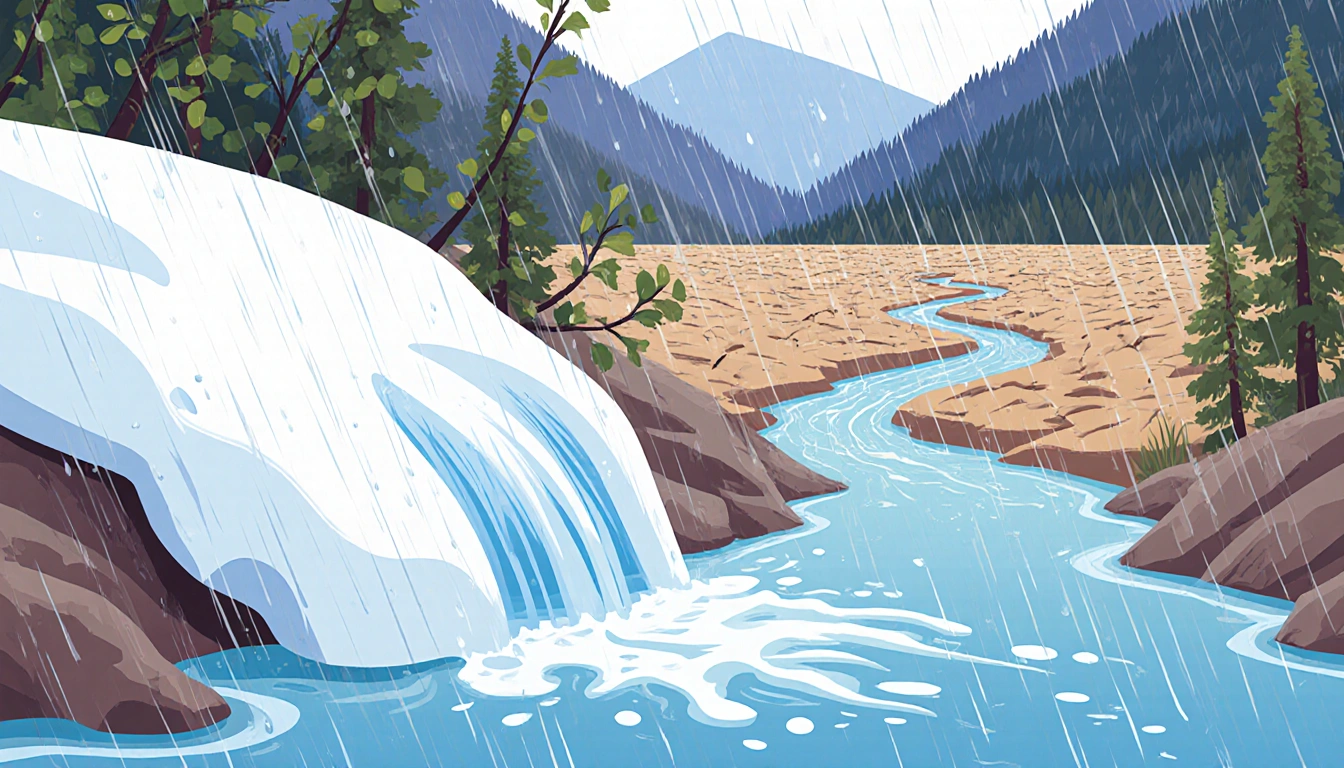
The warm temperatures could usher in another year of drought and wildfires across the West. Jason Gerlich, NOAA’s drought information coordinator, noted that most of the region-except large parts of Colorado and Oregon-has seen decent precipitation, but it has come as rain rather than snow. “That doesn’t help skiers but farmers, ranchers and people from Denver to Los Angeles who rely on snowpack water for their daily existence,” Gerlich said. “Rain runs off all at once at times when it’s not necessarily needed.”
“That snowpack is one of our largest reservoirs for water supply across the West,” Gerlich added. Climate scientists agree that limiting global warming is critical to staving off the snow-to-rain trend.
Record Snow in the Northeast
Below-normal temperatures in the northeastern United States have produced snow instead of rain. Parts of Vermont have almost tripled their snowfall compared to the same time last year, while Ohio has doubled its winter precipitation. Killington Resort and Pico Mountain in Vermont had about 100 trails open, and Josh Reed, the resort spokesman who has lived in Killington for a decade, said the conditions were “by far the best conditions I have ever seen for this time of year.”
New Hampshire ski areas are opening early, with Cannon Mountain reporting over 50 inches (127 centimeters) of snow to date. In northern Vermont, 31-year-old Elena Veatch has already cross-country skied more this fall than she has over the past two years. “I don’t take a good New England winter for granted with our warming climate,” Veatch said.
A Glimmer of Hope
Out West, it is still too early to rule out hope for snow. Gerlich pointed out that a single big storm could “turn things around rather quickly.” Lake Tahoe’s snow forecast over Thanksgiving week didn’t pan out, but Cooper said the long-term forecast could bring several feet (1-2 meters) of snow. “That would be so cool!” Cooper said.
Key Takeaways
- Western ski resorts face significant challenges due to warm temperatures and low snowpack.
- Record snowfalls in the Midwest and Northeast offer a bright spot for winter sports enthusiasts.
- Rising temperatures threaten water supplies and could lead to another drought and wildfire season.
The contrast between the warm West and snowy Northeast highlights the uneven impacts of climate variability on recreation, agriculture, and water resources across the United States.